
Last updated July 11, 2026
Air Duct Cleaning Permits, Codes & Inspections in WA: What You Need to Know
Here’s the counterintuitive truth we’ve learned from 11 years of opening access panels across Seattle: the duct cleaning itself almost never needs a permit, but the work that follows frequently does—and that’s where homeowners get blindsided. We once inspected a Tacoma home where a buyer’s inspection killed the sale because duct modifications made after a cleaning two years prior had never been permitted. The previous contractor had suggested the changes, the homeowner assumed they were routine, and now they were staring at a $4,200 compliance gap two weeks from closing. In this guide, we’ll walk you through exactly where Washington law draws the line between maintenance and modification, what Seattle and Tacoma codes add to state requirements, and how to document every service to protect your property value.
Quick Answer
Air duct cleaning in Washington State does not require a permit because it’s classified as maintenance, not construction. However, duct repair, sealing, rerouting, or any modification to the HVAC distribution system typically triggers permit requirements under WAC 51-52 and local amendments in Seattle and Tacoma. Homeowners should retain all service documentation and verify whether any recommended follow-on work requires permitting before proceeding.
Table of Contents
- Cleaning vs. Modification: The Legal Distinction That Matters
- Washington State Code: What WAC 51-52 Actually Says
- Seattle and Tacoma Municipal Code Layers
- What Your Contractor Is Legally Authorized to Do
- Documentation to Retain for Real Estate and Insurance
- When Cleaning Reveals Existing Code Violations
- Common Mistakes to Avoid
- When to Call a Professional
- Frequently Asked Questions
- The Bottom Line
Cleaning vs. Modification: The Legal Distinction That Matters
The Washington State Building Code Council draws a sharp line between maintenance activities and mechanical system alterations—and understanding this distinction saves homeowners from compliance headaches down the road.
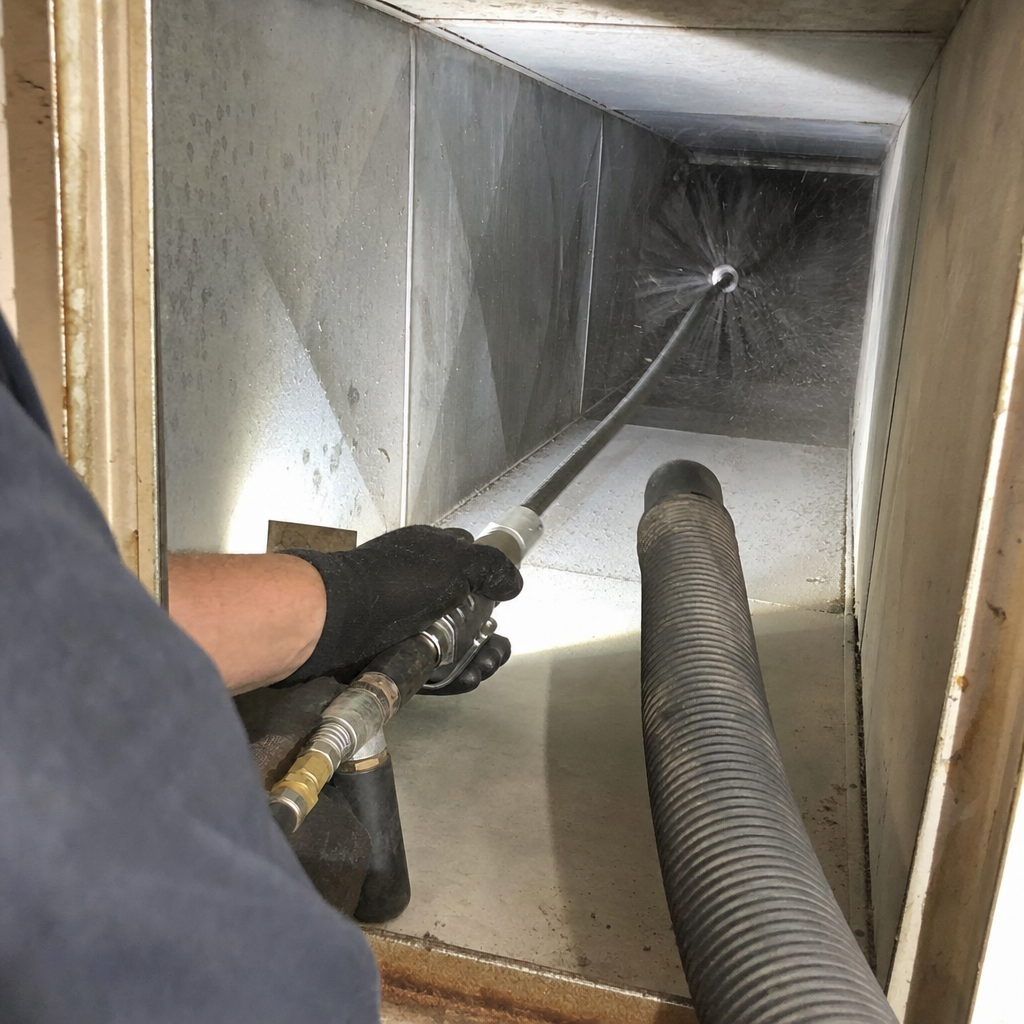
Cleaning (no permit required): This includes the physical removal of dust, debris, and contaminants from existing ductwork using brushes, compressed air, or vacuum systems. When we run our Rotobrush system through a Seattle home’s supply and return lines, we’re not altering the system’s design, capacity, or connection points. We’re restoring the system to its original operating condition. The same applies to dryer vent cleaning and HVAC coil cleaning—maintenance services that leave the system’s engineering unchanged.
Modification (permit typically required): This category catches many homeowners off guard. Any of these changes to your duct system triggers regulatory scrutiny:
- Adding, removing, or relocating supply or return vents
- Changing duct diameter or material type (flexible to rigid, or vice versa)
- Sealing duct joints with mastic or tape in a way that alters airflow calculations
- Repairing crushed or disconnected sections that require new fittings or routing
- Installing inline filtration or sanitizing equipment that changes static pressure
- Modifying ductwork to accommodate a remodel or finished basement conversion
In our experience across Seattle’s varied housing stock—from 1920s Craftsman bungalows in Wallingford to mid-century ramblers in Northgate—cleaning inspections frequently reveal damage that blurs this line. A duct section crushed during a botched attic renovation, a return plenum leaking at the seams, a flex duct pulled taut across a hot attic in violation of bend-radius code: these findings turn a straightforward cleaning into a conversation about permitted repairs.
The critical question isn’t “was the cleaning permitted?” but rather “does the condition we discovered require modification work, and if so, who’s pulling the permit?” A contractor who glosses over this distinction, or who offers to “just take care of it” without discussing permits, is creating liability that attaches to your property—not theirs.
Washington State Code: What WAC 51-52 Actually Says
Washington’s mechanical code, codified in WAC 51-52 (adopting the International Mechanical Code with state amendments), governs all HVAC system installations, alterations, and repairs. The sections relevant to ductwork fall primarily under Chapter 6 (Duct Systems) and Chapter 1 (Scope and Administration).
The maintenance exemption: WAC 51-52-106.1 establishes that “ordinary repairs” and maintenance don’t require permits. The code specifically exempts “the cleaning of existing ducts” from permit requirements, provided no structural, material, or capacity changes occur. This is the statutory foundation for our standard air duct cleaning service across Seattle homes—we’re operating within a clear legal exemption.
The modification trigger: WAC 51-52-106.2 requires permits for “the installation, alteration, repair, replacement, or relocation of any mechanical system.” The key term is “alteration”—defined in the code as any change to the system’s design, capacity, or performance characteristics. When we encounter a disconnected duct in a West Seattle crawl space and recommend reconnection with proper supports and sealed joints, we’ve crossed from maintenance into alteration territory.
The licensed contractor requirement: WAC 18.106.010 requires that anyone performing HVAC alteration work hold a Washington State specialty electrical license or mechanical license, as applicable. Here’s where homeowners get tripped up: a duct cleaning company can legally clean your ducts without holding a mechanical contractor license, but the moment they cut, modify, or reroute ductwork, they’re performing regulated work. If they don’t hold the proper license and permit, that work is unlicensed—and unpermitted work can void your homeowner’s insurance, complicate property sales, and create liability if system failures cause damage.
We’ve seen this play out in Seattle’s competitive real estate market, where inspection reports are deal-breakers. A homeowner in Columbia City had us clean their ducts before listing. We found a previous contractor had added a supply vent to a converted attic bedroom without permits or proper sizing calculations. The buyer’s inspector flagged it. The sale stalled for six weeks while the seller scrambled to get retroactive permits, upgrade the ductwork to code, and pay penalties. The “simple” addition of one vent—done years earlier by an unlicensed handyman—cost nearly $3,800 to legitimize.
Seattle and Tacoma Municipal Code Layers
Washington State allows local jurisdictions to adopt more stringent amendments to the state building code. Both Seattle and Tacoma exercise this authority for mechanical systems, adding layers that homeowners and contractors must navigate.
Seattle amendments: The Seattle Mechanical Code (SMC Chapter 22.100, adopting the Seattle amendments to WAC 51-52) includes several provisions that affect post-cleaning work:
- Permit threshold for duct repair: Seattle requires permits for any duct repair exceeding 10 linear feet of replacement material, or any repair affecting a system’s calculated airflow (SMC 22.100.106.2). A cleaning that reveals extensive rodent damage requiring 15 feet of new flex duct in a Queen Anne Victorian’s crawl space crosses this threshold.
- Fire and smoke damper requirements: Seattle enforces stricter damper inspection and maintenance rules for multi-family buildings. If cleaning reveals inoperable dampers, replacement requires permit and inspection.
- Energy code integration: Seattle’s Energy Code (SMC Chapter 22.100) requires that any duct modification in conditioned space meet current insulation and sealing standards. A 1970s home in Wedgwood with uninsulated metal ducts can’t simply have sections replaced to match existing—it must be brought to current code.
Tacoma amendments: Tacoma Municipal Code Title 2 (Building and Construction) incorporates the state mechanical code with Pierce County amendments. Key distinctions:
- Mechanical contractor registration: Tacoma requires all mechanical contractors to register with the city and display registration numbers on vehicles and contracts. We’ve observed this enforcement during routine parking observations—unregistered operators are common in the duct cleaning space.
- Inspection scheduling: Tacoma requires rough and final inspections for duct modifications, with specific scheduling windows that can extend project timelines. Homeowners should factor this into any sale or rental preparation.
- Historic district overlay: Tacoma’s North Slope and Stadium historic districts impose additional review for any visible exterior modifications, including new vent terminations or exhaust locations.
The climate context matters here too. Seattle’s marine climate—mild, wet winters and dry summers—creates specific duct degradation patterns we see repeatedly. Condensation in unconditioned attics and crawl spaces accelerates flex duct liner deterioration. The frequent temperature differentials between duct air and ambient air stress sealing materials. When we recommend sealing or replacement in these environments, we’re accounting for local conditions that generic code guidance doesn’t address.
What Your Contractor Is Legally Authorized to Do
Not every company offering “air duct cleaning” holds the licenses needed for the full scope of work they might propose. Understanding the legal boundaries protects you from inadvertently hiring unqualified labor for regulated tasks.
Duct cleaning-only operations: In Washington, duct cleaning falls under general business licensing—no specialty contractor license required. This is why the market includes everything from established specialists to carpet cleaners with rented equipment. A company operating solely in this space can legally:
- Clean existing ductwork using mechanical brushes, air whips, or vacuum systems
- Inspect and document conditions with cameras or visual access
- Clean dryer vents, HVAC coils, and blower assemblies
- Apply EPA-registered sanitizers to existing duct surfaces (with proper application credentials)
Mechanical contractor requirements: Any of these activities requires a Washington State specialty contractor license (Mechanical HVAC/R, or equivalent):
- Cutting, joining, or replacing duct sections
- Installing new registers, grilles, or diffusers
- Modifying duct routing or supports
- Altering system airflow through damper adjustment or replacement
- Installing inline filtration, UV, or electronic air cleaning equipment
At Landmark Air Duct Cleaning Service Washington home, Richard Anderson holds appropriate licensing for the full scope of services we offer. When a cleaning inspection reveals needs beyond maintenance, we can discuss permitted solutions without handing you off to unknown subcontractors. This owner-led continuity matters—Richard has personally handled the transition from cleaning to repair on hundreds of Seattle properties, and the permit history is documented in our records, not dispersed across multiple contractors.
The red flags we’ve learned to watch for: a cleaner who offers to “fix that while we’re here” without mentioning permits; a quote that bundles cleaning and repair without line-item separation; pressure to proceed immediately because “it’s just a small job.” Small jobs accumulate into big compliance gaps.
Documentation to Retain for Real Estate and Insurance
We’ve reviewed enough pre-sale duct inspections to know that documentation gaps cost homeowners real money. The work was done, the air got cleaner, but the paper trail doesn’t exist—and in real estate transactions, undocumented work is treated as unpermitted work until proven otherwise.
What to request and retain after every service:
- Detailed scope of work: A document specifying exactly what was performed—cleaning only, or cleaning plus any additional services. Vague invoices (“duct service – $450”) create ambiguity.
- Before and after documentation: Photo or video evidence of duct conditions. We provide this standard; it proves the service occurred and shows what was found.
- Contractor licensing information: Business license number, specialty contractor license number if repair work was performed, and insurance certificate. Verify active status through the Washington State Department of Labor & Industries.
- Permit copies: If any modification work occurred, retain the permit application, approved plans, and inspection sign-off. Seattle and Tacoma both provide online permit history that should match your records.
- Product and equipment specifications: If sanitizing products or air quality equipment were installed, retain manufacturer sheets. This matters for warranty transfers and for buyers with chemical sensitivities.
- Airflow or pressure measurements: If system performance was tested, retain the data. Post-cleaning static pressure readings demonstrate the system wasn’t compromised by the service.
In Seattle’s appreciating market, we’ve seen this documentation add tangible value. A Ballard homeowner had complete records from three years of our services—cleanings, a permitted duct repair, and Honeywell air quality equipment installation. When their buyer’s inspector questioned duct conditions, they produced dated photos, permits, and performance data. The inspection contingency cleared in 48 hours. Their neighbor, with undocumented work from a now-defunct company, faced a $2,100 re-inspection and repair demand.
Insurance claims present similar documentation requirements. If a duct-related fire or water damage occurs, your carrier will investigate whether maintenance was performed and whether modifications were permitted. Gaps in documentation delay or deny claims.
When Cleaning Reveals Existing Code Violations
This is the scenario that tests homeowner-contractor relationships: we open an access panel and find work that was never code-compliant to begin with. The immediate question becomes what’s legally required versus what’s being sold.
Your actual legal obligations: Washington law does not generally require homeowners to bring existing, functioning systems into compliance with current code unless they’re being modified. A 1985 duct system in a Ravenna home that met code when installed doesn’t need retrofitting simply because we cleaned it. The “cleaning triggers upgrade” pitch some contractors use is typically a sales tactic, not a legal mandate.
Exceptions that create real obligations:
- Imminent safety hazards: A disconnected gas furnace flue, backdrafting combustion appliances, or deteriorating transite (asbestos-containing) ductwork. These trigger repair obligations under RCW 19.27.530, which requires hazardous conditions to be addressed.
- Active water or pest intrusion: Ongoing conditions causing structural damage or health hazards. The violation isn’t the ductwork itself but the unaddressed damage pathway.
- Insurance policy requirements: Some policies include maintenance clauses that void coverage for damage from known, unaddressed defects.
- Rental property regulations: Seattle’s Rental Registration and Inspection Ordinance (RRIO) requires functional heating systems, and deteriorated ductwork can fail inspection.
What we can and cannot do: When we find code violations during cleaning, we document them, explain their implications, and recommend appropriate next steps. We don’t perform scare tactics or imply legal obligations that don’t exist. If repair is needed, we discuss whether it requires permitting and whether we’re the right contractor—or whether a mechanical specialist should handle the permit work.
We’ve developed particular expertise in Seattle’s older housing stock, where decades of incremental HVAC modifications have created layered compliance issues. A 1910 Craftsman in Capitol Hill might have original gravity-duct remnants, 1970s forced-air retrofits, and 1990s additions—all coexisting in ways that no single code era anticipated. Cleaning these systems requires historical knowledge and careful documentation, not blanket upgrade recommendations.
Common Mistakes to Avoid
- Assuming “maintenance” covers everything: A Seattle homeowner allowed a cleaner to reroute a damaged return duct, believing it was part of routine service. The unpermitted work required $1,800 in retroactive compliance when discovered during refinancing. Always ask explicitly: “Does this specific task require a permit?”
- Accepting verbal assurances: A Tacoma property manager took a contractor’s word that duct sealing was “just maintenance.” The city’s mechanical inspector disagreed, issuing a stop-work order on a tenant turnover. Get permit determinations in writing.
- Discarding old documentation: Washington’s statute of limitations on construction defects is six years; permit and inspection records should be retained at least that long. We’ve seen homeowners unable to prove compliant work from four years prior.
- Hiring based on price alone: The lowest bid often reflects unlicensed labor that can’t legally perform needed repairs, or a business model that ignores permit requirements entirely. Verify licensing through L&I before signing.
- Ignoring municipal overlays: Seattle’s energy code and Tacoma’s contractor registration create requirements beyond state minimums. A contractor familiar with Bellevue or Kent may not know Seattle’s specific amendments.
- Letting real estate timelines rush decisions: Pre-listing cleaning discoveries create pressure to “just get it done.” Rushed repairs without proper permits create bigger sale complications than disclosed, documented conditions.
- Failing to separate cleaning and repair quotes: Bundled pricing obscures what’s maintenance versus modification. Itemized quotes protect both parties and create clear documentation.
When to Call a Professional
Call when you’re unsure where the maintenance-modification line falls for your specific situation. Call when a cleaning proposal includes language about “repairs,” “upgrades,” or “improvements” without specifying permit status. Call when you’re preparing a property for sale or rental and need documentation that will satisfy inspection scrutiny.
At Landmark Air Duct Cleaning Service Washington, Richard Anderson personally evaluates every property we serve in Seattle and the surrounding region. With 11 years of exclusive focus on air duct and indoor air quality services, we’ve navigated permit questions from Ballard to Beacon Hill, from historic renovations to new construction. Our Rotobrush and Nikro cleaning systems handle the maintenance work; when inspection reveals needs beyond that scope, we provide clear guidance on whether permitting applies and what your options are.
We offer free estimates in Seattle—call (877) 335-1974 to schedule. Richard will walk your property, explain what your ducts actually need, and ensure you understand the regulatory landscape before any work begins.
Frequently Asked Questions
No. Air duct cleaning is classified as maintenance under WAC 51-52-106.1 and does not require a permit. However, if your contractor discovers damage and recommends repair, replacement, or modification of ductwork, that follow-on work may trigger permit requirements depending on scope and location.
Permitted work typically costs 15–25% more due to application fees, inspection scheduling, and code-compliant materials. In Seattle, permit fees for minor mechanical work start around $150–$300, with total repair costs ranging from $800 for simple flex duct replacement to $3,500+ for system reconfiguration. Unpermitted work may appear cheaper upfront but carries risks of sale complications, insurance denial, and required retroactive compliance that often exceeds original permitted costs. Call (877) 335-1974 for an exact quote—estimates are free.
Only if they hold a Washington State specialty mechanical contractor license and Tacoma city registration. Many duct cleaning operations lack these credentials and legally cannot perform repairs. Always verify licensing through the Washington State Department of Labor & Industries before authorizing repair work. HVAC Cleaning in Tacoma by properly licensed providers ensures compliance.
Buyer’s inspections, lender requirements, or title insurance may flag unpermitted work. Remediation options include retroactive permitting (often requiring exposed work for inspector access), removal of unpermitted modifications, or price concessions to buyers. In Seattle’s competitive market, we’ve seen unpermitted ductwork reduce offers by $5,000–$15,000 or delay closing by 4–8 weeks. Documented, permitted work eliminates this uncertainty.
Visit the Washington State Department of Labor & Industries contractor lookup at lni.wa.gov and search by business name or individual name. Verify the license is active, the bond is current, and any required specialty endorsements are listed. For work in Seattle or Tacoma, additionally confirm city business registration. We provide our license information proactively; contractors who hesitate should raise immediate concern.
Yes, indirectly. Seattle’s marine climate—high humidity, moderate temperatures, and significant rainfall—creates condensation risks in unconditioned spaces that inform local insulation and vapor barrier requirements. The Seattle Energy Code’s duct sealing and insulation standards are more stringent than drier inland climates would require. When we clean ducts in crawl spaces or attics throughout Seattle, we’re assessing conditions specific to this environment, not applying generic national guidance.
The Bottom Line
Air duct cleaning in Washington operates in a clear legal exemption—but it’s an exemption with boundaries that many contractors and homeowners misunderstand. The cleaning itself needs no permit. The repairs, modifications, and system changes that cleaning often reveal frequently do. Seattle and Tacoma add municipal layers that matter for compliance. Documentation protects property value. And the contractor you choose should understand these distinctions clearly enough to explain them, not obscure them.
From 11 years of owner-led work across Seattle’s neighborhoods, we’ve learned that transparency about permits and codes builds more lasting trust than any discount or speed claim. The homeowner who understands what they’re buying—and what they’re not—makes better decisions and avoids the compliance gaps that derail sales and insurance claims.
Written by Richard Anderson, Owner & Lead Technician at Landmark Air Duct Cleaning Service Washington, serving Seattle since 2015.