
Fast, Reliable Air Quality & Sanitizing Across Lake Forest Park
Air quality and sanitizing in Lake Forest Park typically costs $280–$650 for mold treatment, $180–$350 for bacteria sanitizing, and $450–$1,200 for UV light installation with whole-home air purifier integration. We’re usually on-site within 45 minutes to an hour for Lake Forest Park calls, with same-day scheduling available most weekdays. Call (877) 335-1974 for a free estimate.
We’ve been working the shaded hillside streets and wooded cul-de-sacs of Lake Forest Park for 11 years, and we’ve learned that this city’s extraordinary tree canopy creates air quality challenges you simply won’t find in more open suburbs. Richard Anderson, our Owner and Lead Technician, has personally treated duct systems in ranch homes off Ballinger Way, split-levels near the Lake Washington shoreline, and mid-century builds tucked into the forested hills above 98155. Our Air Quality & Sanitizing team understands how Lake Forest Park’s damp, canopy-shaded environment drives mold and allergen loads that standard duct cleaning alone can’t address.
Why Landmark Air Duct Cleaning Service Washington Is Lake Forest Park’s Preferred Air Quality & Sanitizing Company
Our reputation in Lake Forest Park is built on 732 verified reviews averaging 4.9 stars — and a significant portion of those come from repeat customers in this exact zip code who’ve watched us solve problems other companies missed. Homeowners here research before they call; they read reviews, they ask neighbors, and they want to know exactly who will be crawling under their house. Richard Anderson answers that question directly: he’s the one running the Rotobrush, applying the antimicrobial treatment, and installing the UV system. Owner-led on every job means no rotating crews, no accountability gaps.
Our response time to Lake Forest Park averages under an hour because we know the area — the winding streets off Ballinger Way, the hillside lots with limited crawl-space access, the mid-century homes with original ductwork routed through uninsulated spaces. We arrive with Nikro HEPA recovery systems and EPA-registered sanitizers already loaded, not making a supply run while your appointment window slips away.
What separates us from generalist HVAC companies is 11 years of exclusive focus on indoor air quality. We’re not adding duct sanitizing as an upsell to a furnace tune-up; it’s the core of what we do. That specialist depth shows in how we diagnose Lake Forest Park’s specific failure modes — the mold mats on flex duct, the degraded sheet-metal joints, the red alder debris that generalists often misidentify as generic dust.
Our Air Quality & Sanitizing Services in Lake Forest Park
Mold Treatment
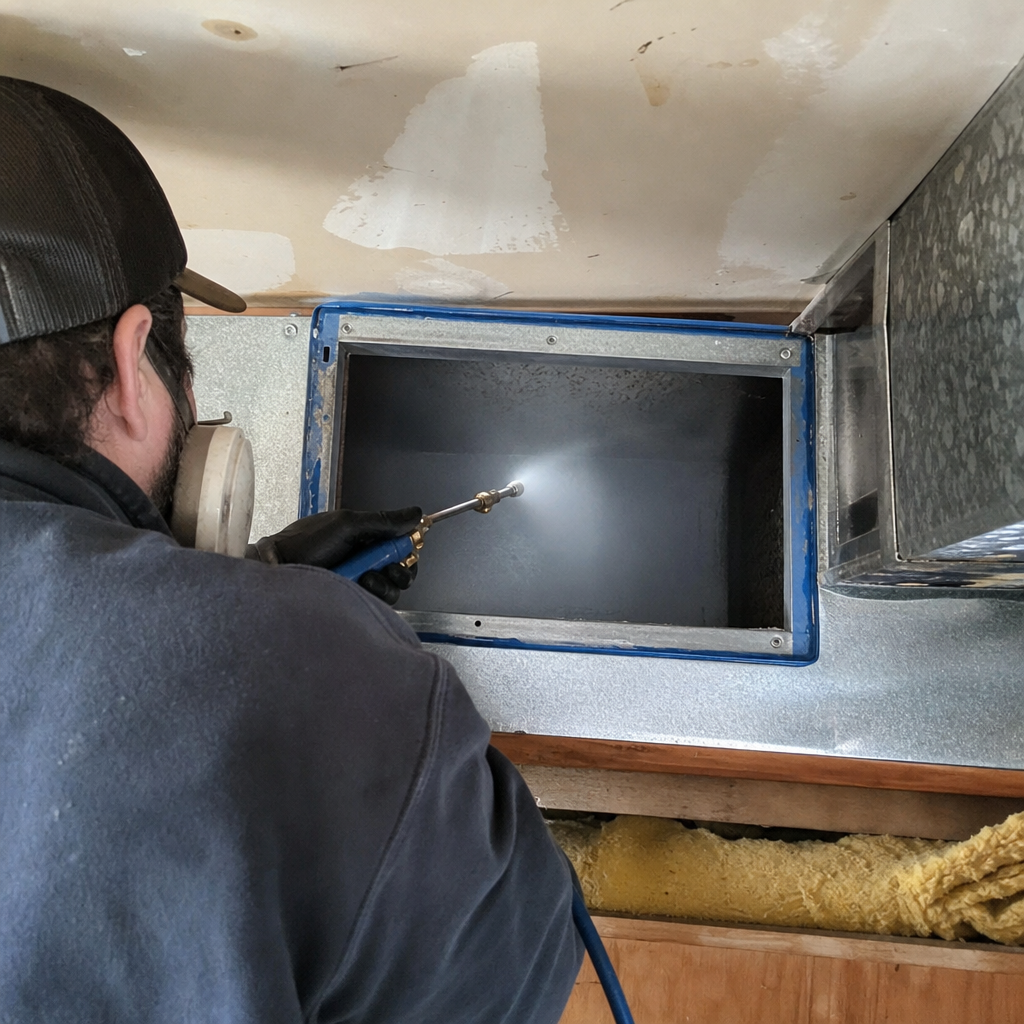
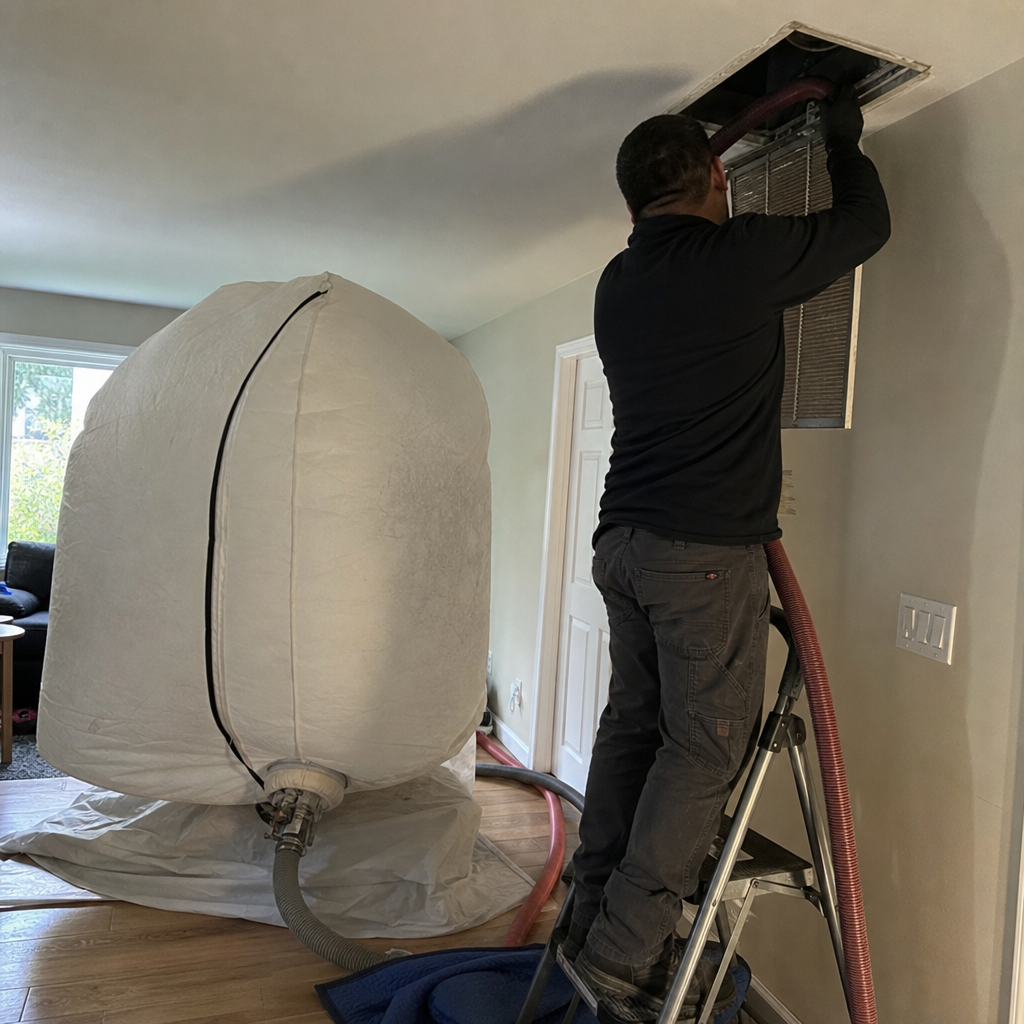
Lake Forest Park’s near-continuous canopy of red alder, big-leaf maple, Douglas fir, and western red cedar keeps lots damp and shaded year-round, dramatically elevating airborne mold spore and pollen loads that infiltrate ductwork compared to more open neighbors like Shoreline or Kenmore. In this environment, mold treatment isn’t an occasional service — it’s a necessary response to conditions built into the city’s geography. We use Rotobrush mechanical agitation with HEPA containment to remove visible mold colonies from duct surfaces, followed by EPA-registered antimicrobial fogging that penetrates porous fiberglass liner and reaches joints where brush contact is limited. For homes with recurring issues — common in the 1950s–1970s ranch stock with crawl-space duct runs — we recommend pairing treatment with UV light installation to suppress spore regrowth between service cycles.
Bacteria Sanitizing
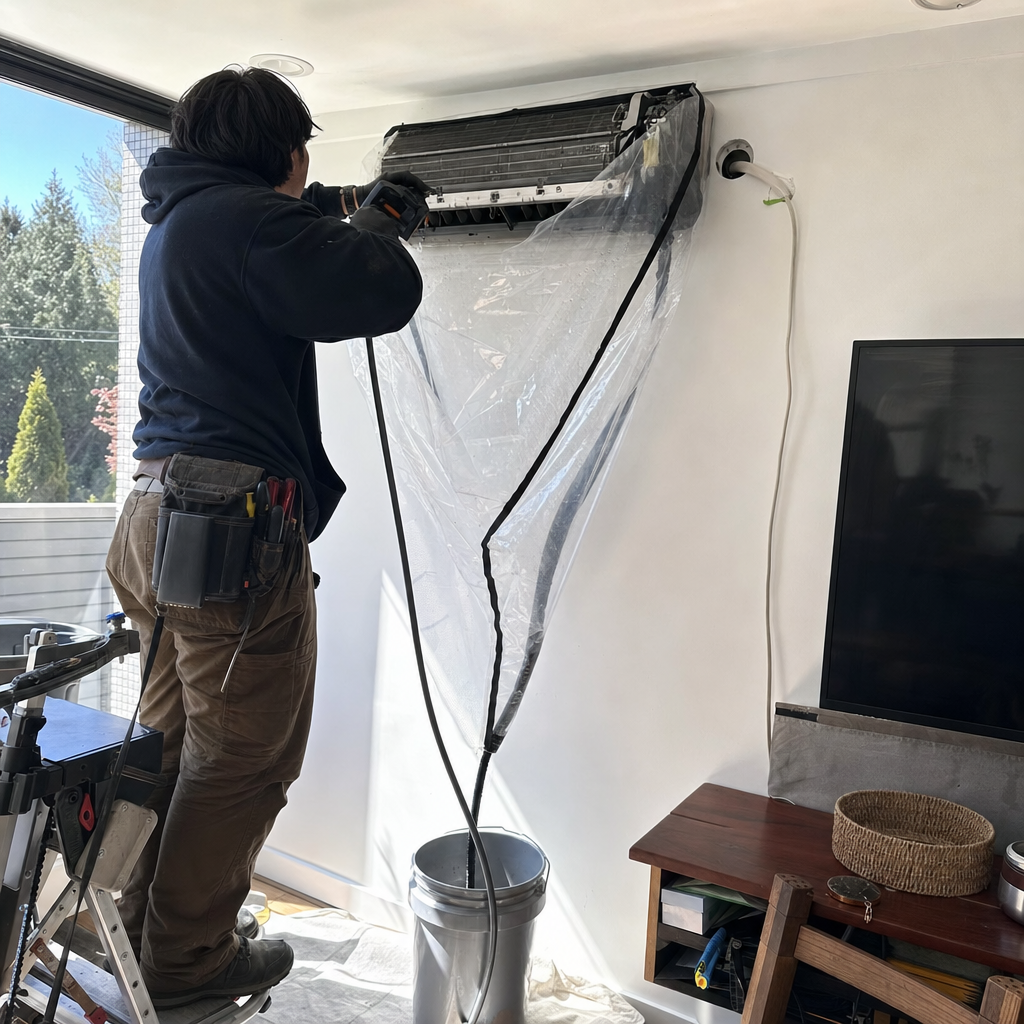
Bacteria sanitizing addresses the microbial load that accumulates when moisture meets organic debris in your duct system. In Lake Forest Park, that moisture is ambient — the shaded canopy suppresses evaporation and extends the wet season effectively into late spring. We’ve treated homes where flex duct in uninsulated crawl spaces had become a culture medium for bacteria feeding on accumulated pollen and decaying leaf matter. Our process applies hospital-grade sanitizing agents through the full duct network, with dwell times calibrated to the contamination level we find during pre-treatment inspection. This isn’t surface wiping; it’s whole-system treatment that reaches every register and return.
Odor Removal
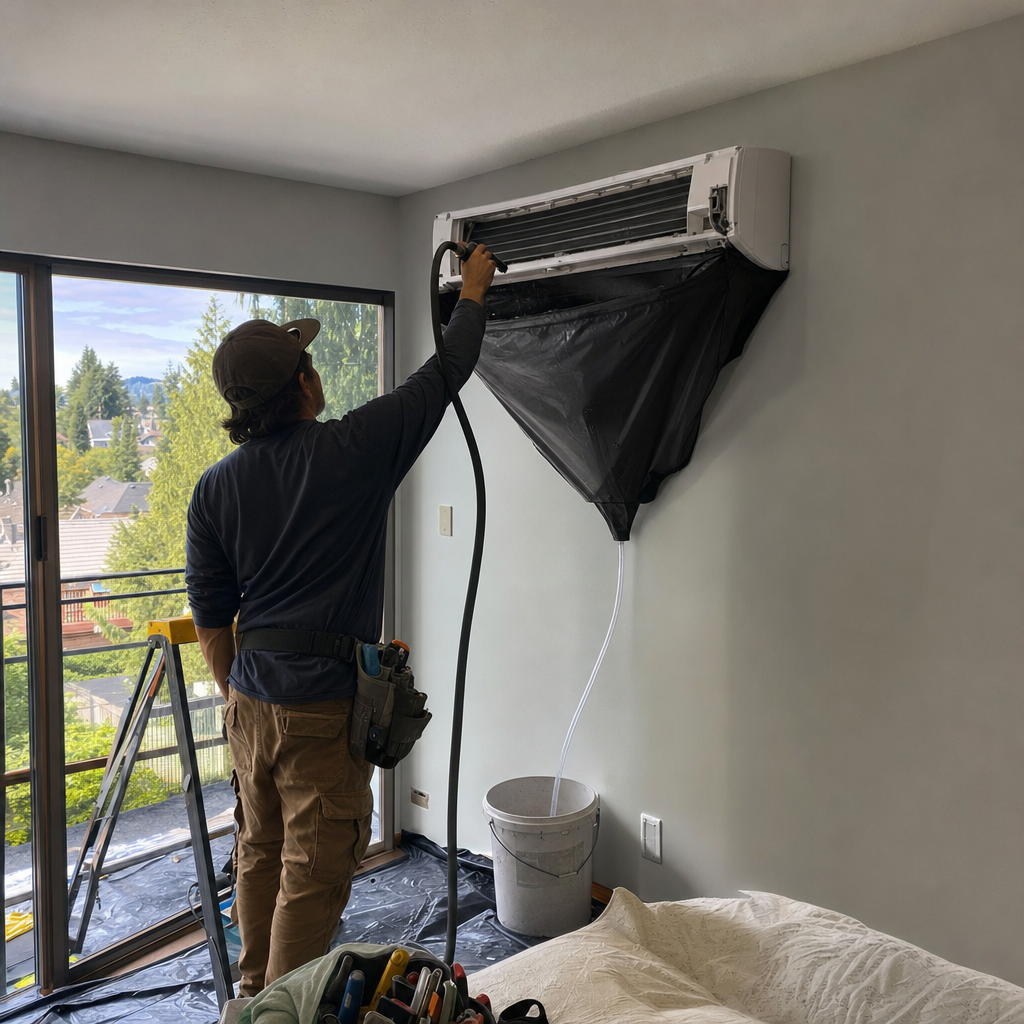
Musty, earthy odors in Lake Forest Park homes often trace directly to mold and bacteria activity in damp ductwork — not to “old house smell” or imagined problems. Homeowners on the hillside streets near the Lake Washington shoreline particularly report this issue after prolonged wet periods, when ground moisture wicks into crawl spaces and the original sheet-metal joints of mid-century systems begin weeping condensation. Our odor removal protocol eliminates the source organism rather than masking it with scented treatments. We locate the active contamination, treat it mechanically and chemically, then verify reduction with post-treatment assessment. If the odor source is a degraded duct joint pulling crawl-space air, we’ll flag that for repair — because sanitizing without sealing is temporary.
UV Light Installation
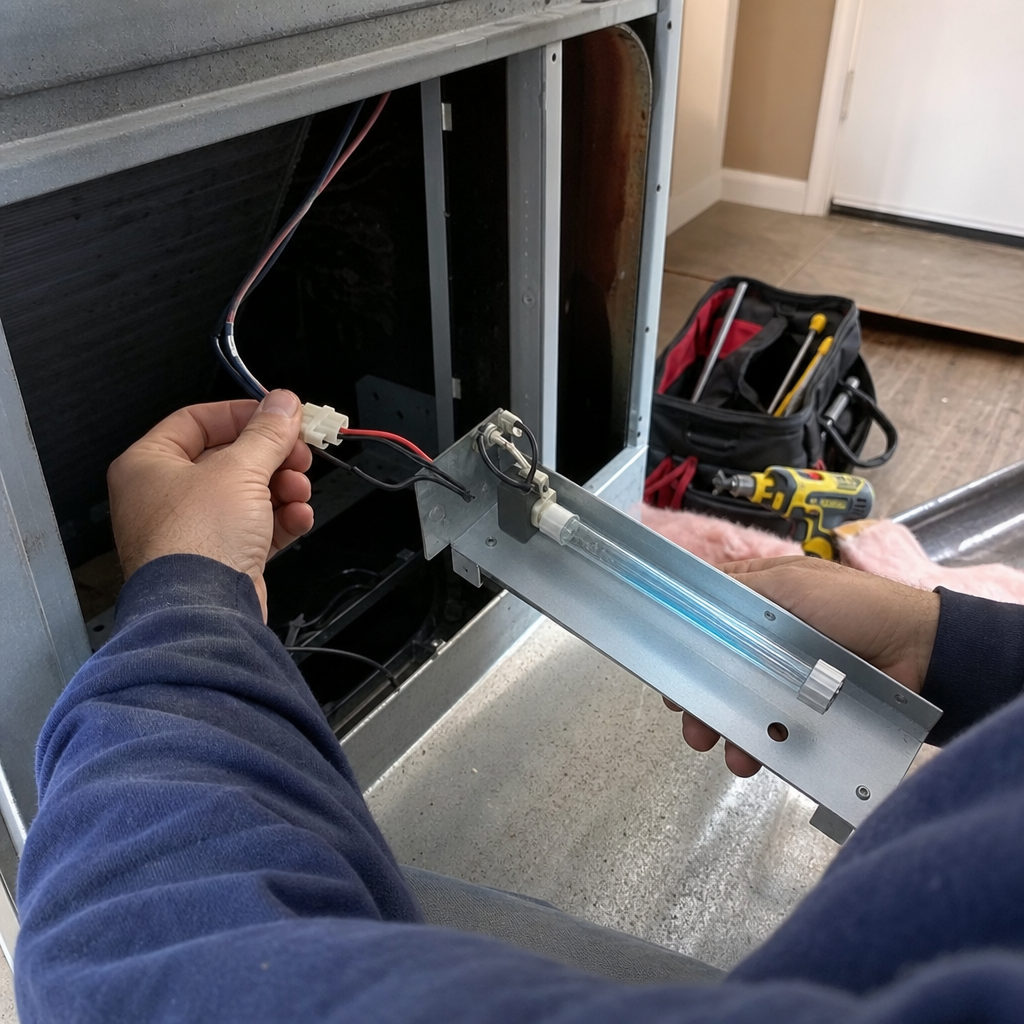
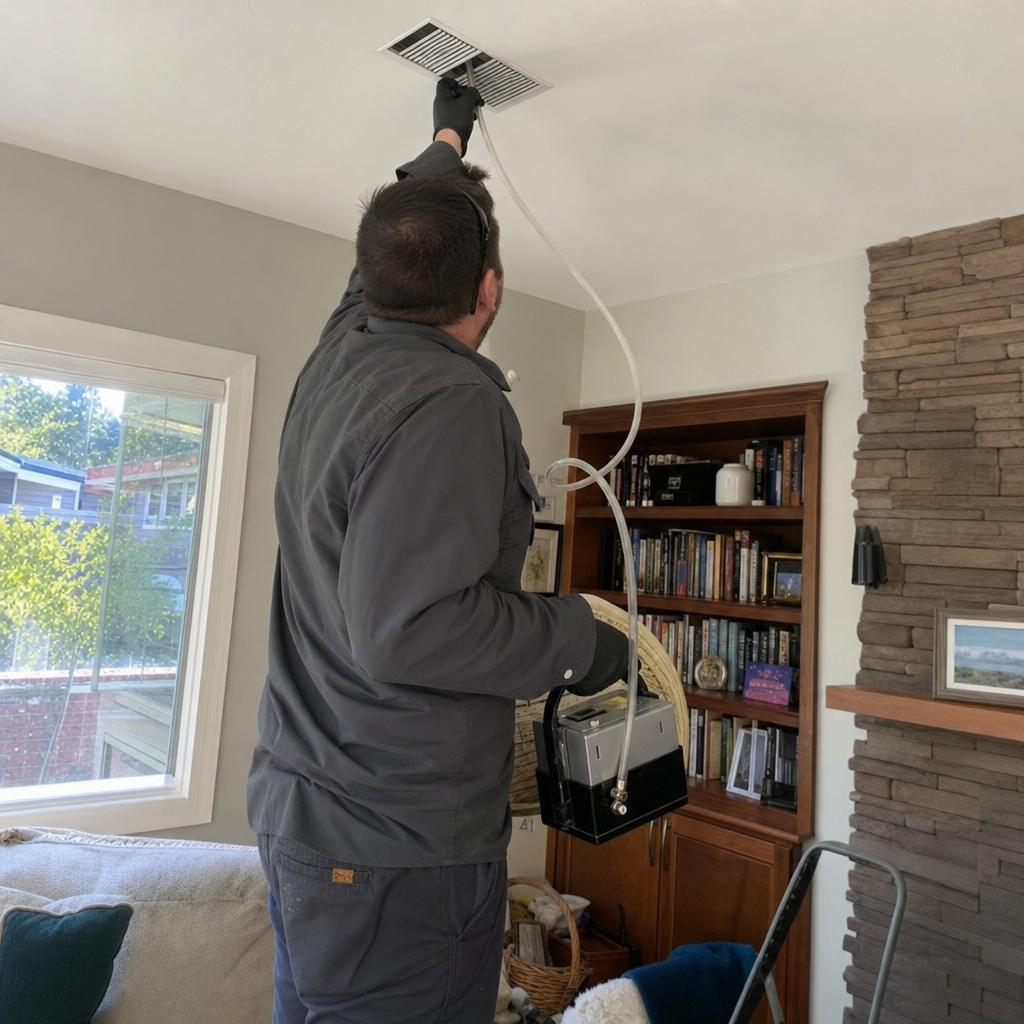
UV light installation is our most requested add-on in Lake Forest Park, and for specific local reasons. The city’s shaded, humid microclimate creates ideal conditions for mold spore proliferation in duct systems; a properly installed UV-C lamp in the main supply trunk suppresses that growth continuously, between professional cleanings. We install Aprilaire and Honeywell UV systems sized to your duct volume and airflow rate — not generic units wedged in wherever they’ll fit. For homes with crawl-space duct runs that stay damp even in summer, we often recommend dual-lamp configurations treating both the supply and return sides. Installation typically runs $450–$1,200 depending on system complexity and whether electrical routing is needed to the furnace location.
What happens when you call
- 1
A real person answersNo phone trees — you reach a local pro.
- 2
You get an upfront price rangeHonest numbers before anyone is dispatched.
- 3
A background-checked tech heads outLicensed & insured, dispatched right away.
- 4
You approve before work beginsNothing starts until you say go.
Trusted Brands We Service in Lake Forest Park
We work with professional-grade air quality equipment from Honeywell, Aprilaire, and Abatement Technologies — the same brands specified by commercial restoration contractors and hospital facilities managers. For Lake Forest Park homeowners, this means we stock UV lamps, replacement filters, and purifier components locally rather than ordering on demand. A failed UV bulb in January doesn’t wait two weeks for shipping; we carry the match. Our Rotobrush and Nikro cleaning systems are also professional-spec, not rental-grade units that leave debris behind. When Richard Anderson recommends a specific Aprilaire 5500 series purifier or a Honeywell UV treatment system, it’s because he’s installed dozens in Lake Forest Park homes with similar canopy-driven moisture profiles and can predict the performance based on that direct experience.
Common Air Quality & Sanitizing Problems We See in Lake Forest Park Homes
- Mold mats on flex duct in uninsulated crawl spaces. The shaded canopy keeps ground moisture elevated year-round, and that moisture contacts flex duct runs directly. We regularly find dark, spreading mold colonies on the exterior and interior liner of flex duct in 1960s–1970s split-levels — contamination that simple vacuum cleaning won’t remove and that demands full sanitizing with antimicrobial treatment.
- Homeowners assuming Seattle’s mild reputation means dry ducts. Lake Forest Park’s specific microclimate is wetter and more shaded than the regional average. By the time visible mold appears at registers or allergy symptoms intensify, the duct contamination is typically extensive. We recommend proactive assessment every 2–3 years for homes under heavy canopy cover.
- Degraded sheet-metal joints in mid-century ranch homes re-contaminating clean air. The 1950s–1970s housing stock common in 98155 used original or early-retrofit forced-air ductwork with joints that weren’t sealed to modern standards. Humid crawl-space air pulls through these gaps continuously, bypassing any filter or purifier and delivering unconditioned, mold-laden air directly into living spaces.
- Red alder catkin debris accumulating in supply registers. On a winding cul-de-sac off Ballinger Way, we found a homeowner’s supply registers caked with red alder catkin debris and dark mold mats on flex duct runs in the crawl space. We deployed a Rotobrush with HEPA filtration to clear the debris and applied an EPA-registered antimicrobial fogging treatment, then installed an Aprilaire 5500 UV air purifier in the main trunk to suppress ongoing mold spore regrowth. This pattern repeats across Lake Forest Park’s heavily wooded neighborhoods every spring.
Pricing for Air Quality & Sanitizing in Lake Forest Park, WA
Here’s what typical air quality and sanitizing services cost in the Lake Forest Park market:
| Service | Typical Range |
|---|---|
| Mold treatment (whole-system) | $280–$650 |
| Bacteria sanitizing | $180–$350 |
| Odor removal protocol | $220–$480 |
| UV light installation (single lamp) | $450–$750 |
| Whole-home air purifier install | $800–$1,200 |
| Allergen reduction treatment | $200–$420 |
Costs vary with duct system size, contamination severity, and crawl-space accessibility — some Lake Forest Park hillside homes have tight access that extends labor time. Homes with original 1950s–1970s ductwork often need repair or sealing alongside sanitizing for lasting results; we quote that upfront, not as a mid-job surprise. Every estimate is free and includes a camera inspection of your duct system. Call (877) 335-1974 to schedule — we’ll give you exact numbers for your specific home.
We Also Serve Cities Near Lake Forest Park
Our service radius extends naturally to the communities bordering Lake Forest Park’s wooded hills. We regularly treat air quality issues in Shoreline, where more open lots see different pollen profiles; Kenmore, with its own Lake Washington shoreline humidity patterns; Mountlake Terrace, with a mix of mid-century and newer construction; and Alderwood Manor, where suburban density changes the contaminant mix. Each area gets the same owner-led service, adjusted for local conditions.
Serving Lake Forest Park, WA — Our Local Coverage Area
We’re based in the Lake Forest Park area and know this community well. Use the map below to see our service coverage — if you’re nearby, we can almost certainly help.
FAQs — Air Quality & Sanitizing in Lake Forest Park
Lake Forest Park’s dense tree canopy — red alder, big-leaf maple, Douglas fir, and western red cedar — keeps lots shaded and damp year-round, while Shoreline’s more open development allows faster evaporation and lower sustained humidity. That elevated moisture infiltrates crawl spaces and contacts duct surfaces directly, creating conditions where mold colonizes faster and more extensively than in sunnier neighboring cities. If you’re comparing symptoms with Shoreline friends, your environment is genuinely different — not your imagination. Call (877) 335-1974 and we’ll assess your specific canopy and crawl-space conditions.
Yes, when properly specified and installed. UV-C lamps in the 254-nanometer range destroy mold spore viability on duct surfaces and in passing airflow, but they must be sized to your duct volume and positioned where the full airstream contacts the lamp. In Lake Forest Park’s humid crawl-space conditions, we typically recommend UV installation paired with duct sealing — because unsealed joints bypass the treatment zone entirely. We’ve tracked mold recurrence rates in local homes and found UV-treated systems with sealed ducts maintain significantly lower spore counts between professional cleanings. Richard Anderson can show you the installation options for your specific furnace and duct configuration.
Persistent musty odor when the HVAC runs, visible dark staining around supply registers, increased allergy symptoms in household members, and reduced airflow from specific vents are the key indicators. In Lake Forest Park, where the wet season extends into late spring due to canopy shade, we see these symptoms peak in May and June — often surprising homeowners who expect “dry summer” conditions. If your home sits beneath heavy tree cover or has crawl-space duct runs, schedule inspection promptly; delayed treatment allows mold to establish in fiberglass liner where it becomes harder to fully eliminate. Call (877) 335-1974 for a free camera inspection.
No. Installing an air purifier on a contaminated duct system is like putting a water filter on a dirty pipe — you’ll treat the symptom while the source continues growing. We always recommend mechanical cleaning and antimicrobial treatment first, then UV or filtration installation to maintain the clean state. In Lake Forest Park’s moisture-driven environment, skipping the cleaning step means your purifier works against an active, expanding mold load rather than preventing recurrence. We quote both phases upfront so you understand the full path to lasting results.
Most Lake Forest Park homes under heavy canopy cover benefit from professional duct cleaning and assessment every 2–3 years, with sanitizing treatment added when inspection reveals active mold or bacterial contamination. Homes with UV light installations and properly sealed ductwork can extend that interval; homes with unsealed crawl-space flex duct in shaded lots may need annual attention. Richard Anderson evaluates your specific tree cover, crawl-space conditions, and duct material to recommend a schedule — not a generic calendar reminder. Call (877) 335-1974 to set up your initial assessment and personalized maintenance plan.
Written by Richard Anderson, Owner and Lead Technician at Landmark Air Duct Cleaning Service Washington, serving Lake Forest Park and the greater Seattle area since 2013.