
Fast, Reliable Air Quality & Sanitizing Across Lynnwood
Air quality and sanitizing service in Lynnwood typically runs $280–$650 for whole-system treatment and can usually be scheduled within 24–48 hours. We’re familiar with the specific challenges Lynnwood homes face — from the post-war ranches near Alderwood Mall to the split-levels along 196th Street — and we arrive prepared for what your duct system is actually dealing with.
Call (877) 335-1974 for a free estimate. Our Air Quality & Sanitizing team serves all Lynnwood ZIP codes: 98036, 98037, 98046, and 98087.
Why Landmark Air Duct Cleaning Service Washington Is Lynnwood’s Preferred Air Quality & Sanitizing Company
Richard Anderson, our Owner and Lead Technician, has spent 11 years working exclusively on air duct and indoor air quality systems — not as a sideline to HVAC installation, but as a dedicated specialty. That single-trade focus shows in how we approach Lynnwood’s particular housing stock. We know the 1960s–1980s ranch and split-level homes that dominate neighborhoods like North Lynnwood and Meadowdale weren’t built with modern moisture barriers, and we’ve treated enough of them to recognize the failure patterns before we even enter the crawl space.
Our 732 verified reviews average 4.9 stars, and a significant portion come from repeat Lynnwood customers and property managers who initially called us for duct cleaning and returned for sanitizing after seeing what their systems contained. Owner-led on every job means Richard personally runs the Rotobrush and Nikro equipment, inspects the flex-duct connections, and makes the call on whether a disconnected boot needs immediate repair or a full collar replacement.
Response time to Lynnwood is typically same-day or next-day. We’re based in Seattle and regularly route through the I-5 corridor to 98036 and 98037 properties, often fitting Lynnwood calls between morning and afternoon appointments without extra travel charges.
Our Air Quality & Sanitizing Services in Lynnwood
Mold Treatment
In Lynnwood’s persistently damp marine climate, mold inside ductwork isn’t a one-time problem — it’s a structural condition. Relative humidity stays elevated eight or more months annually, and crawl spaces in 98036 and 98037 rarely dry out completely. We’ve found active mold colonies in systems that were “cleaned” six months prior because the previous service treated the ducts but never addressed moisture intrusion from below.
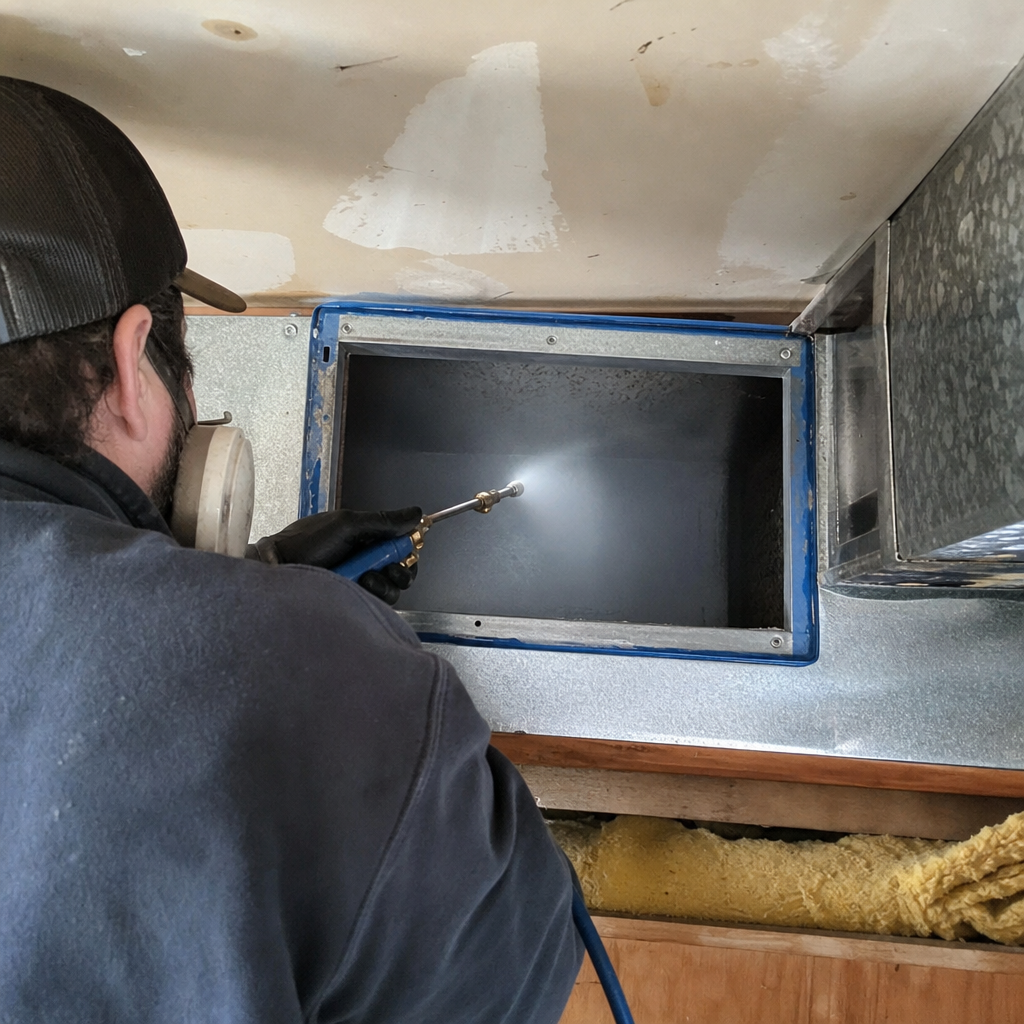
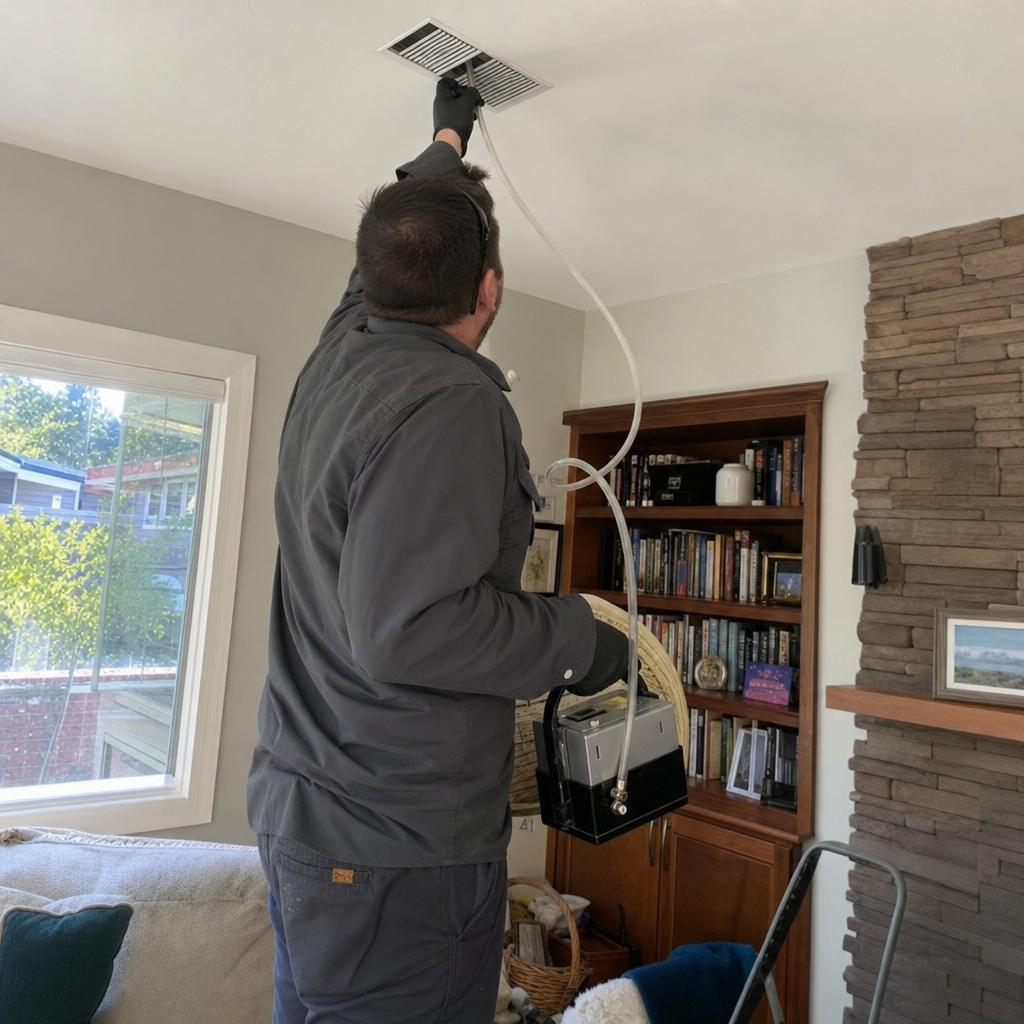
Our mold treatment protocol for Lynnwood homes includes mechanical removal with Rotobrush agitation, followed by application of EPA-registered antimicrobial through Abatement Technologies fogging equipment. We document moisture sources — disconnected boots, deteriorated vapor barriers, standing water — so you’re not paying for treatment twice.
Bacteria Sanitizing
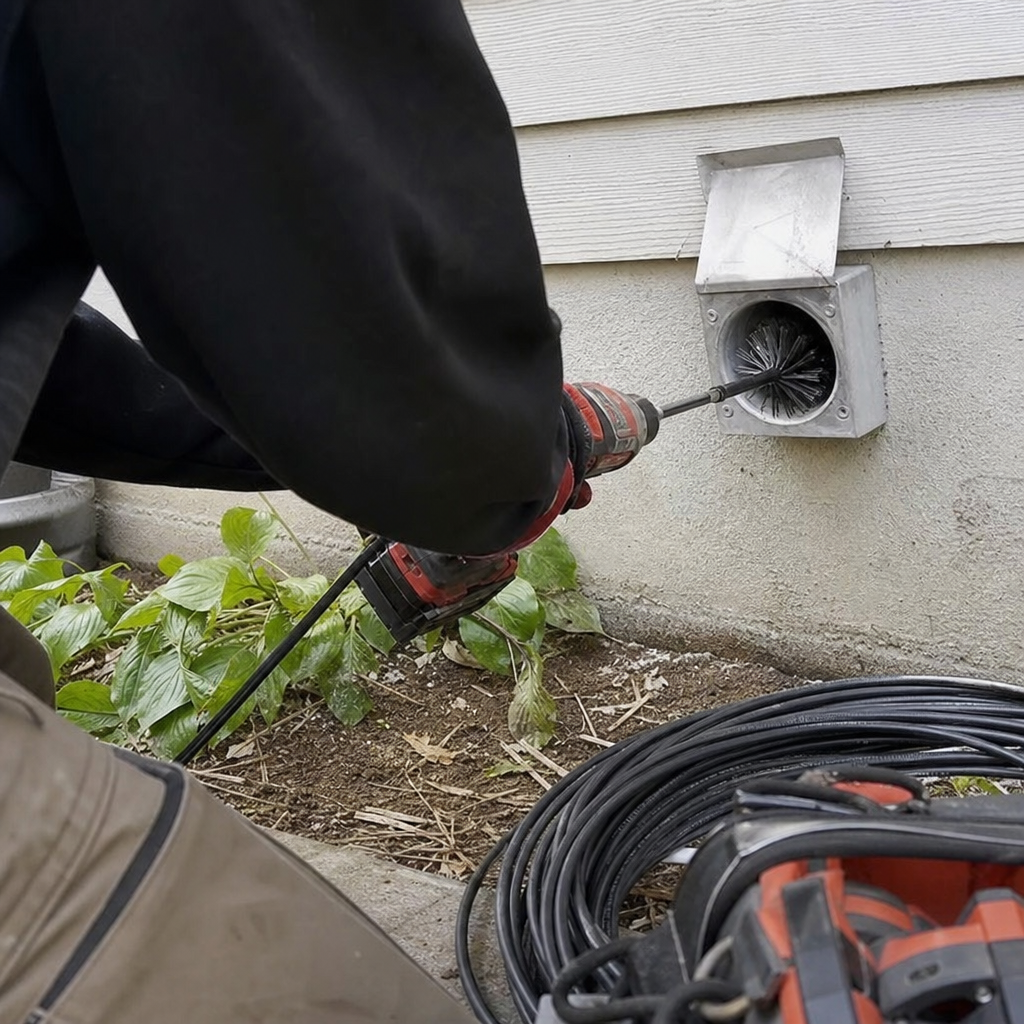
Bacteria sanitizing targets the biological load that standard duct cleaning leaves behind. In Lynnwood’s older homes with dirt-floor crawl spaces, rodent activity and organic debris create reservoirs of bacterial contamination that mechanical brushing alone won’t eliminate. We apply hospital-grade sanitizing agents through our Nikro systems, sized to treat the full volume of your ductwork without oversaturating fiberglass liner. For homes near the wetlands along Swamp Creek or the marshy areas north of 196th Street, this step is often the difference between temporary improvement and sustained air quality.
Odor Removal
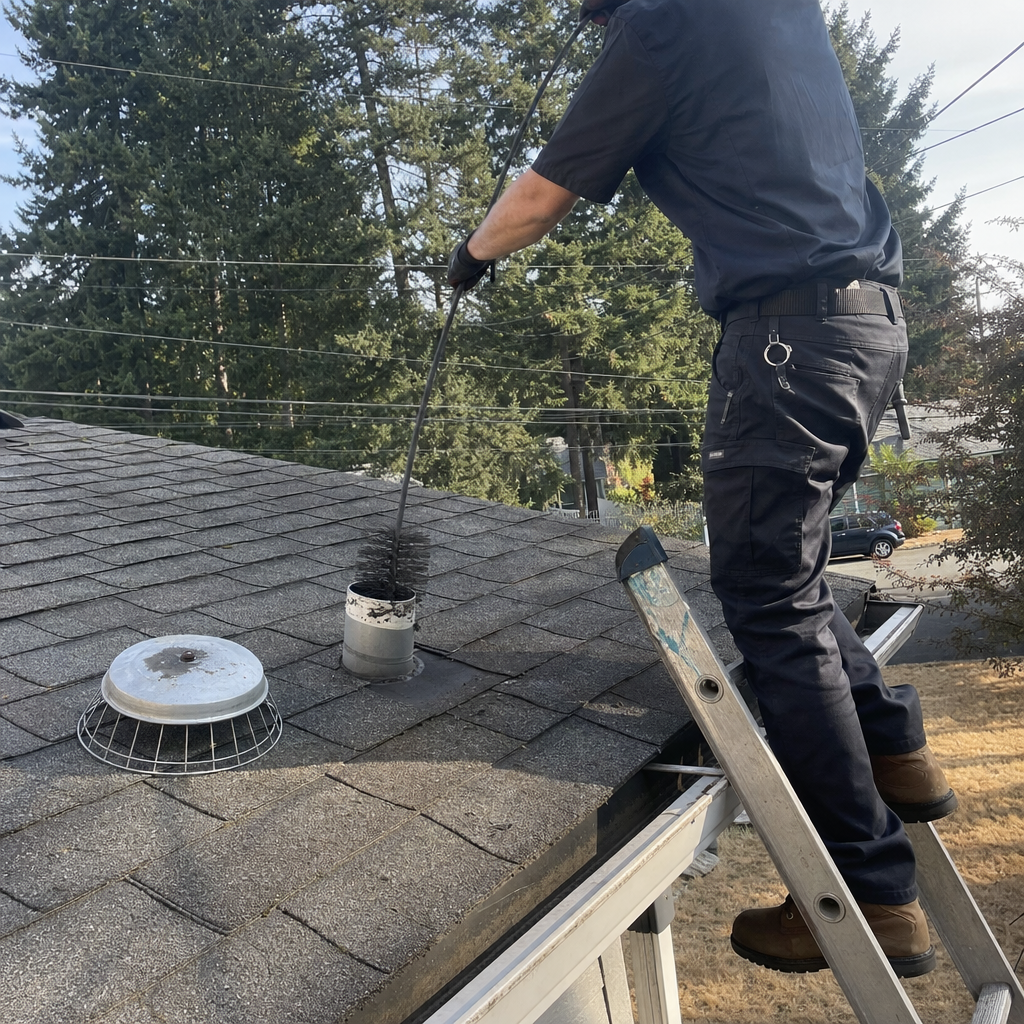
Musty, stale, or “crawl-space” odors that persist after filter changes and standard cleaning usually indicate active biological growth or dead air pockets where moisture accumulates. Last fall we treated a 1970s split-level on 196th Street in 98036 where the homeowner reported musty odors despite regular filter changes. Our Rotobrush inspection revealed mold colonies throughout the ductwork and two disconnected flex-duct collars in the crawl space that had been pulling damp, contaminated air inside for years. We sanitized the system with Abatement Technologies equipment and secured the separated collars, restoring clean airflow.
UV Light Installation
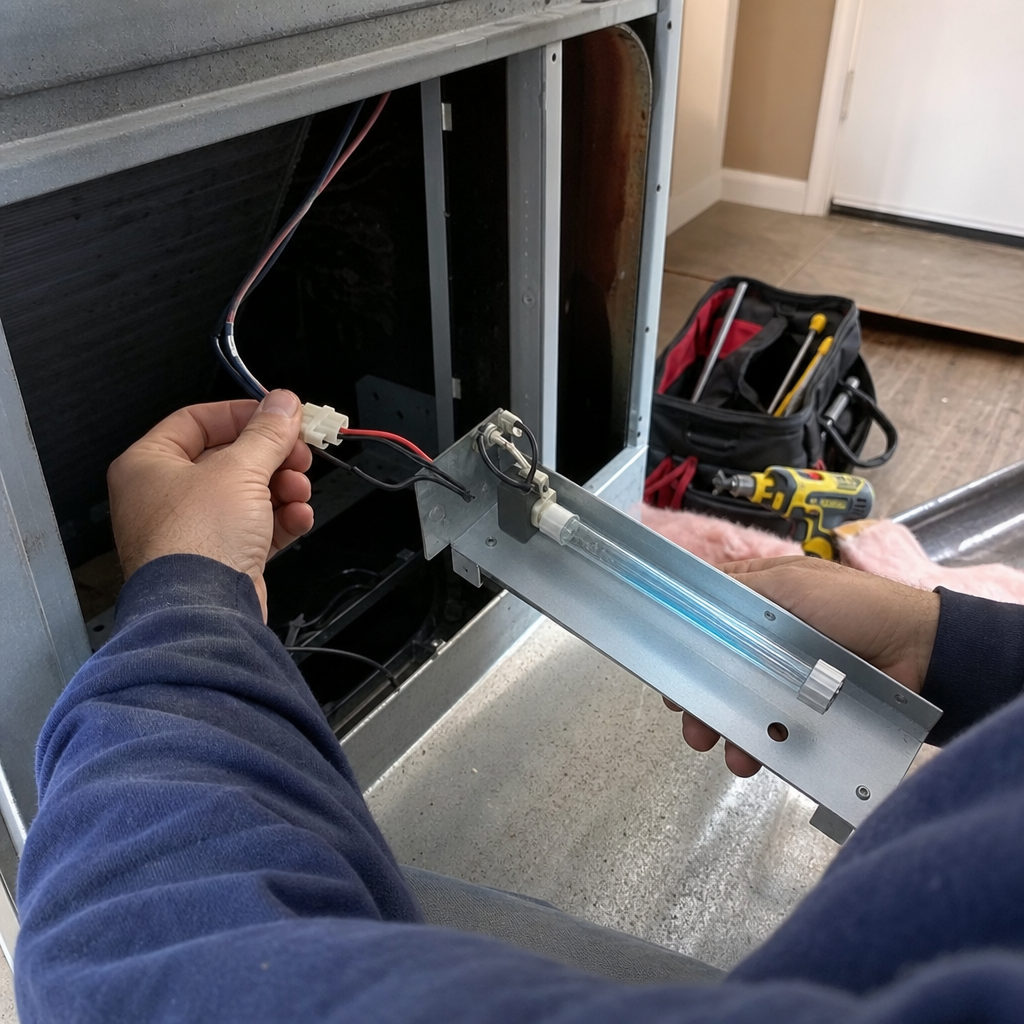
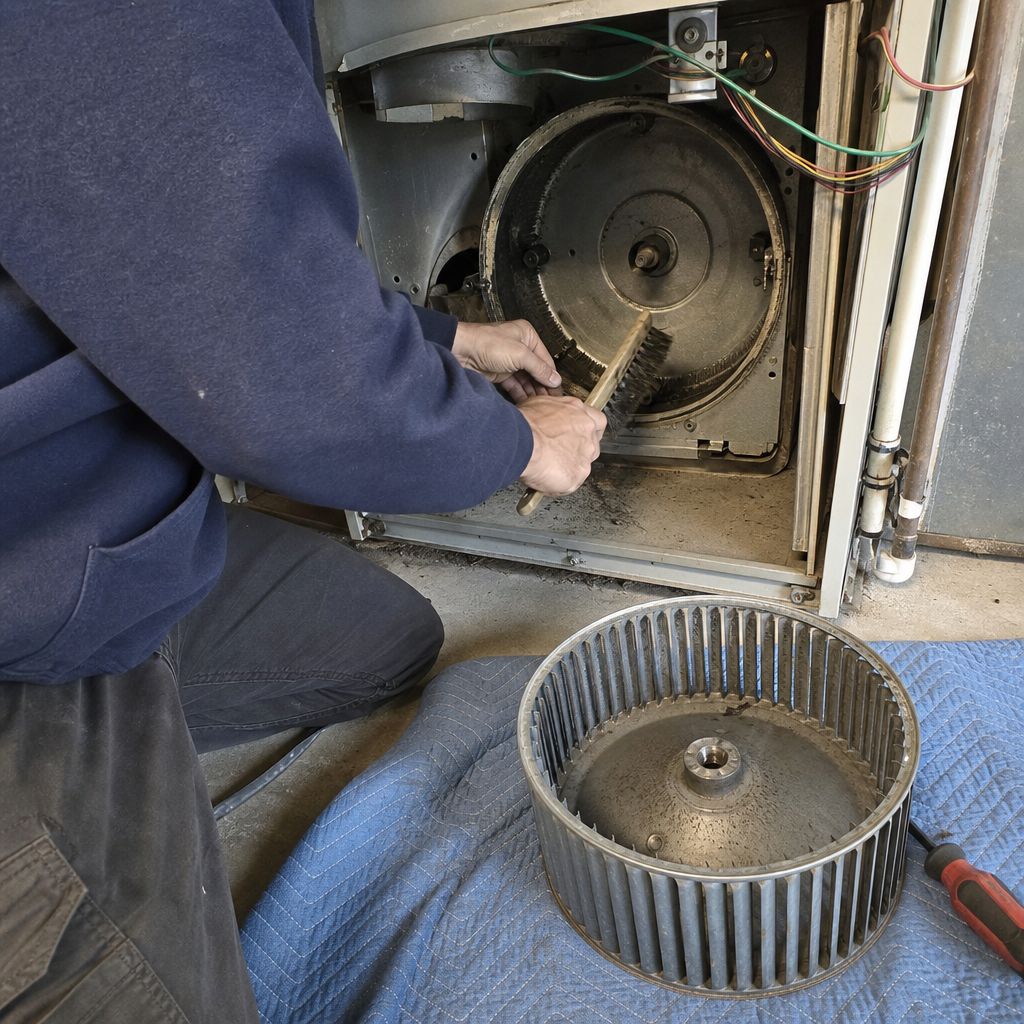
UV-C light systems installed at the coil or in the return plenum destroy mold spores and bacteria that pass through the treatment zone. In Lynnwood’s humid conditions, we size UV systems for continuous operation during the long wet season — October through May — when biological growth accelerates. We source UV units from Honeywell and Aprilaire, matched to your furnace capacity and duct geometry. Installation typically takes 2–3 hours and integrates with your existing electrical.
What happens when you call
- 1
A real person answersNo phone trees — you reach a local pro.
- 2
You get an upfront price rangeHonest numbers before anyone is dispatched.
- 3
A background-checked tech heads outLicensed & insured, dispatched right away.
- 4
You approve before work beginsNothing starts until you say go.
Trusted Brands We Service in Lynnwood
We work with air quality equipment from Honeywell, Aprilaire, and Abatement Technologies — the same brands specified by commercial restoration contractors and healthcare facilities. For Lynnwood customers, this means replacement parts and compatible components don’t require special ordering from out of state. If your existing Aprilaire media air cleaner needs a new cabinet seal, or your Honeywell UV lamp requires replacement, we stock or can source it within a day or two. Our Nikro and Rotobrush cleaning systems are professional-grade, not rental-shop equipment, and we maintain them to manufacturer spec so they perform at the suction and agitation rates these jobs actually require.
Common Air Quality & Sanitizing Problems We See in Lynnwood Homes
- Disconnected flex-duct collars pulling raw crawl-space air. In Lynnwood’s 98036 and 98037 ZIP codes, the flex-duct collars connecting trunk lines to floor-register boots have often separated or collapsed in damp crawl spaces, causing furnaces to pull raw crawl-space air—including mold spores and rodent debris—directly into living areas. A sanitizing treatment that doesn’t identify and flag these disconnections will see contamination rebound within a single heating season.
- Mold regrowth after treatment without moisture control. Applying sanitizing agents without addressing crawl-space moisture intrusion allows mold to regrow within weeks in Lynnwood’s damp marine climate. We inspect vapor barriers, foundation vents, and standing water conditions before recommending treatment scope.
- General HVAC equipment that can’t reach Lynnwood’s flex-duct branches. Many duct systems in 1960s–1980s Lynnwood homes have flex-duct branches accessed only through limited crawl-space openings. Consumer-grade or generalist equipment often can’t navigate these runs effectively, leaving organic buildup in place.
- Deteriorating duct-liner fiberglass shedding particulate. Original fiberglass liner in sheet-metal trunks breaks down after 40–50 years of moisture cycling. We inspect liner condition during every sanitizing evaluation and flag areas where degradation is contributing to airborne fiber counts.
Pricing for Air Quality & Sanitizing in Lynnwood, WA
| Service | Typical Range in Lynnwood |
|---|---|
| Whole-system bacteria sanitizing (single furnace) | $280–$420 |
| Mold treatment with antimicrobial fogging | $380–$650 |
| Odor removal protocol (mechanical + chemical) | $320–$480 |
| UV light installation (unit + labor) | $450–$780 |
| Air purifier install (whole-house media cleaner) | $520–$950 |
| Allergen reduction treatment | $260–$390 |
What moves you within these ranges: system size (square footage and duct branches), severity of biological contamination, accessibility of crawl space or attic runs, and whether we find disconnected boots or liner damage that needs repair before sanitizing is effective. We provide exact quotes after inspection — never ballpark figures that change on arrival. Estimates are free. Call (877) 335-1974 to schedule.
We Also Serve Cities Near Lynnwood
Our service area extends to Alderwood Manor, Brier, Picnic Point, and Picnic Point-North Lynnwood — communities that share Lynnwood’s housing era and crawl-space duct configurations. If you’re in these areas and noticing musty airflow or persistent odors, the same moisture and disconnection patterns likely apply.
Serving Lynnwood, WA — Our Local Coverage Area
We’re based in the Lynnwood area and know this community well. Use the map below to see our service coverage — if you’re nearby, we can almost certainly help.
FAQs — Air Quality & Sanitizing in Lynnwood
Mold returns because the moisture source was never eliminated. In Lynnwood’s damp marine climate, dirt-floor crawl spaces with failed vapor barriers continuously humidify the air surrounding ductwork. Cleaning removes visible growth but doesn’t stop new spores from germinating on damp duct surfaces. We address both: mechanical removal plus moisture-source identification. Call (877) 335-1974 for an inspection that includes crawl-space evaluation.
Signs include persistent musty odors that worsen when the furnace runs, uneven heating between rooms, and visible dust accumulation around floor registers. In 98036 and 98037 neighborhoods, we find disconnected flex-duct boots in roughly one of every three homes built 1965–1985. A smoke pencil test during our inspection confirms whether your system is pulling unfiltered crawl-space air. Call (877) 335-1974 and we’ll check it.
UV lights work, but they treat air passing through the unit — they don’t dehumidify the crawl space itself. For Lynnwood homes, we install UV at the coil or plenum where it kills spores and bacteria in the airstream, then separately address crawl-space moisture through vapor barrier repair, sealing, or dehumidification recommendations. The combination is what produces lasting results. Call (877) 335-1974 to discuss whether UV makes sense for your system layout.
Mechanical agitation with Rotobrush contact cleaning, followed by low-volume antimicrobial fogging sized to the duct volume. Old sheet-metal trunks in Lynnwood homes often have degraded fiberglass liner that sheds if oversaturated, so we avoid high-pressure or high-moisture methods. We inspect liner condition first and adjust technique accordingly. Call (877) 335-1974 for a method matched to your duct age and condition.
Every 18–24 months for maintenance, or immediately if you notice musty odors, increased allergy symptoms, or visible mold around registers. Homes with dirt-floor crawl spaces and no vapor barrier — common in pre-1980 Lynnwood construction — reload biological contaminants faster than slab or sealed-crawl homes. We recommend pairing sanitizing with annual duct inspection to catch disconnected boots or moisture intrusion early. Call (877) 335-1974 to set up a schedule.
Written by Richard Anderson, Owner and Lead Technician at Landmark Air Duct Cleaning Service Washington, serving Lynnwood and the greater Seattle area since 2013.