
Fast, Reliable Air Quality & Sanitizing Across North Bend
Air quality and sanitizing in North Bend typically runs $280–$650 for most residential duct systems, with mold treatment and post-wildfire smoke remediation landing at the higher end due to the Snoqualmie Valley’s unique environmental load. We’re usually on-site in North Bend within 24–48 hours of your call, sometimes same-day when wildfire smoke events create sudden demand spikes. Our Air Quality & Sanitizing team knows the 98045 area well — from the original townsite homes near North Bend Way to the newer subdivisions in Snoqualmie Highlands and the properties lining the Middle Fork Snoqualmie River corridor.
North Bend’s position at the mouth of the Snoqualmie Valley creates air quality problems you won’t find in Seattle or Bellevue. Cascade runoff, persistent valley fog, and 55+ inches of annual precipitation keep indoor humidity elevated year-round, while I-90 through Snoqualmie Pass delivers wildfire smoke directly to your HVAC system before it disperses elsewhere in western Washington. These aren’t abstract concerns here — they’re the specific conditions we design our sanitizing protocols around. Call (877) 335-1974 for a free estimate.
Why Landmark Air Duct Cleaning Service Washington Is North Bend’s Preferred Air Quality & Sanitizing Company
We’ve built our reputation in North Bend on 11 years of exclusive focus on indoor air quality — not as an HVAC upsell, but as our only trade. Richard Anderson serves as both Owner and Lead Technician, meaning the person quoting your job runs the equipment on your job. That owner-led accountability matters in North Bend, where the valley’s moisture and smoke exposure create contamination patterns that require hands-on diagnostic skill rather than a standardized checklist.
Our 732 verified reviews averaging 4.9 stars include consistent feedback from North Bend homeowners who’ve watched us extract visible mold from crawlspace duct runs and remove the stubborn campfire odor that lingers after wildfire season. They mention specifics: that we identified flex-duct sag points their previous cleaner missed, that we explained why their UV light had failed, that Richard himself handled the Rotobrush work rather than delegating to an untrained crew member.
Response time to North Bend matters because air quality emergencies here often follow predictable seasonal patterns. When eastern Washington wildfires push smoke through Snoqualmie Pass, we see a concentrated surge in calls from 98045 — and we maintain capacity to respond without the multi-day delays that leave families breathing particulate-laden air through compromised ductwork.
Our Air Quality & Sanitizing Services in North Bend
Mold Treatment
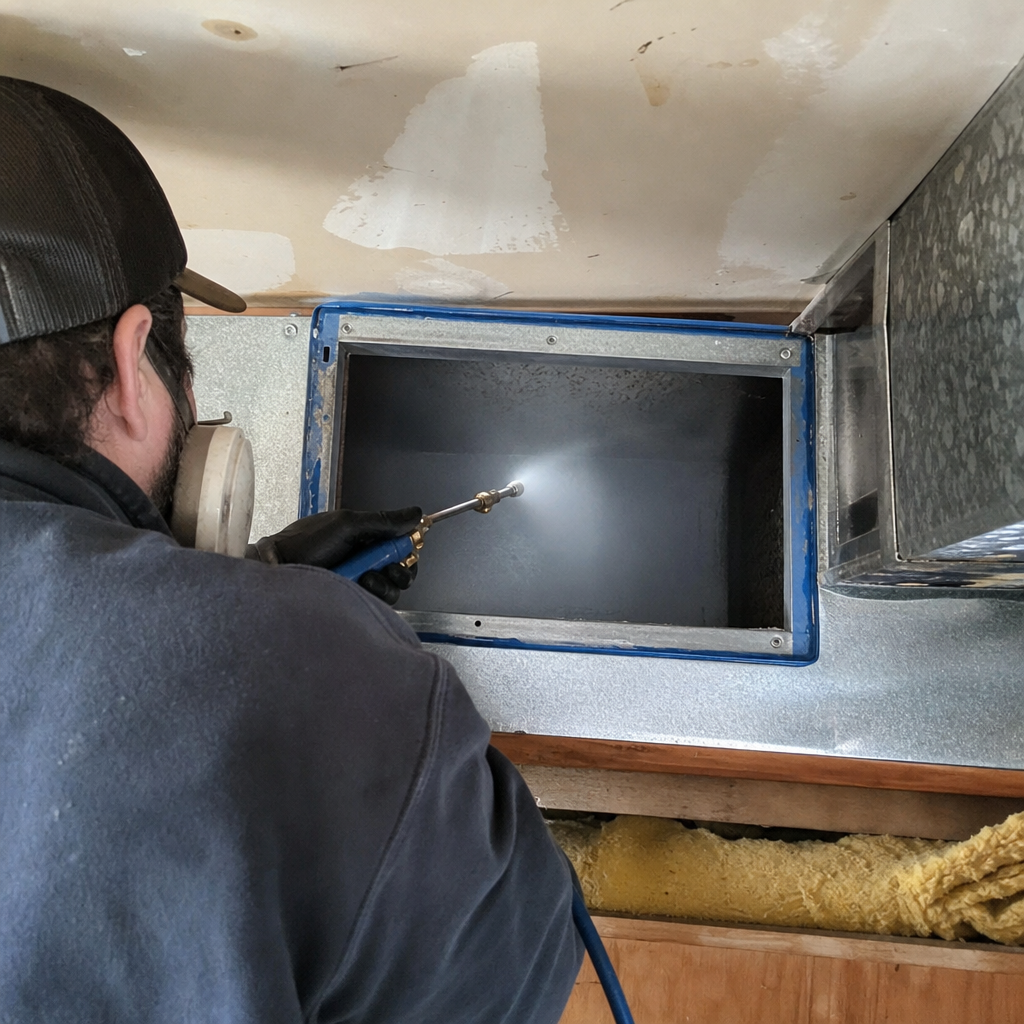
Mold treatment in North Bend homes typically costs $320–$580 for residential systems, with crawlspace duct runs adding $150–$280 due to access complexity. The Snoqualmie Valley’s sustained moisture load — that 55+ inches of annual precipitation, the ground saturation from Cascade runoff, the temperature inversions that trap humid air against the valley floor — creates near-ideal conditions for mold colonization inside ductwork. We find it most aggressively in older homes near the floodplain, where periodic inundation history has introduced spores into crawlspace environments, and in 1990s–2010s subdivisions where flex-duct sag creates standing-water pockets in low spots. Our mold treatment protocol combines mechanical agitation with Rotobrush systems, HEPA containment via Nikro equipment, and targeted application of EPA-registered antimicrobial products. We don’t fog and hope — we remove the growth, then address the moisture source that’s feeding it.
Bacteria Sanitizing
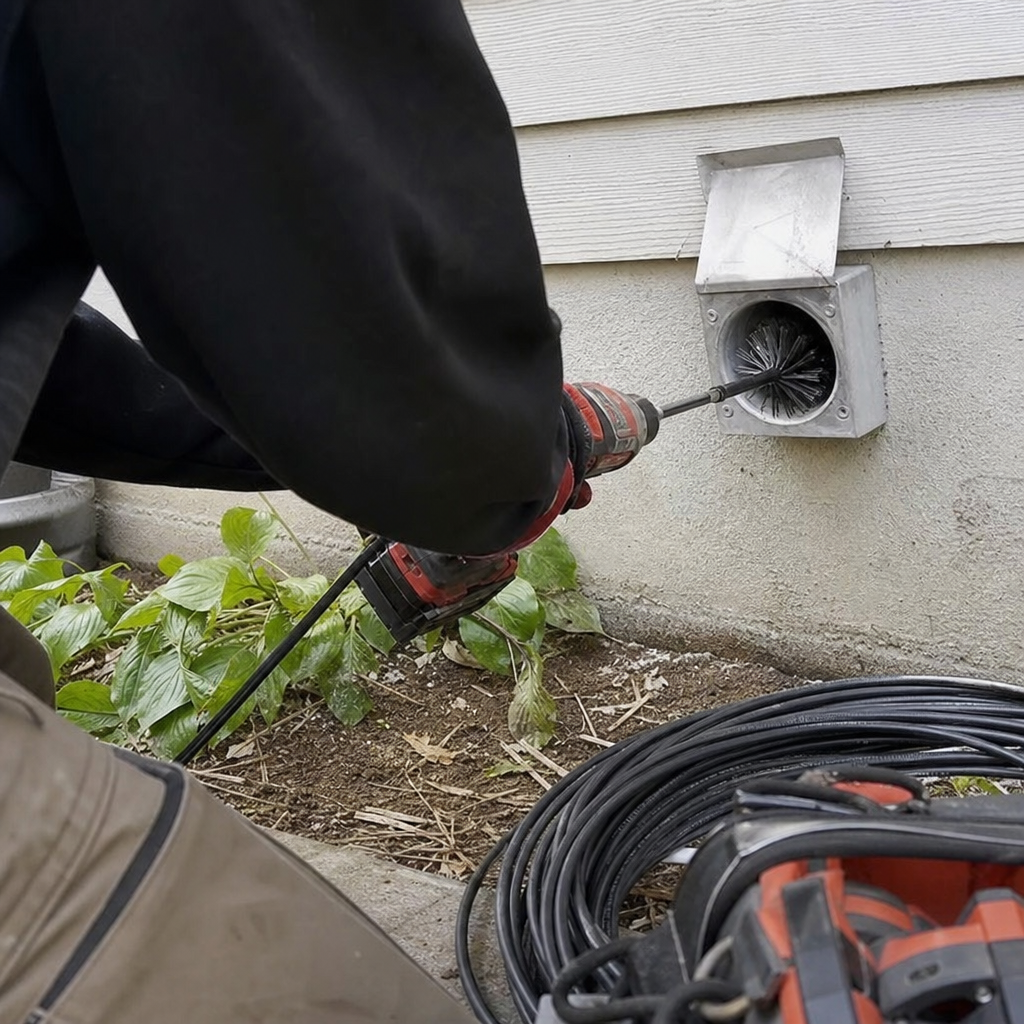
Bacterial contamination in North Bend ductwork often follows the same moisture pathways as mold, particularly in homes with crawlspace returns that draw from chronically damp subfloor environments. Our bacteria sanitizing service runs $280–$450 for most residential systems, using commercial-grade application equipment that delivers consistent coverage throughout the duct network — not the spotty results from consumer foggers. In North Bend’s older townsite homes with original metal ductwork, we pay particular attention to seam integrity; those decades-old joints can harbor bacterial biofilms that resist standard cleaning. For newer subdivisions, we inspect flex-duct connections at trunk-line takeoffs, where the valley’s vibration from I-90 traffic and seasonal freeze-thaw cycles can loosen seals and introduce unfiltered crawlspace air.
Odor Removal
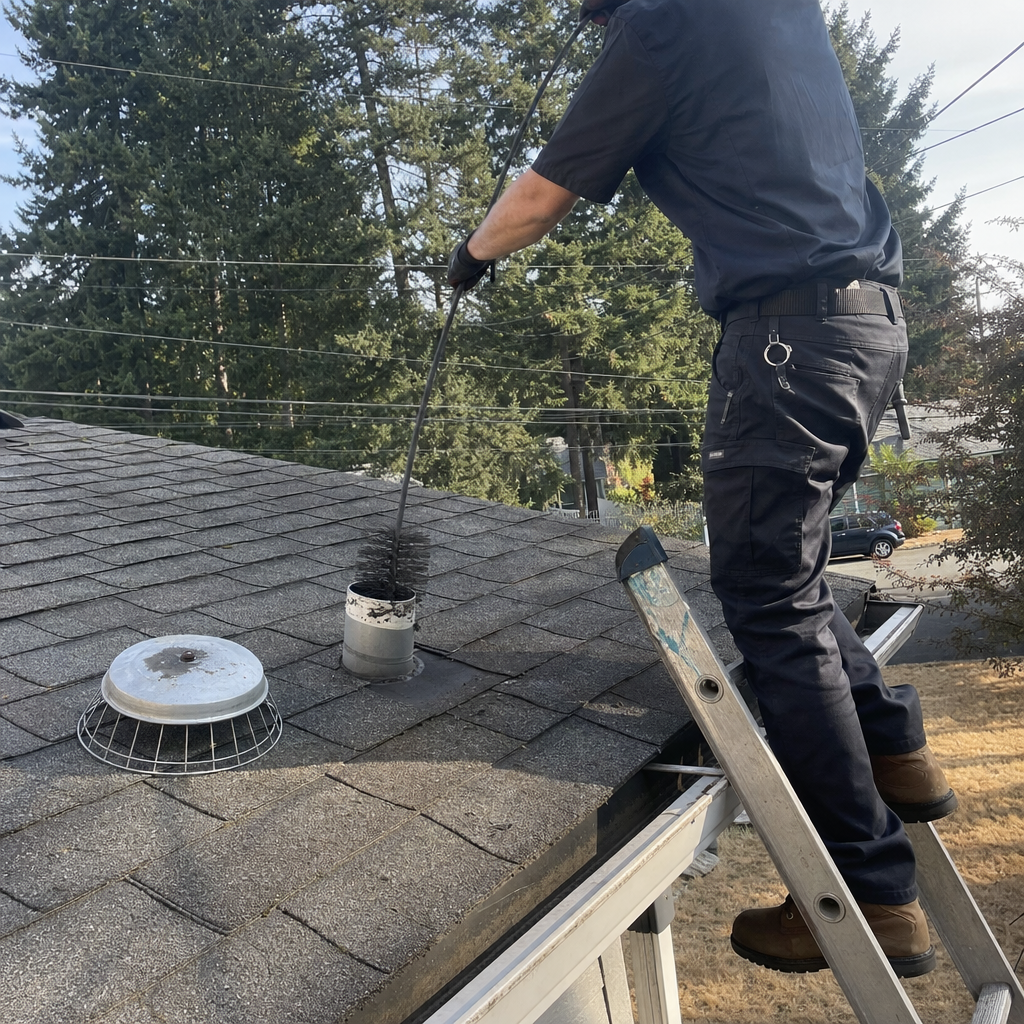
Odor removal is where North Bend’s unique geography most clearly separates our work from generic duct cleaning. After significant wildfire events — increasingly common each summer and fall — our crews routinely find a distinct grey-brown particulate coating on supply register faces and inside first-section trunk lines. This isn’t ordinary dust. It’s smoke-cycle residue that arrives via Snoqualmie Pass before dispersing across the broader Puget Sound region, making North Bend homes the first major residential area to load this contamination. Standard cleaning won’t touch it. Our odor removal protocol for smoke-damaged systems combines Rotobrush mechanical extraction with Abatement Technologies HEPA filtration and targeted deodorization, typically $380–$620 depending on contamination depth and duct configuration. After the 2023 wildfire season, we cleaned out the ductwork of a 2000s split-level in the Snoqualmie Highlands neighborhood, where Aprilaire media filters had been overwhelmed and smoke residue had settled deep in flex-duct sag points. We used a Rotobrush system combined with Abatement Technologies HEPA filtration to extract the fine grey-brown particulate, restoring airflow and eliminating the lingering campfire smell.
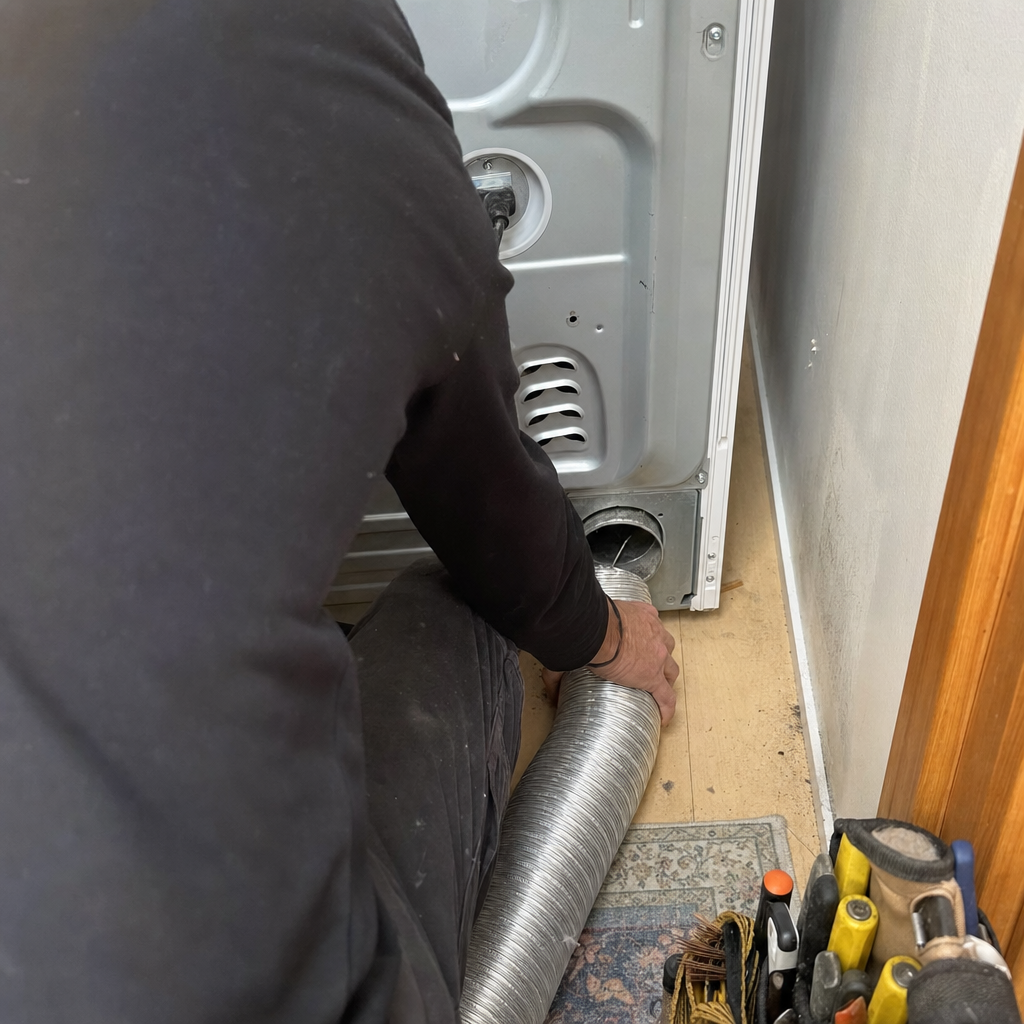
UV Light Installation
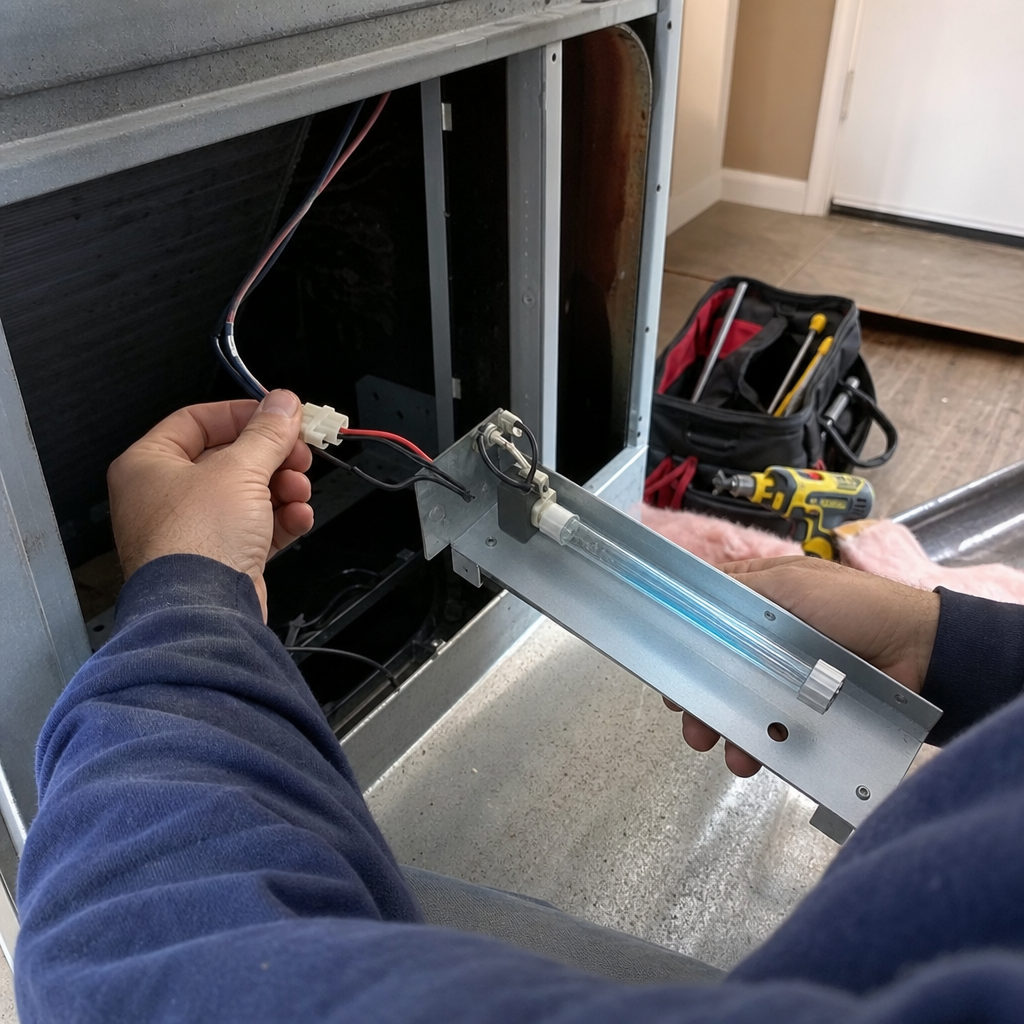
UV light installation in North Bend requires more careful sizing than in drier climates, and we see the consequences of undersized systems regularly. A basic UV installation runs $450–$780; dual-lamp systems for larger homes or comprehensive coverage range $780–$1,200. Here’s the local failure mode we encounter: UV lights installed without adequate pre-filtering quickly become coated with smoke particulate during wildfire season, rendering them ineffective against microbial growth. The lamp keeps glowing, but the output is blocked. In North Bend’s moisture-heavy environment, we specify Honeywell and Aprilaire UV systems with matched media filtration stages, and we position lamps at points in the duct network where they’ll receive adequate air velocity to keep surfaces clear. For homes with chronic mold pressure — common in floodplain-adjacent properties — we may recommend dual-wavelength systems that address both surface mold and airborne spores.
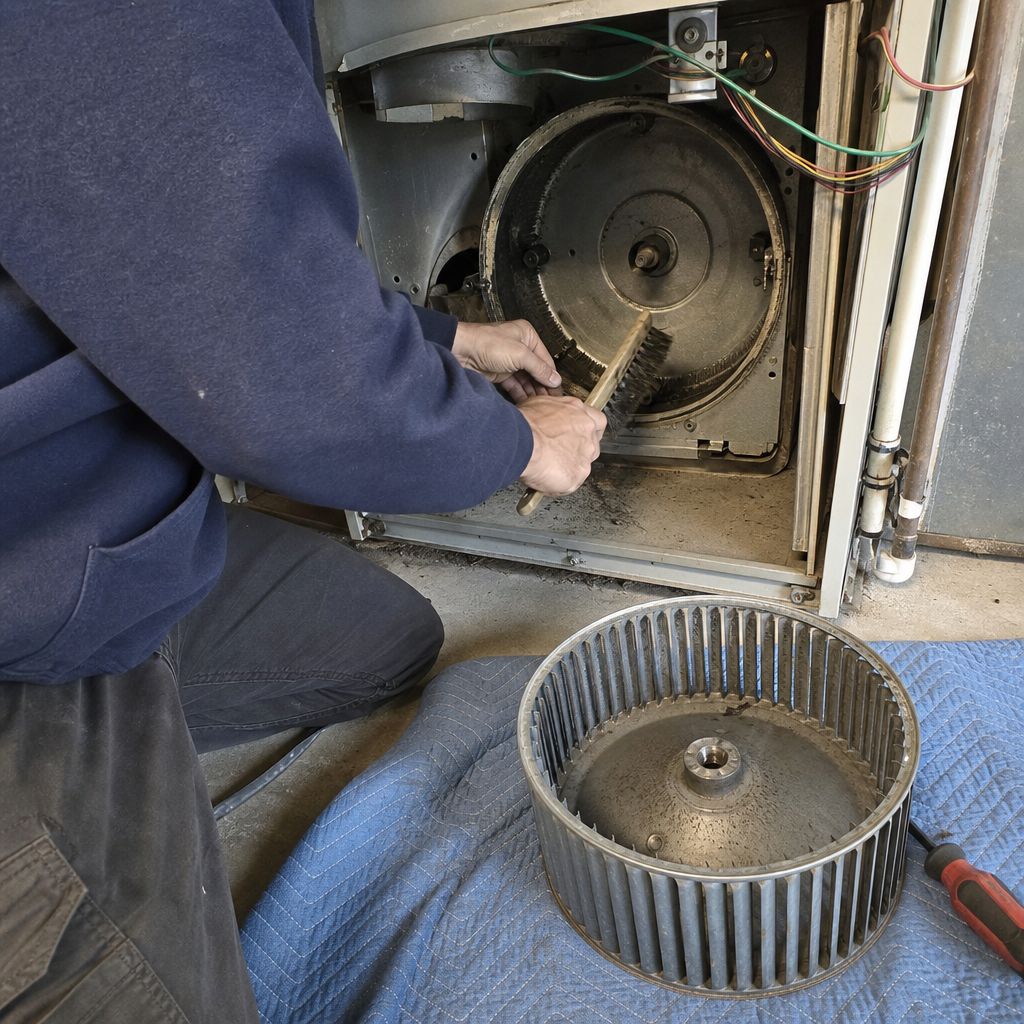
Air Purifier Install
Whole-home air purifier installation in North Bend typically ranges $680–$1,400 depending on system capacity and existing HVAC compatibility. Given the valley’s dual challenge of moisture-driven microbial growth and smoke particulate infiltration, we favor multi-stage systems: Honeywell electronic air cleaners or Aprilaire media purifiers with MERV 16 filtration for particulate loading, paired with activated carbon stages for smoke odor and VOC absorption. In North Bend’s 1990s–2010s subdivisions with flex-duct systems, we verify static pressure compatibility before specifying — those sag-prone ducts already restrict airflow, and adding an overly restrictive filter bank can compound the problem.
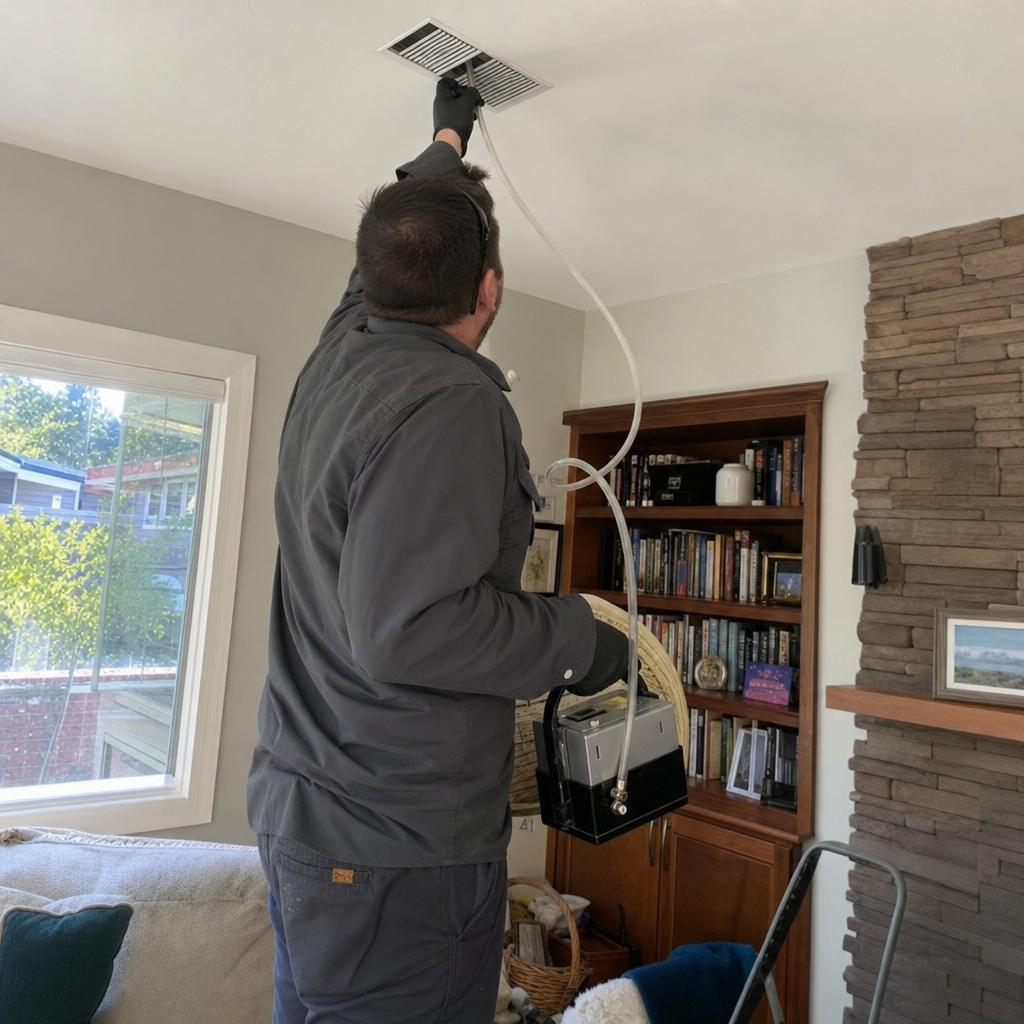
Allergen Reduction
Allergen reduction in North Bend combines duct sanitizing with source control, typically $300–$520 for residential systems. The Snoqualmie Valley’s dense conifer forests produce heavy pollen loads in spring, while the sustained indoor heating season — October through April — circulates accumulated allergens through living spaces continuously. We find the highest allergen concentrations in homes with crawlspace duct returns that draw from beneath the subfloor, particularly in areas where the Snoqualmie River floodplain’s organic debris contributes to dust mite and mold spore loads. Our allergen reduction protocol includes full mechanical cleaning, followed by application of anti-allergen treatments and recommendations for filtration upgrades appropriate to your specific HVAC configuration.
What happens when you call
- 1
A real person answersNo phone trees — you reach a local pro.
- 2
You get an upfront price rangeHonest numbers before anyone is dispatched.
- 3
A background-checked tech heads outLicensed & insured, dispatched right away.
- 4
You approve before work beginsNothing starts until you say go.
Trusted Brands We Service in North Bend
We install and service air quality equipment from Honeywell, Aprilaire, Abatement Technologies, and Guardsman — the same product lines used by commercial restoration contractors and healthcare facility managers. For North Bend customers, this means we stock replacement lamps, filters, and components locally rather than ordering from a central warehouse across the mountains. When your Honeywell UV lamp burns out in January or your Aprilaire media filter loads up during smoke season, we can typically replace it on the same service call. That parts availability matters in North Bend, where Snoqualmie Pass closures can delay freight shipments for days. Our Rotobrush and Nikro cleaning equipment is professional-grade — not rental-store units — and we maintain it to manufacturer specs because Richard Anderson, as both owner and lead technician, has a direct stake in every job’s outcome.
Common Air Quality & Sanitizing Problems We See in North Bend Homes
- Flex-duct sag trapping smoke particulates and mold spores. In North Bend’s 1990s–2010s subdivisions — Snoqualmie Highlands, Tannerwood, and similar developments — flex-duct installed with inadequate support creates low spots where debris accumulates. The valley’s moisture makes these sag points prime mold habitat, while wildfire smoke particulate settles in and resists standard cleaning. We routinely perform full-pull cleaning rather than simple sweep-throughs to restore these systems.
- Crawlspace duct runs compromised by ground moisture. Homes near the Middle Fork Snoqualmie River corridor or on the historic floodplain often have supply and return ducts running through crawlspaces that experience seasonal moisture spikes. The Snoqualmie River’s periodic inundation history has introduced organic debris and mold spores beneath these properties, and the valley’s temperature inversions prevent normal drying. We find active mold colonization inside metal trunk lines that appeared sound from outside inspection.
- Undersized UV systems rendered ineffective by smoke residue coating. North Bend homeowners who installed UV lights based on generic sizing recommendations often find them failing prematurely. Without adequate pre-filtering and proper lamp positioning, the grey-brown wildfire particulate that arrives through Snoqualmie Pass coats lamp surfaces and blocks UV output. The system runs, but it’s not sanitizing anything. We assess existing installations and specify correctly sized, properly filtered replacements.
- Post-wildfire-season supply register staining. That visible grey-brown dust on your vent faces after summer? It’s not ordinary household dust. It’s smoke-cycle residue that’s concentrated in North Bend before dispersing to western Washington cities. We see it first on registers closest to the air handler, then progressively through the supply system. Early intervention prevents deeper infiltration into ductwork and occupied spaces.
Pricing for Air Quality & Sanitizing in North Bend, WA
| Service | Typical Range in North Bend |
|---|---|
| Bacteria Sanitizing (residential) | $280–$450 |
| Mold Treatment (standard system) | $320–$580 |
| Mold Treatment (with crawlspace ducts) | $470–$860 |
| Odor Removal (smoke/contamination) | $380–$620 |
| UV Light Installation (single lamp) | $450–$780 |
| UV Light Installation (dual, whole-home) | $780–$1,200 |
| Air Purifier Install (whole-home) | $680–$1,400 |
| Allergen Reduction Protocol | $300–$520 |
What moves your project within these ranges? System size and duct configuration are the biggest factors — a compact townsite home with straight metal trunk lines costs less than a sprawling Snoqualmie Highlands split-level with flex-duct branches and crawlspace returns. Contamination depth matters too: surface mold responds faster than established colonization, and fresh smoke residue extracts more easily than particulate that’s been baked through multiple heating cycles. We provide exact quotes after inspection, not ballpark guesses. Estimates are free, and we don’t charge for the diagnostic visit that determines your specific needs. Call (877) 335-1974 to schedule.
We Also Serve Cities Near North Bend
Our service radius covers the full Snoqualmie Valley and I-90 corridor, including Snoqualmie to the north along SR-202, Hobart to the west toward Maple Valley, Issaquah and the Klahanie master-planned community to the southwest. Each of these areas shares some of North Bend’s valley geography, though none experiences the identical smoke-corridor and moisture-loading combination that makes 98045 unique. We adjust our protocols accordingly — less aggressive smoke remediation for Issaquah homes, different moisture profiles for Snoqualmie’s ridge-top properties versus its valley floor.
Serving North Bend, WA — Our Local Coverage Area
We’re based in the North Bend area and know this community well. Use the map below to see our service coverage — if you’re nearby, we can almost certainly help.
FAQs — Air Quality & Sanitizing in North Bend
That grey-brown dust is wildfire smoke particulate that arrives through Snoqualmie Pass before dispersing to cities further west — a phenomenon our crews see concentrated in North Bend homes but rarely in Bellevue or Seattle properties. The particulate loads into your HVAC system during smoke events, then settles on supply registers and inside first-section trunk lines as airflow patterns deposit it. Call (877) 335-1974 for an inspection — estimates are free, and early cleaning prevents deeper infiltration.
No — fogging without mechanical removal leaves dead mold spores in place, and many DIY products aren’t rated for HVAC application. In North Bend’s moisture-heavy environment, the underlying humidity problem persists, so regrowth is rapid. We use Rotobrush mechanical extraction combined with targeted antimicrobial application, addressing both the visible growth and the conditions that enable it. For crawlspace duct runs common in North Bend’s older homes, access and containment require professional equipment. Call (877) 335-1974 for a proper assessment.
Most North Bend homes benefit from professional duct sanitizing every 2–3 years, with annual inspection recommended if you have crawlspace duct runs, post-wildfire smoke exposure, or family members with respiratory sensitivities. The valley’s 55+ inches of annual precipitation and persistent humidity accelerate microbial growth compared to drier Puget Sound locations. After significant smoke events — increasingly common each summer — we recommend post-season assessment even if you’re not on a regular schedule. Call (877) 335-1974 to set up inspection timing that matches your home’s specific risk profile.
A properly sized and positioned UV light can significantly reduce musty odors by controlling microbial growth on coil and duct surfaces, but it’s not a standalone solution for North Bend’s moisture-driven problems. The Snoqualmie Valley’s humidity loads often require combined approach: mechanical cleaning to remove existing growth, moisture source control, filtration upgrades, and UV as one component. Undersized or poorly positioned UV systems — common in retrofit installations — won’t deliver results. We assess your specific duct configuration and humidity profile before recommending UV specification. Call (877) 335-1974 for a diagnostic that identifies the root cause.
Yes — 1990s–2010s North Bend subdivisions commonly used flex-duct with support spacing that creates sag points where debris and moisture accumulate. The valley’s sustained humidity makes these low spots particularly problematic, and the smoke particulate that arrives through Snoqualmie Pass settles in these traps more readily than in rigid metal systems. We often find that standard cleaning methods don’t fully clear these sag points, requiring full-pull cleaning or, in severe cases, duct replacement with properly supported rigid or semi-rigid alternatives. Call (877) 335-1974 for an inspection that identifies whether your specific system has developed these failure modes.
Written by Richard Anderson, Owner and Lead Technician at Landmark Air Duct Cleaning Service Washington, serving North Bend and the Snoqualmie Valley since 2013.