
Emergency Air Duct Cleaning Near Me: What Seattle Homeowners Should Do First
If you’re searching “emergency air duct cleaning near me” in Seattle, here’s what you need to know first: most duct-related emergencies aren’t actually solved by duct cleaning alone. The smell from your vents, debris at your registers, or sudden airflow loss usually signals a deeper problem — water intrusion, rodent infestation, or HVAC system failure — that needs the right trade called first. Acting on urgency before diagnosis wastes money and can make conditions worse. If you’d rather not sort this out alone, call us at (877) 335-1974 and we’ll walk you through what you’re actually dealing with.
Calling a duct cleaning company first when you smell something coming from your vents is like calling a carpet cleaner when you notice water stains on your ceiling — the visible symptom isn’t the problem, and treating it before the source is found guarantees you’ll be calling again. In 11 years of running Landmark Air Duct Cleaning Service Washington home, we’ve taken hundreds of calls from panicked Seattle homeowners who’ve already paid for duct cleaning that didn’t solve anything because the root cause was still active. Here’s how to avoid that.
The Four “Emergency” Duct Situations — and Who to Call First
Not every alarming duct symptom needs a duct cleaner first. Here’s the decision tree we use when Seattle homeowners call us in a hurry:
- Sudden smell from vents: Musty usually means moisture somewhere in the system — call an HVAC technician or plumber to find the source first. Burning or electrical odors mean possible motor or wiring issues — shut off the system and call an HVAC tech immediately. Dead animal or rodent waste smell — pest control or rodent exclusion specialist first, then duct cleaning after the entry points are sealed.
- Visible debris blowing from registers: If it’s dust and lint, that’s our territory — but if it’s insulation fragments, you may have a compromised duct in your attic or crawl space that needs repair before cleaning. If it’s mold-colored growth, you need a mold assessment before anyone disturbs it.
- System running but no airflow: This is nearly always an HVAC mechanical issue — blower motor, capacitor, or duct disconnect — not a cleanliness problem. Call your HVAC company first. We’ve had Seattle homeowners in neighborhoods like Ballard and West Seattle book emergency duct cleanings for this, only to discover their blower had failed completely.
- Post-flood or water damage concern: Water remediation company first, always. Duct cleaning before the moisture source is eliminated and the area is dried to industry standards just recirculates wet, potentially contaminated air. In Seattle’s damp climate, especially in low-lying areas near Lake Washington or the Duwamish, this mistake leads to recurring mold cycles.
We’re not trying to talk ourselves out of work — we’re trying to save you from paying twice. Our Air Duct Cleaning in Tacoma and Seattle operations run on owner-led accountability, and that means telling you when we’re not the right first call.
When Duct Cleaning Actually Is the Right First Call
There are legitimate same-day and next-day scenarios where professional duct cleaning should happen immediately:
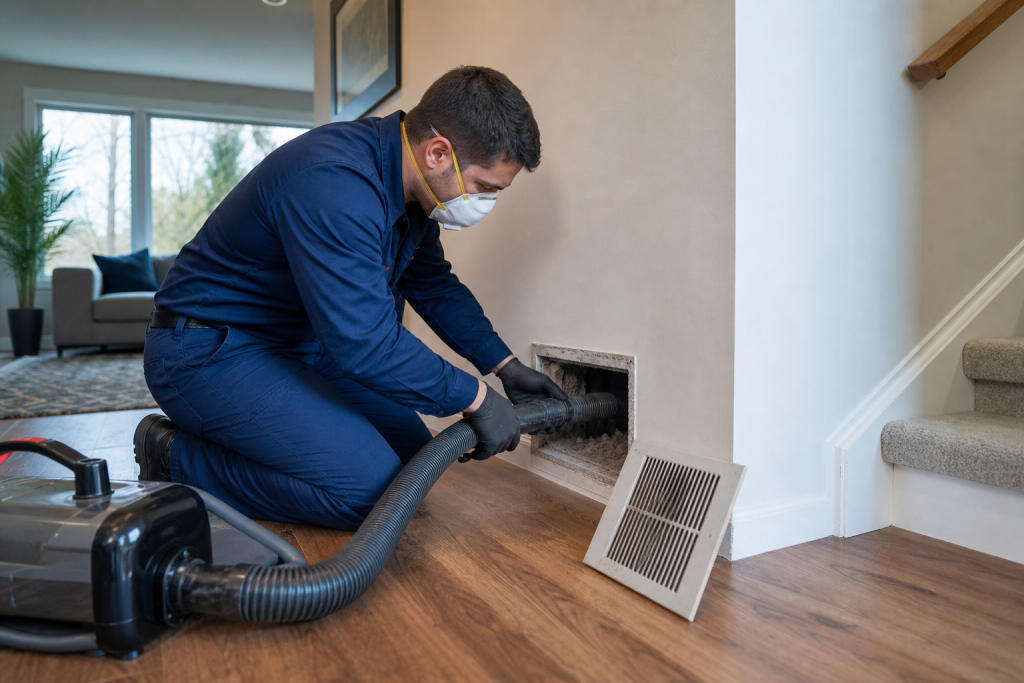
- Confirmed rodent exclusion is complete: Pest control has sealed entry points, removed nests, and cleared droppings from accessible areas — now the duct system itself needs professional cleaning with proper containment and HEPA filtration. This is where our Nikro equipment and containment protocols matter.
- Post-construction dust surge: Major remodeling without proper HVAC protection has loaded your ducts with fine particulate — drywall dust, wood fibers, insulation particles. Your system is now a distribution network for construction debris. Same-day service makes sense here.
- Severe allergy or respiratory flare-up with known dirty ducts: When a physician has identified environmental triggers and your ducts haven’t been cleaned in 8+ years, expedited cleaning can be part of a medical recommendation — though we always suggest HVAC inspection first to rule out system issues.
- Post-fire smoke odor in ductwork: After structure fires or even heavy kitchen fires with smoke drawn into returns, professional duct cleaning with odor-neutralizing treatment is appropriate — but only after fire restoration has addressed the source and the HVAC system has been electrically cleared.
Even in these scenarios, a responsible contractor asks diagnostic questions before booking. If you call someone who can “be there in an hour” without asking what happened first, that’s a red flag.
What a Responsible Duct Cleaner Tells You When You Call in a Panic
Here’s what we actually say when Seattle homeowners call (877) 335-1974 with an “emergency”:
“Walk me through what you’re experiencing. When did it start? What does it smell like — musty, chemical, burning, or organic? Any recent water, construction, or pest activity? Is your HVAC system running normally otherwise?”
These questions aren’t stalling — they’re how we determine if you’re about to spend $400–$800 on duct cleaning that won’t fix your actual problem. In our experience across 732 customer interactions, the homeowners who get lasting results are the ones who let us help them sequence the work correctly.
Contractors who skip this screening and rush to book are often generalist operations with crews to keep busy, not specialists with owner accountability on every job. Richard Anderson personally oversees every Landmark job as both owner and lead technician — we don’t have crews to fill, we have reputations to protect.
Post-Disaster Duct Assessment: Seattle’s Unique Risks
Seattle’s climate and geography create specific post-disaster scenarios that require methodical handling before any cleaning begins:
After flooding (seasonal creek overflow, basement seepage, pipe bursts): Our wet winters and spring runoff, especially in neighborhoods near Thornton Creek, Longfellow Creek, or the low areas of Georgetown, mean water finds its way into crawl spaces and basements where ductwork runs. Document everything with dated photos before any cleanup starts — your insurance adjuster will need this. Get moisture readings in the duct system itself; if fiberglass ductboard is saturated, cleaning won’t salvage it, and replacement sections may be needed.
After fire or heavy smoke exposure: Seattle’s older housing stock — Capitol Hill Craftsman homes, pre-war apartments in the U District — often has original duct systems that act like smoke reservoirs. Don’t run the HVAC until it’s been inspected; forced air will redistribute soot throughout the structure.
After confirmed rodent infestation: The Pacific Northwest has active roof rat and deer mouse populations. Droppings in ducts carry hantavirus risk — this is not a DIY vacuum job. Professional containment, negative air pressure, and HEPA filtration are non-negotiable. We use Rotobrush systems with proper containment for this exact scenario.
Related services: If you’re dealing with water or fire damage in the Tacoma area, our HVAC Cleaning in Tacoma and Dryer Vent Cleaning in Tacoma teams follow the same owner-led protocols.
Documentation Steps That Protect You
Before any emergency service — duct cleaning or otherwise — take 10 minutes to protect yourself:
- Photograph everything: The register where you noticed debris, the water line in your basement, the area where you found rodent activity. Date-stamp if your camera allows it.
- Write down the timeline: When did symptoms start? What changed in your home that day or that week? New construction nearby? Heavy rain? HVAC service call?
- Note exact odor descriptions: “Musty like wet cardboard” versus “sharp and chemical” versus “sweet and decomposing” — these point to completely different causes.
- Check your HVAC filter: Note the date you last changed it and photograph its condition. This simple step has saved Seattle homeowners from unnecessary service calls when the “emergency” was simply a completely clogged filter.
- Get any contractor’s scope in writing: What exactly are they cleaning? What equipment? What happens if the problem persists? Vague proposals are a warning sign.
We pulled one out of a garage over in Ravenna last month where the homeowner had already paid for two “emergency” cleanings in six months for a musty smell that kept returning. Turns out a disconnected downspout was dumping water into their crawl space every heavy rain, saturating the duct boots. No amount of Rotobrush cleaning fixes a gutter problem. We found it because we looked — because Richard was on-site, not sending a crew with a checklist.
Key Takeaways
- Most “emergency” duct symptoms have root causes that duct cleaning alone won’t fix
- Smells, airflow loss, and post-disaster situations need diagnosis before action
- Same-day duct cleaning is appropriate only after the source problem is resolved
- Seattle’s wet climate makes moisture-related duct issues especially common
- Documentation protects your insurance claim and helps contractors solve the real problem
- Contractors who book without asking questions are prioritizing volume over outcomes
The Bottom Line
Urgency is expensive when it’s pointed in the wrong direction. The best “emergency” response for most Seattle homeowners isn’t the fastest duct cleaning appointment — it’s the right sequence of calls that actually solves the problem. We’ve built Landmark Air Duct Cleaning Service Washington on 11 years of telling people the truth about what they need, even when it means we’re not the first contractor on-site. That owner-led accountability is why 732 customers have left us a 4.9-star average — and why we’ll still be here when you’re actually ready for the cleaning phase.
If you’re in Seattle and need help figuring out whether your situation needs duct cleaning now, later, or not at all, call (877) 335-1974 for a free estimate. Richard Anderson will walk you through it personally.
Frequently Asked Questions
Start with the symptom: musty smells usually mean moisture and need a plumber or HVAC tech first; no airflow means possible mechanical failure and needs an HVAC technician; visible droppings or nesting material needs pest control first; burning smells mean shut off your system and call an HVAC technician immediately. If you’re unsure, call us at (877) 335-1974 and we’ll help you sort it out — estimates are free.
Surface mold on metal ductwork can often be remediated with professional cleaning and EPA-registered treatments, but fiberglass ductboard or flex duct with internal mold growth typically needs replacement — cleaning just spreads spores. In Seattle’s humid climate, we see this distinction matter most in older homes with original fiberglass systems. We use Honeywell and Abatement Technologies products for post-cleaning sanitizing when appropriate. Call (877) 335-1974 and we’ll assess what you’re actually dealing with.
Only after water remediation is complete, moisture readings confirm the space is dry to industry standards, and any compromised duct materials are replaced. Cleaning wet ducts recirculates moisture and guarantees mold recurrence — we’ve seen this mistake repeatedly in Seattle’s damp neighborhoods. The drying phase typically takes 3–7 days with professional dehumidification. For a post-flood assessment call (877) 335-1974.
They’re usually generalist operations with crews to keep busy, not specialists. Owner-led companies have direct accountability for outcomes — we can’t afford to clean ducts that don’t need it or clean them before the real problem is fixed. Our 732 reviews at 4.9 stars reflect customers who got lasting solutions, not rushed appointments. If you want a straight answer about what you actually need, call (877) 335-1974.
Written by Richard Anderson, Owner & Lead Technician at Landmark Air Duct Cleaning Service Washington, serving Seattle since 2015.
Need Air Duct Cleaning Help?
Call Landmark Air Duct Cleaning Service Washington — licensed & insured, here with fast after-hours help in Washington.
(877) 335-1974