
Fast, Reliable Dryer Vent Cleaning Across Mill Creek
Dryer vent cleaning in Mill Creek typically costs $149–$289 for standard residential service, with most appointments completed in under 90 minutes. If your dryer’s taking longer than one cycle to dry towels, or you’re noticing excess humidity in your laundry room, a clogged vent is the likely culprit—and in Mill Creek’s forested neighborhoods, the problem’s often worse than homeowners expect.
We’re based in Seattle and regularly serve Mill Creek, usually arriving within 45 minutes to an hour for scheduled appointments across the 98082 ZIP code and surrounding areas. Our Dryer Vent Cleaning team knows the local housing stock inside out: those master-planned developments off Bothell-Everett Highway, the winding streets of Thornwood, the rambler clusters near Mill Creek Town Center. Richard Anderson, our owner and lead technician, personally oversees every Mill Creek job. That’s not a dispatch service sending whoever’s available—it’s owner-led accountability from arrival to final airflow test.
Mill Creek’s homes were built in concentrated waves from the late 1970s through the mid-1990s, and most still run original or near-original dryer vent systems. After 30–45 years of Snohomish County moisture cycles and dense tree canopy debris, those flex ducts, vent caps, and termination points are well past their design life. We’ve cleared vents in Mill Creek where the original builder-grade plastic louvers had crystallized shut, where sagging flex duct in crawl spaces had become a standing water trap, and where alder catkins mixed with lint into something closer to peat moss than household dust.
Why Landmark Air Duct Cleaning Service Washington Is Mill Creek’s Preferred Dryer Vent Cleaning Company
Our reputation in Mill Creek is built on specificity. Homeowners here research before they call—they read reviews, they ask neighbors, they want to know exactly who’ll be in their home. We’ve earned 732 verified reviews averaging 4.9 stars across our service area, and Mill Creek customers specifically mention Richard’s willingness to crawl into tight spaces, explain what he found, and show before-and-after airflow readings. That’s the difference owner-led service makes.
Response time matters when you’re managing a rental property near North Creek or coordinating around a work-from-home schedule in Silver Firs. We schedule Mill Creek appointments with realistic arrival windows and text updates when we’re en route. No four-hour waits, no subcontractor roulette.
Our local knowledge runs deeper than GPS coordinates. We know which Mill Creek developments have the shallow crawl spaces that make vent rerouting a challenge. We know which neighborhoods see more bird activity around roof vents—particularly where the alder canopy meets eave lines. We know the 1980s-era construction patterns that left dryer vents running 25+ feet with multiple elbows, creating natural lint accumulation points that shorter, straighter modern runs avoid. This isn’t generalized training; it’s 11 years of single-trade focus on air duct and indoor air quality work, with Richard Anderson running the equipment on every job.
Our Dryer Vent Cleaning Services in Mill Creek
Dryer Vent Inspection
Every Mill Creek job starts with a full inspection using a borescope camera and airflow meter. We document the vent path from dryer back to termination, noting sag points, joint separations, and corrosion. In Mill Creek’s 1980s-built homes, we regularly find original flex duct that has degraded internally—the wire helix exposed, the vapor barrier compromised, the interior lining shedding fibers into the airstream. Our inspection report gives you the facts: what’s clogged, what’s worn, what’s hazardous, and what has remaining service life.
Vent Cleaning & Lint Removal
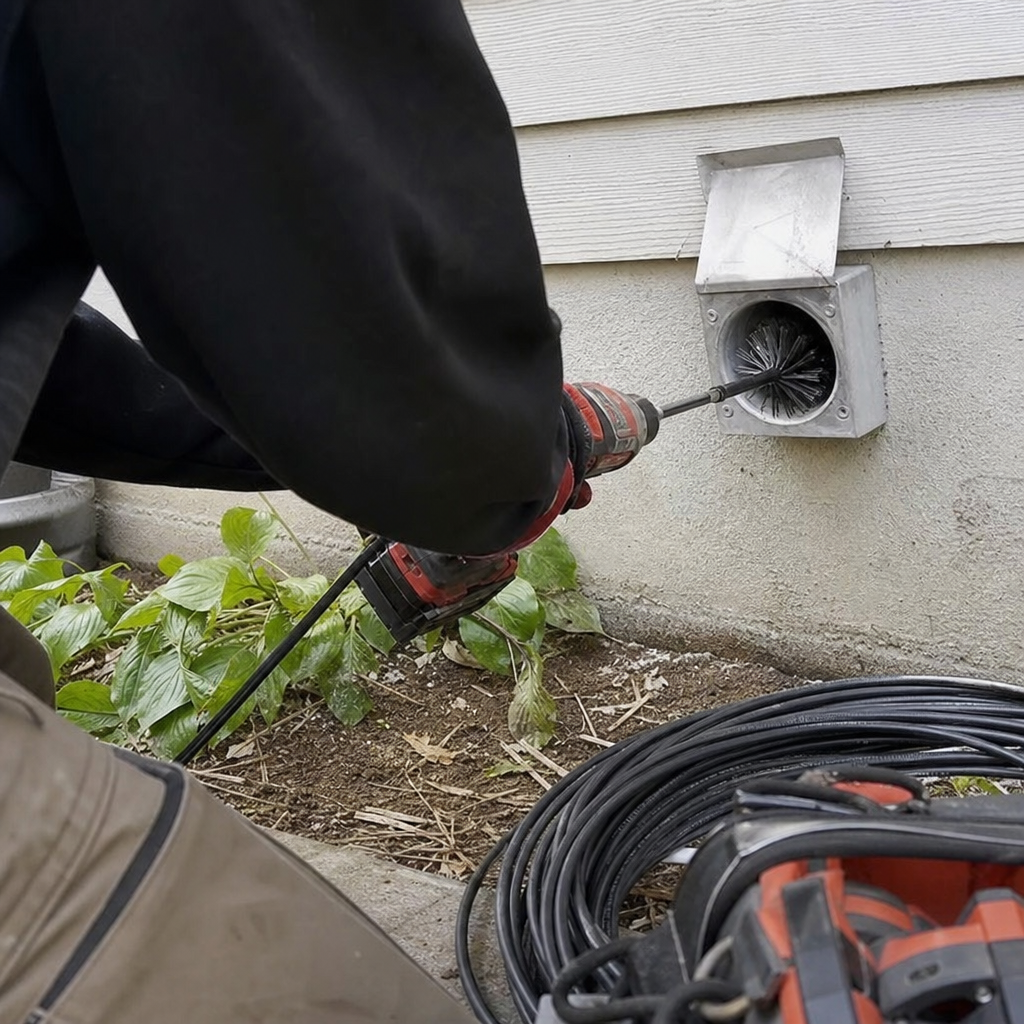
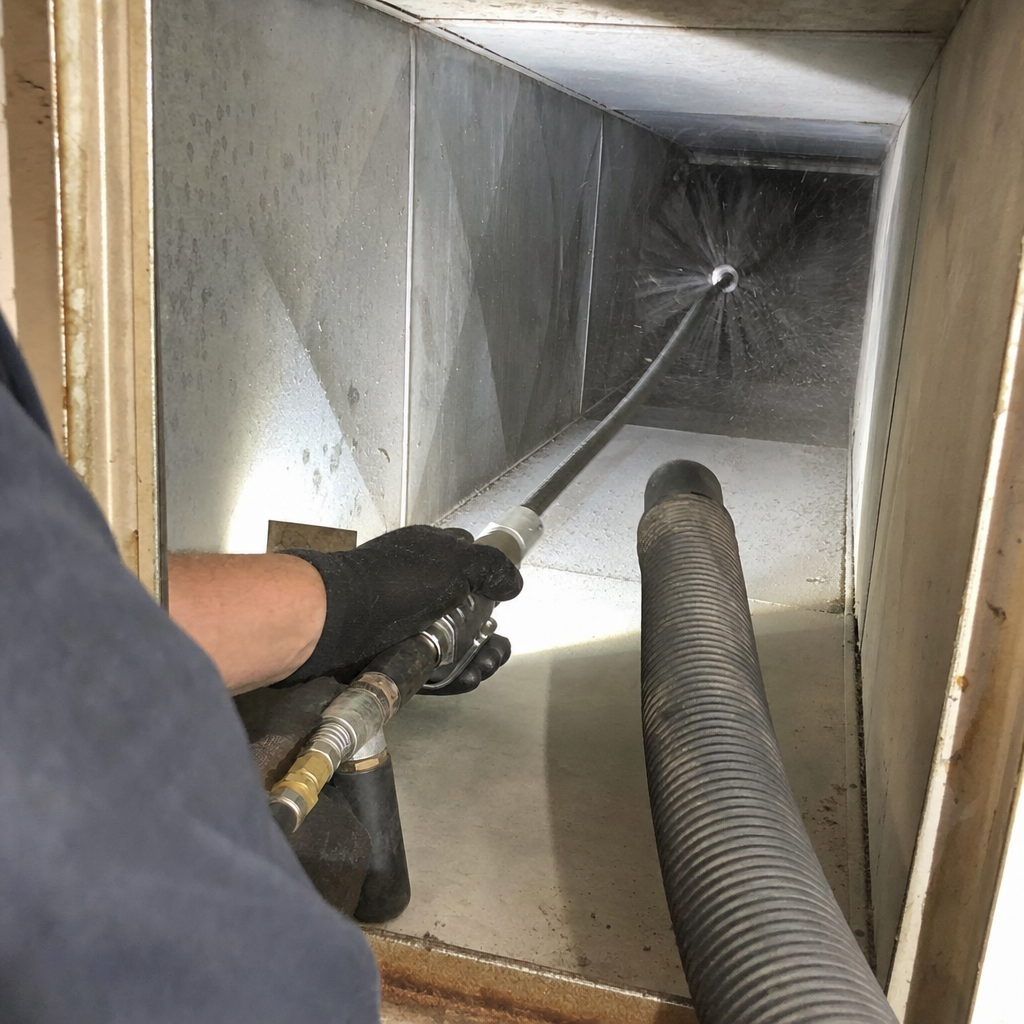
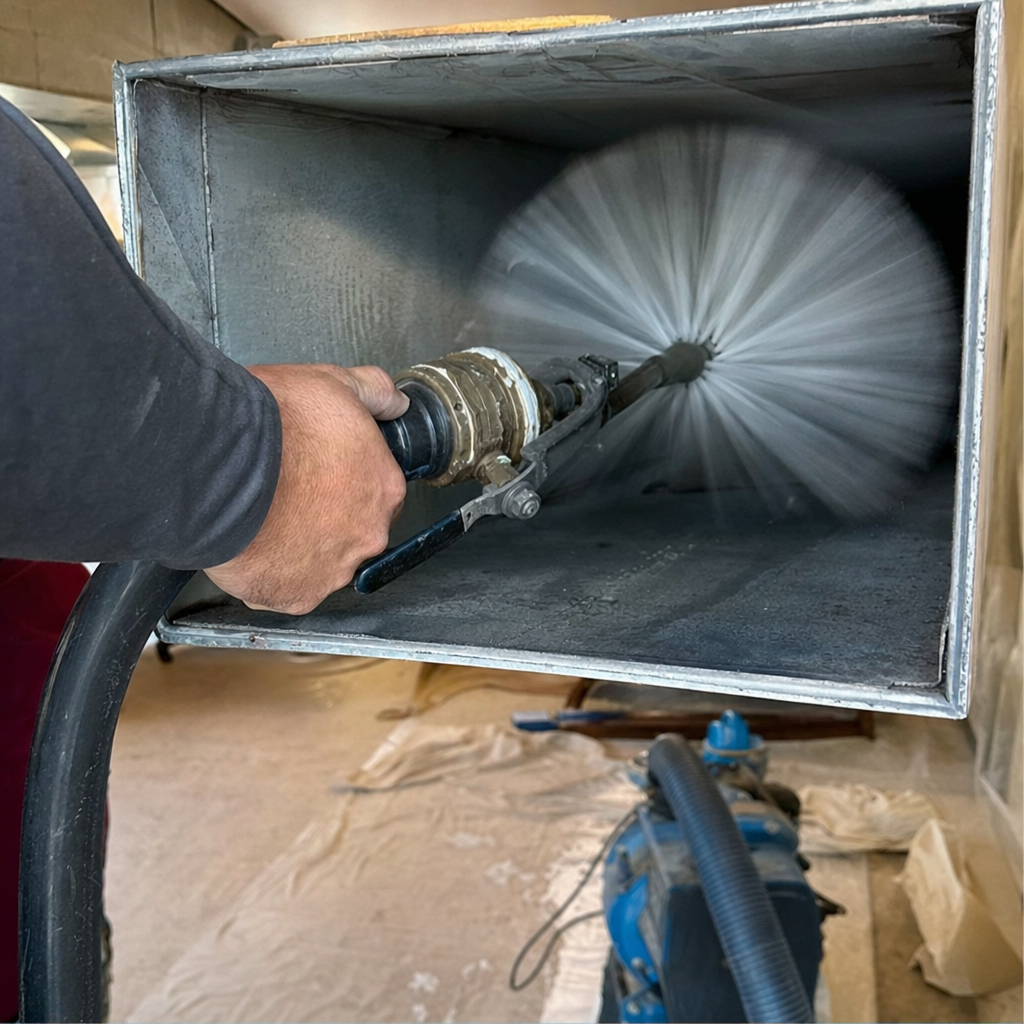
We clean with professional-grade Rotobrush and Nikro equipment—rotary brushes sized to your duct diameter, paired with high-volume negative air machines that pull dislodged material out rather than pushing it deeper. In Mill Creek, standard lint is only part of what we remove. The distinctive local problem is organic debris from the Douglas fir and alder canopy: catkins, needles, bud scales, and the fine particulate that slips through aging vent caps. This material mixes with lint into a dense, moisture-retaining mat that standard cleaning tools can struggle to break up. Our brush systems and compressed-air whips handle it, but the technique differs from dryer-vent-in-a-box services that don’t account for Pacific Northwest forest debris.
Vent Rerouting
Some Mill Creek homes have dryer vent runs that were poorly designed from construction: too long, too many turns, terminating in crawl spaces or garages against current code. We reroute to shorter, straighter paths using smooth-wall aluminum duct—never the sag-prone flex that fails in Snohomish County’s damp crawl spaces. A reroute in Mill Creek typically runs $340–$580 depending on path length and access difficulty. The payoff is faster drying, lower energy bills, and elimination of condensation points that breed mold.
Bird Guard Installation & Vent Cap Replacement
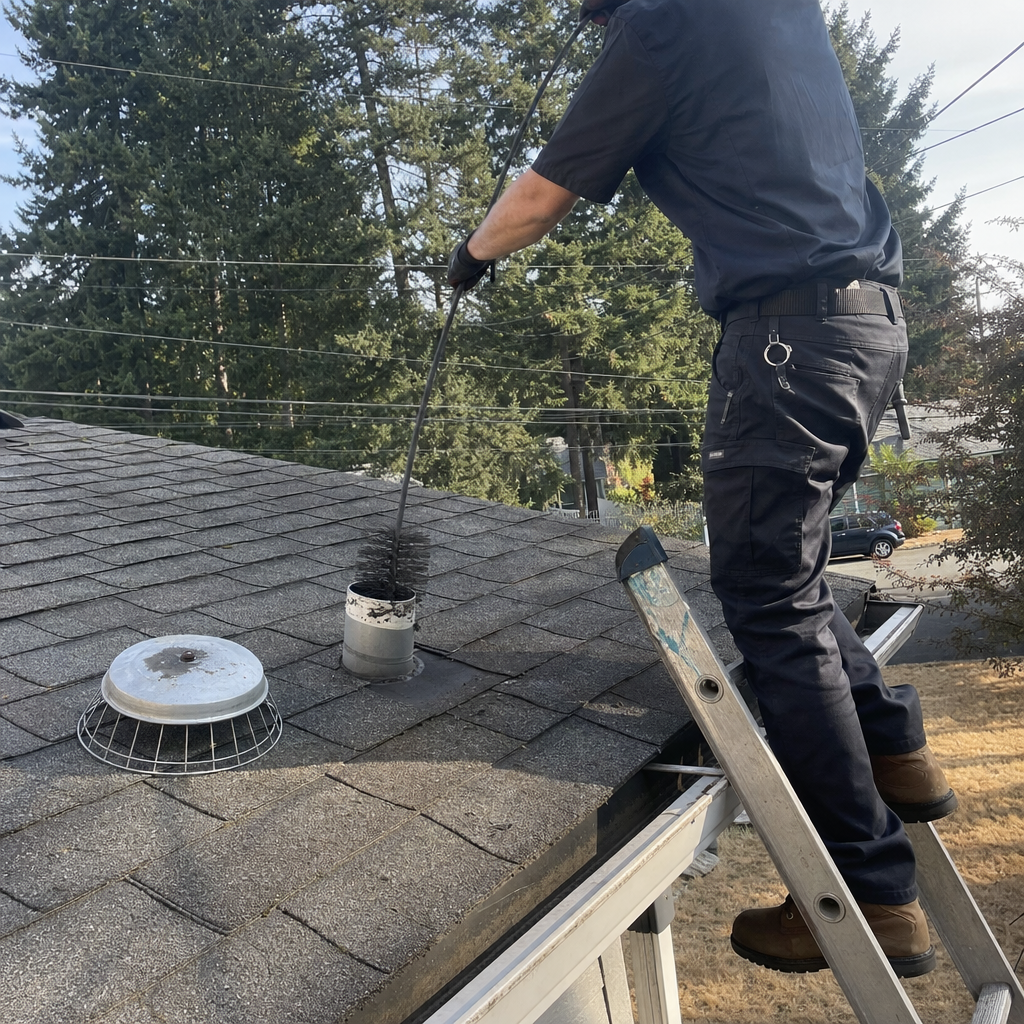
Mill Creek’s mature tree canopy supports active bird populations, and dryer vent terminations without proper guards become nesting sites—especially on homes with roof-line or second-story vents where access is difficult for homeowners to monitor. We install stainless steel bird guards that allow proper exhaust airflow while blocking entry. For corroded or damaged vent caps, we stock replacement units sized to Mill Creek’s common 4-inch and 6-inch terminations, with magnetic or gravity-operated dampers that seal against backdraft. A bird guard installation runs $89–$149; vent cap replacement with guard is typically $129–$189.
What happens when you call
- 1
A real person answersNo phone trees — you reach a local pro.
- 2
You get an upfront price rangeHonest numbers before anyone is dispatched.
- 3
A background-checked tech heads outLicensed & insured, dispatched right away.
- 4
You approve before work beginsNothing starts until you say go.
Trusted Brands We Service in Mill Creek
Our equipment comes from Rotobrush and Nikro—the same brands used by commercial restoration contractors and large-scale property management firms. For air quality components related to dryer vent systems, we work with Honeywell and Aprilaire ventilation controls, and stock Guardsman protective treatments for duct interiors where microbial growth has been identified. We carry common vent cap sizes, bird guard diameters, and transition fittings on our service vehicles, so most Mill Creek repairs don’t require a return trip. Parts availability matters when you’re dealing with 1980s-era hardware that’s no longer standard stock at big-box retailers.
Common Dryer Vent Cleaning Problems We See in Mill Creek Homes
- Alder catkin and fir needle accumulation. The dense canopy over Mill Creek’s planned developments continuously sheds organic material that enters through unscreened or damaged vent caps. Mixed with lint, it forms a compost-like plug that traps moisture and restricts airflow far more severely than lint alone. In the Thornwood neighborhood, we cleared a dryer vent where alder catkin debris had mixed with lint to form a compost-like plug. The 1980s builder-grade flex duct had sagged, trapping moisture; we replaced it with smooth-wall aluminum and installed a bird guard.
- Sagging flex duct in damp crawl spaces. Mill Creek’s original construction used lightweight flex duct routed through crawl spaces. Decades of Snohomish County ground moisture have degraded the support straps, allowing low points to form where condensation collects. The duct collapses under its own weight, creating a standing water trap that accelerates corrosion and mold growth.
- Corroded vent caps that jam shut or fall off. Thirty-plus years of marine west coast weather cycles—wet winters, mild summers, constant humidity—have destroyed the original galvanized or plastic vent caps on most Mill Creek homes. We’ve found caps rusted solid, louvers missing entirely, and flapper mechanisms glued shut by accumulated lint and organic debris.
- Excessive run lengths with multiple elbows. Master-planned Mill Creek homes often placed laundry rooms centrally, requiring vent runs of 20–35 feet with two or three 90-degree turns. Each elbow reduces effective airflow by the equivalent of several feet of straight duct, and lint accumulates at every change of direction. These marginal designs worked adequately when new; after decades of buildup, they’re fire hazards.
Pricing for Dryer Vent Cleaning in Mill Creek, WA
| Service | Typical Range in Mill Creek |
|---|---|
| Standard dryer vent cleaning (single-story, direct exterior termination) | $149–$189 |
| Multi-story or extended-run vent cleaning (20+ feet, roof termination) | $189–$249 |
| Vent cleaning with bird guard installation | $238–$338 |
| Vent cap replacement (standard) | $129–$189 |
| Vent rerouting with smooth-wall aluminum duct | $340–$580 |
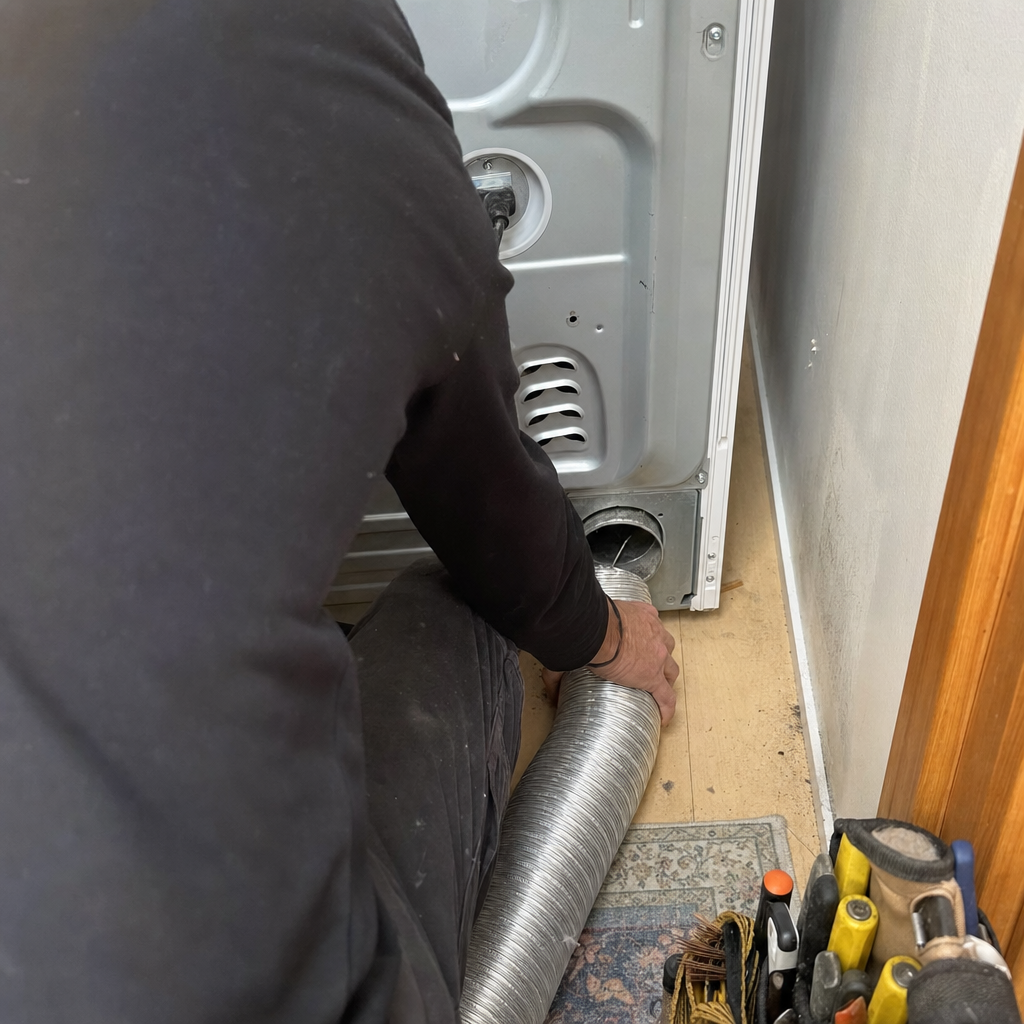
| Dryer transition duct replacement (behind unit) | $79–$129 |
What moves you within these ranges? Run length and termination height are the big ones. A first-floor laundry with a straight 8-foot run to an exterior wall is quick work; a second-floor laundry with a roof termination, or a basement unit routed through a finished ceiling, takes more time and specialized equipment. The condition of existing duct matters too—heavily compacted organic debris from Mill Creek’s tree canopy requires more aggressive cleaning than standard lint buildup. We provide exact quotes before starting work, and estimates are always free. Call (877) 335-1974 to schedule.
We Also Serve Cities Near Mill Creek
Our service area extends throughout Snohomish County and north King County. We regularly work in Silver Firs just to the south, Mill Creek East along the 164th Street corridor, North Creek toward the Bothell border, and Lake Stickney to the west. Each shares Mill Creek’s general climate and housing-era patterns, with localized variations in development density and tree canopy coverage that we account for on every job.
Serving Mill Creek, WA — Our Local Coverage Area
We’re based in the Mill Creek area and know this community well. Use the map below to see our service coverage — if you’re nearby, we can almost certainly help.
FAQs — Dryer Vent Cleaning in Mill Creek
They create a unique, dense clogging material that standard lint alone doesn’t produce. The alder catkins and Douglas fir needles common to Mill Creek’s mature canopy enter through vent caps and mix with lint into a compost-like mat that traps moisture and severely restricts airflow. This organic-lint combination is far more problematic than lint alone, and it requires professional-grade rotary cleaning to fully remove. Call (877) 335-1974 for an inspection—estimates are free.
Three decades of service life have pushed original components past their design limits. The builder-grade flex duct, plastic vent caps, and support straps used in Mill Creek’s 1978–1995 construction weren’t designed for 30+ years of Snohomish County moisture cycles and dense tree canopy debris loading. Sagging duct, corroded caps, and accumulated organic material are now standard findings in this housing stock. Call (877) 335-1974 for an inspection—estimates are free.
Yes, if your vent terminates anywhere birds can access—and in Mill Creek’s treed lots, that’s most terminations. We’ve removed nests from unguarded vents in neighborhoods throughout the 98082 area, particularly where roof-line terminations sit near alder or fir branches. A stainless steel bird guard allows proper exhaust while blocking entry, and at $89–$149 installed, it’s inexpensive protection against a recurring problem. Call (877) 335-1974 to add one during your next cleaning.
For Mill Creek homes under the forest canopy, we recommend annual inspection and cleaning every 12–18 months. The combination of lint and organic debris accelerates buildup compared to less-treed areas, and the 1980s-era vent systems common here have less tolerance for restriction before performance and safety degrade. Homes with heavy laundry use or multiple residents may need more frequent service. Call (877) 335-1974 to set up a maintenance schedule.
Yes, extended drying time is the most common symptom of a restricted vent, and it’s often the first sign Mill Creek homeowners notice. A load that previously dried in 45 minutes stretching to 75 minutes or more indicates airflow reduction, typically from lint and organic debris buildup in the vent path. Don’t ignore it—restricted vents increase energy costs and create fire risk. Call (877) 335-1974 for a free airflow assessment.
Written by Richard Anderson, Owner and Lead Technician at Landmark Air Duct Cleaning Service Washington, serving Mill Creek and the greater Seattle area since 2013.