
Fast, Reliable HVAC Cleaning Across Everett
HVAC cleaning in Everett typically costs $280–$650 for a complete system service and is usually scheduled within 48 hours. We’re based in Seattle and regularly dispatch our HVAC Cleaning team to Everett homes—reaching neighborhoods from Silver Lake to the waterfront in under an hour during normal traffic. Richard Anderson, our owner and lead technician, has spent 11 years cleaning duct systems in the Puget Sound marine corridor, and he’s seen firsthand how Everett’s persistent humidity turns ordinary dust buildup into accelerated mold problems that inland Snohomish County homes simply don’t face at the same rate. Call (877) 335-1974 for a free estimate.
Why Landmark Air Duct Cleaning Service Washington Is Everett’s Preferred HVAC Cleaning Company
Our reputation in Everett is built on showing up where other companies send rotating crews. Richard Anderson personally runs the equipment on every job—owner-led on every job means the same person who answers your questions is the one cleaning your evaporator coil and inspecting your blower assembly. That accountability matters in a market where many “duct cleaning” offers come from carpet cleaners or general HVAC shops adding a sideline service.
732 customers and counting have left reviews averaging 4.9 stars. Those aren’t anonymous ratings—they’re documented jobs where homeowners describe specific outcomes: reduced allergy symptoms, eliminated musty odors, restored airflow to second-floor bedrooms. That volume and consistency reflect repeatable results, not occasional luck.
We maintain dedicated routing to Everett, with same-week availability for standard appointments and emergency response for systems showing visible mold or complete airflow failure. Our technicians know the difference between a 1960s rambler near Paine Field with original fiberglass-lined ducts and a 1990s Mill Creek-area build with flex-duct retrofits—and we adjust our approach accordingly.
Our HVAC Cleaning Services in Everett
Evaporator Coil Cleaning
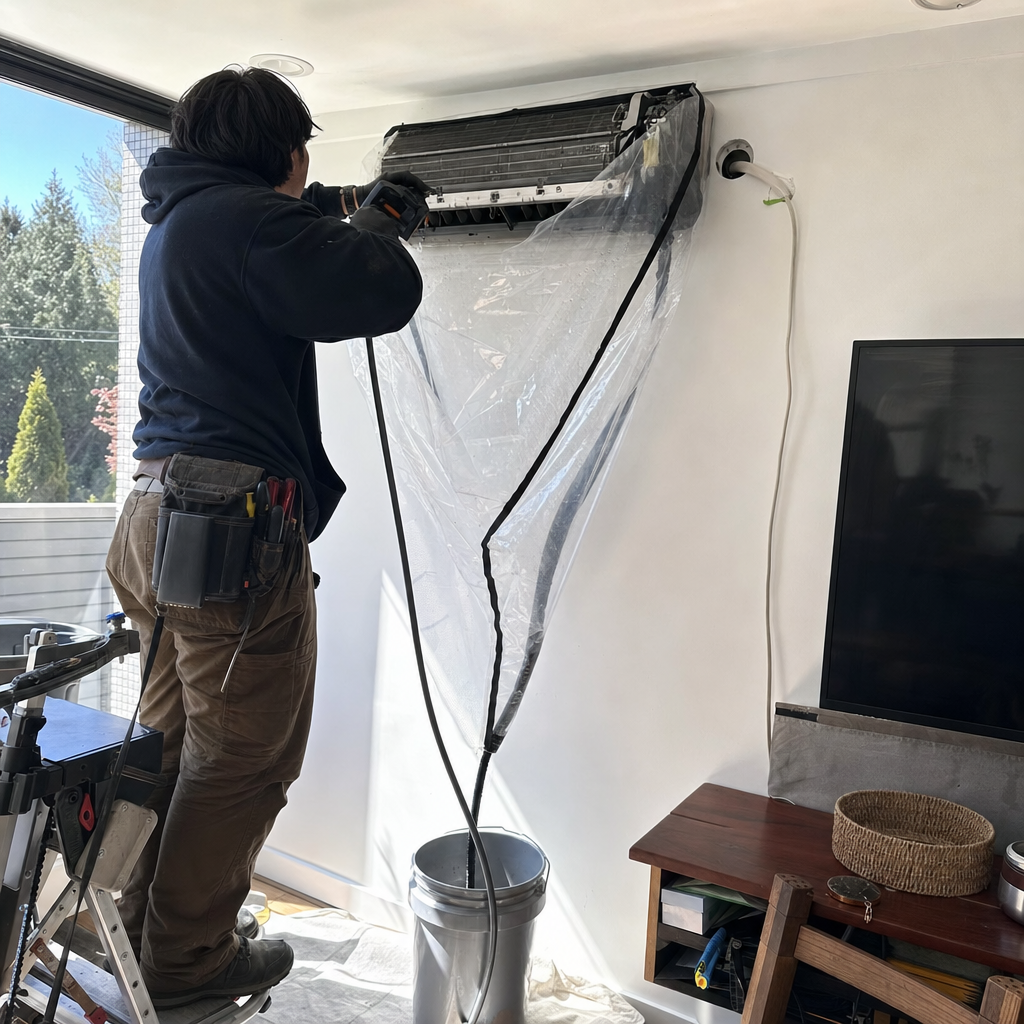
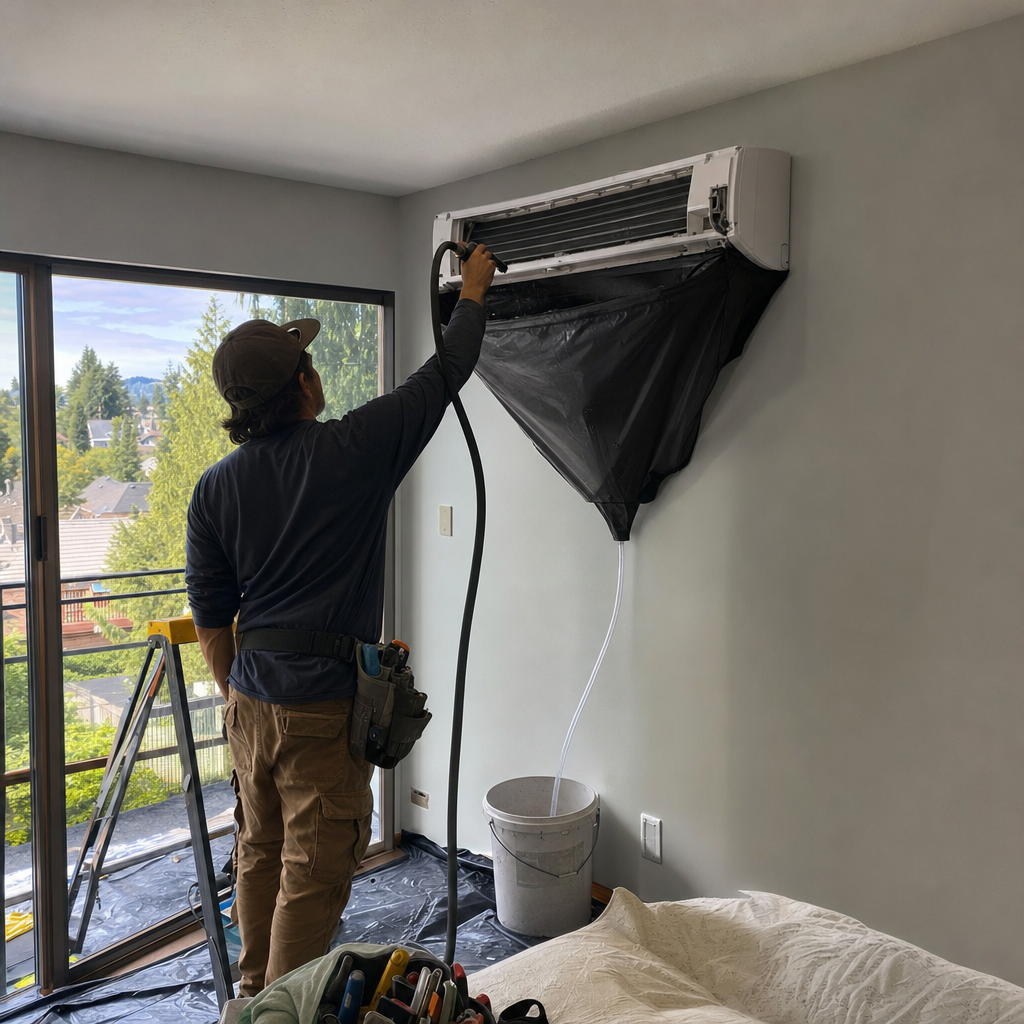
Everett’s coastal humidity, especially in the Port Gardner Bay corridor, causes mold colonization in ductwork at a rate that far exceeds inland Snohomish County cities, with fiberglass-lined ducts from the Boeing 747 buildout acting as a sponge for moisture. Your evaporator coil sits in that same damp airstream, and when it’s coated in biofilm, it can’t transfer heat efficiently—your system runs longer, costs more, and still leaves rooms clammy. We remove the coil assembly where accessible, clean with foaming agents appropriate to your refrigerant type, and apply coil treatment to slow regrowth through Everett’s seven-month wet season. Most Everett homes we service see a 15–25% improvement in cooling efficiency after proper coil cleaning.
Blower Cleaning
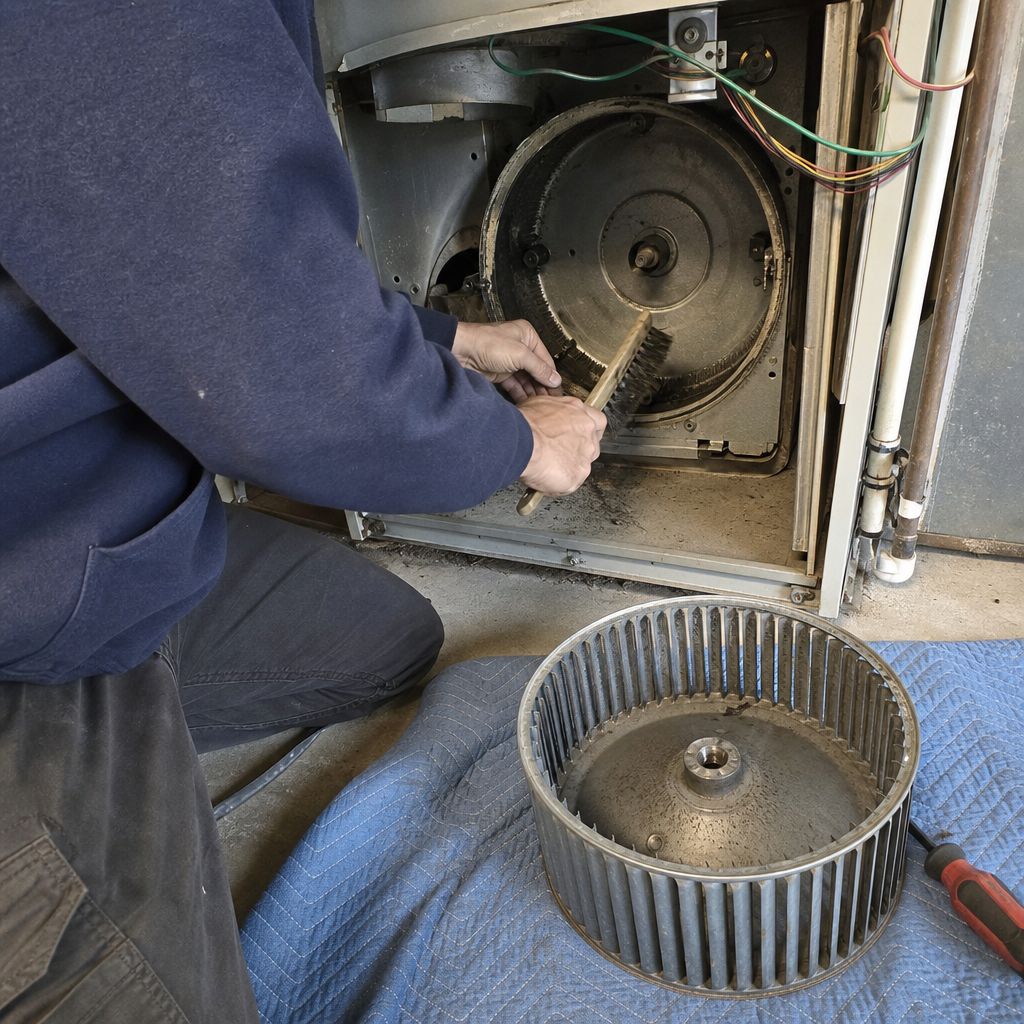
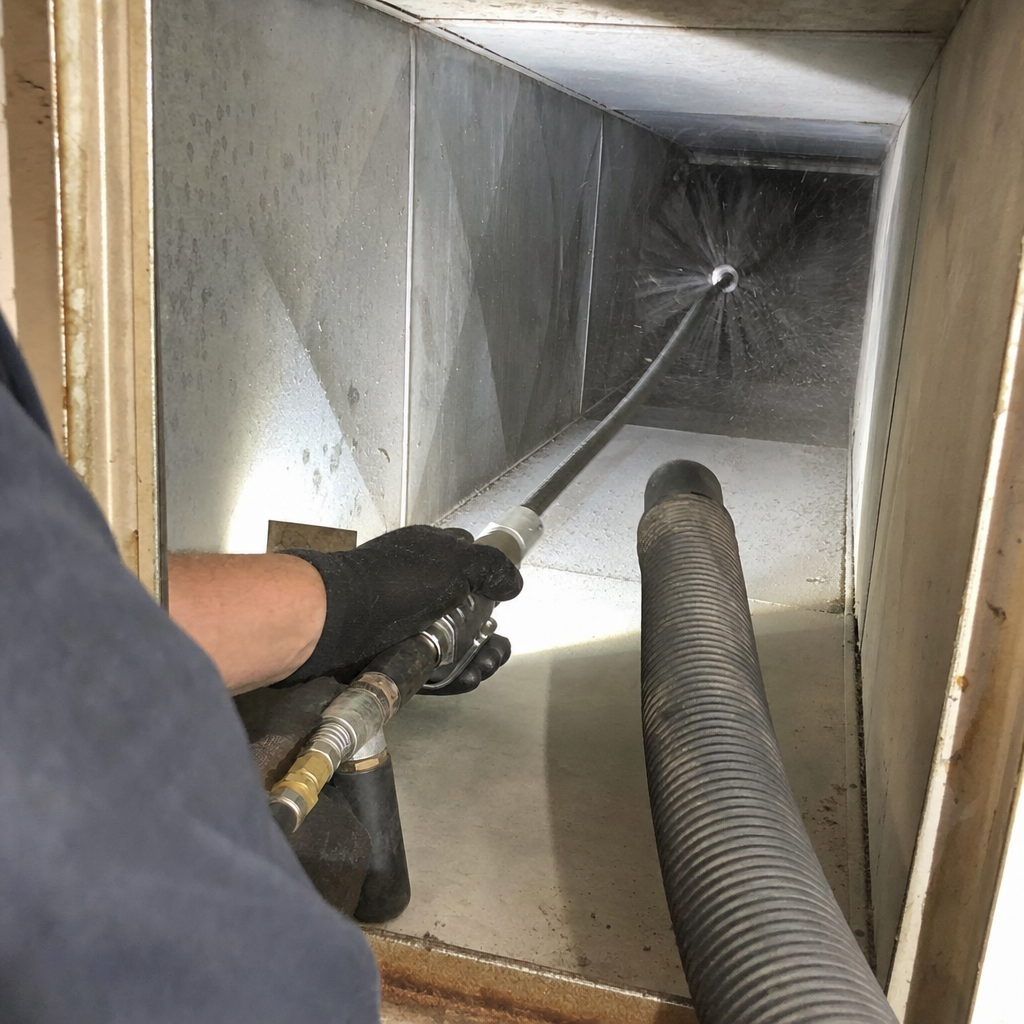
The blower motor and squirrel-cage assembly in your Everett home’s air handler is a magnet for the fine particulate that degrading duct liner sheds—especially in 98203 and 98204 ZIP codes where original Boeing-era fiberglass insulation has begun breaking down. A dirty blower can’t move rated CFM, so your furnace cycles on and off more frequently, wearing heat exchangers and limit switches prematurely. We disassemble and clean the blower housing, balance the wheel, and inspect the motor bearings for moisture corrosion common to crawl-space installations near Port Gardner Bay. Clean blowers run cooler and quieter. Homeowners in the Delta neighborhood and along Everett Avenue regularly tell us they noticed the difference in sound before they checked the utility bill.
Condenser Cleaning
Outdoor condenser coils in Everett take a beating that inland Snohomish County units don’t. Salt aerosol from Puget Sound, combined with cottonwood fluff from the Snohomish River Valley and the sticky pollen load that settles in May and June, forms an insulating mat on coil fins. We use foaming cleaner and low-pressure rinsing—never high-pressure washing that folds fins flat. For waterfront homes near Grand Avenue Park and the 98201 ZIP code, we inspect more frequently for salt corrosion on aluminum fins and copper tubing. A clean condenser in Everett’s mild summer climate can mean the difference between adequate cooling and a compressor running at damaging head pressures.
Air Handler Cleaning
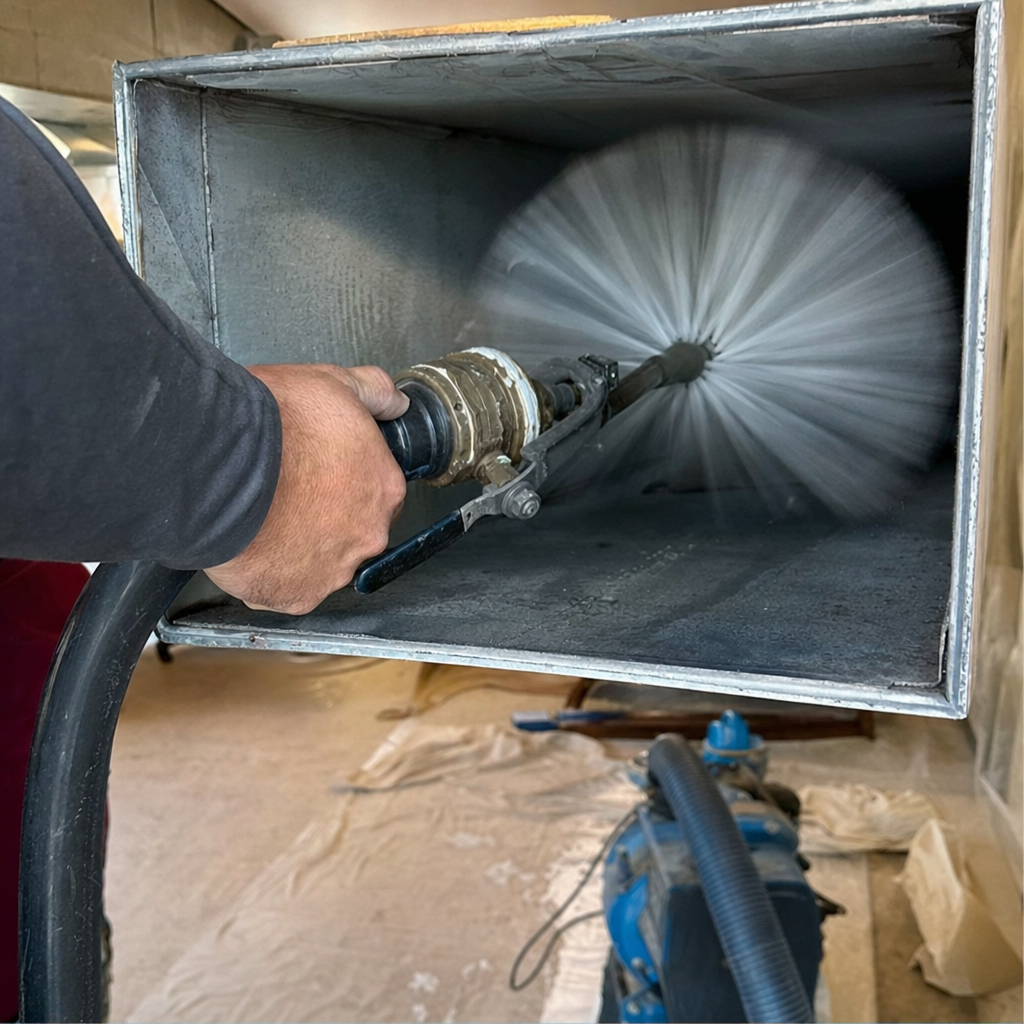
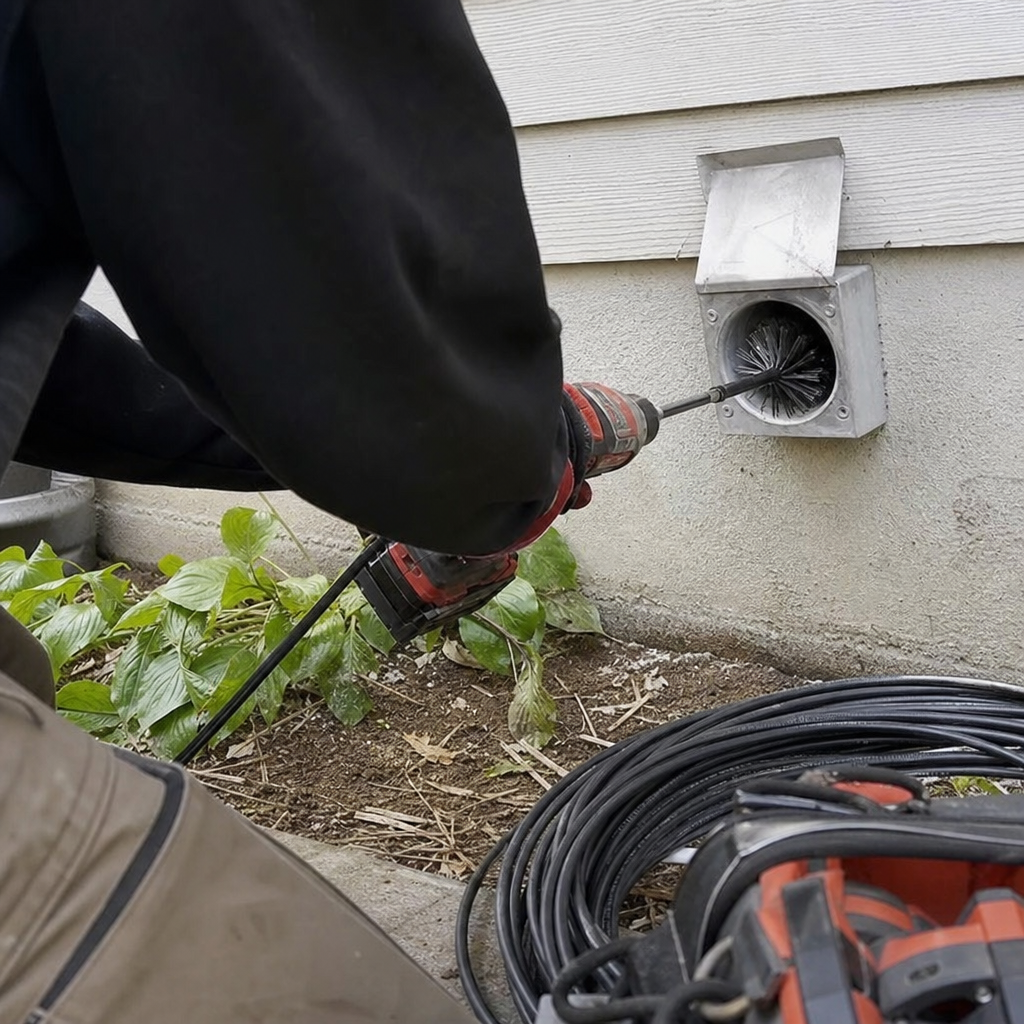
The air handler cabinet is where Everett’s humidity problems concentrate. In mid-century homes with basement or crawl-space installations—common throughout the Holly and Bayside neighborhoods—standing water in the drain pan and secondary pan creates a reservoir that re-inoculates the entire system with mold spores. We clean and treat the cabinet interior, clear primary and secondary drains, and verify that condensate pumps are functioning. In a 1960s rambler near the 98208 ZIP code close to Paine Field, we found flexible duct connectors from a 1980s furnace upgrade that were run through an uninsulated crawl space where ground fog condenses regularly. The connectors were collapsing under mold growth, so we replaced them with Rotobrush-cleaned galvanized sections and applied an Aprilaire microbial treatment to the remaining trunk lines.
Coil Treatment
After mechanical cleaning, we apply EPA-registered coil treatment products that inhibit microbial regrowth without damaging fin coatings or refrigerant circuits. In Everett’s climate, this step isn’t optional—it’s what keeps your system clean through the October-to-April damp season. We use products compatible with aluminum, copper, and the coated coils found in newer heat pump systems common to waterfront condos and recent infill construction.
What happens when you call
- 1
A real person answersNo phone trees — you reach a local pro.
- 2
You get an upfront price rangeHonest numbers before anyone is dispatched.
- 3
A background-checked tech heads outLicensed & insured, dispatched right away.
- 4
You approve before work beginsNothing starts until you say go.
Trusted Brands We Service in Everett
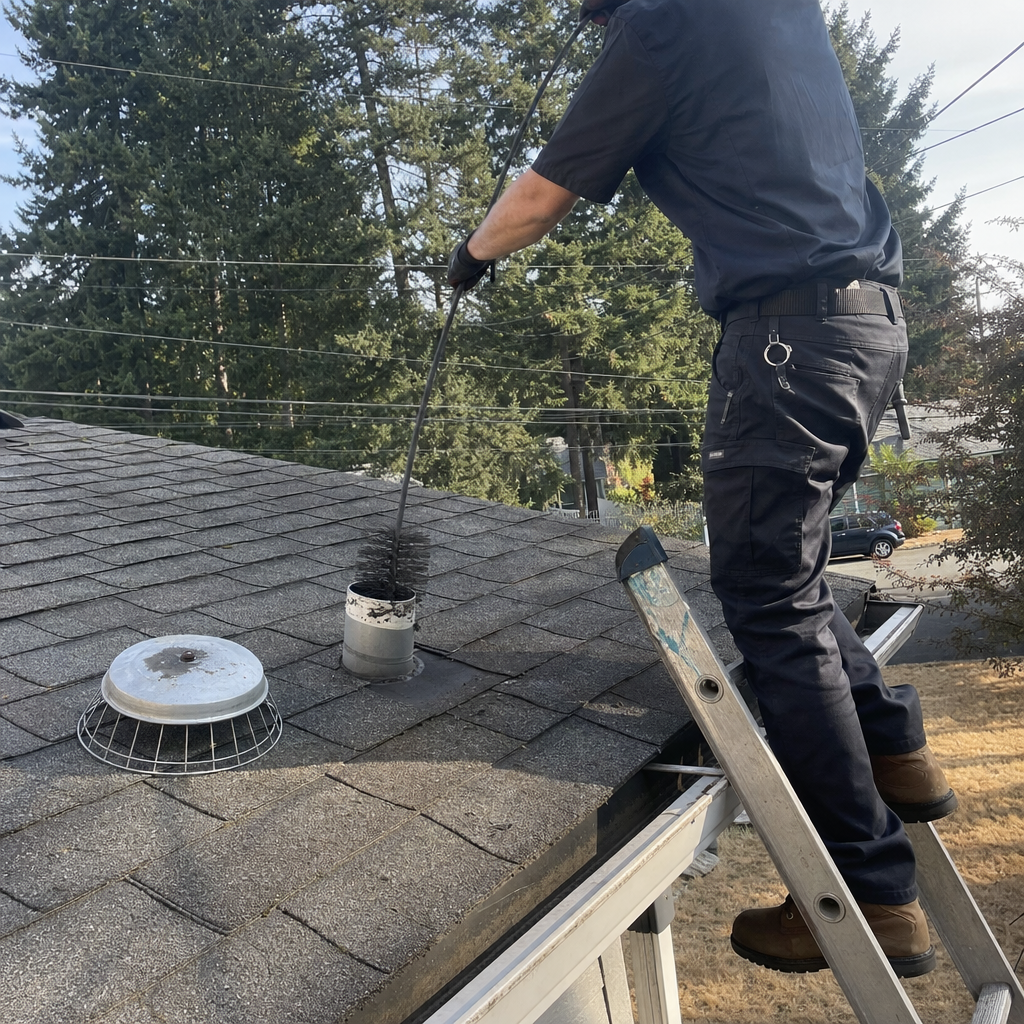
We maintain cleaning protocols and treatment compatibility for systems using Honeywell, Aprilaire, and Abatement Technologies components—brands we encounter regularly in Everett’s mix of original equipment and retrofit upgrades. Our Rotobrush and Nikro equipment handles the mechanical cleaning; our product knowledge ensures we don’t apply treatments that void manufacturer warranties or react badly with existing coatings. For Everett customers, this means we don’t need to order specialty supplies or subcontract unfamiliar equipment—we arrive prepared, complete the job in one visit, and document what was done for your maintenance records.
Common HVAC Cleaning Problems We See in Everett Homes
- Fiberglass-lined rectangular ducts in Boeing-boom homes shed deteriorated fibers. Built between the late 1940s and mid-1970s, these systems in 98203, 98204, and parts of 98205 have liner material that breaks down with age and moisture exposure, sending visible particles into living spaces and providing organic substrate for mold.
- Flexible duct connectors from 1980s retrofits condense ground fog in low-lying neighborhoods. The 98204 area near Paine Field sees this failure mode specifically: original sheet-metal trunks remain while flex connectors added during furnace upgrades run through uninsulated crawl spaces where Boeing-area fog penetrates and cools the duct surface below dew point.
- Uninsulated crawl-space ductwork stays damp for months during the rainy season. Everett averages roughly 38 inches of annual rainfall, and that moisture doesn’t stay outside—crawl spaces in mid-century homes along Broadway and Colby Avenue wick ground moisture and bay humidity, creating near-ideal conditions for microbial growth in supply and return plenums.
- Heat pump indoor coils in waterfront properties corrode faster than manufacturer specifications anticipate. Salt-laden marine air in 98201 and the Port Gardner shoreline accelerates fin degradation and refrigerant leaks; these systems need more frequent inspection and gentler cleaning chemistry than inland installations.
Pricing for HVAC Cleaning in Everett, WA
| Service | Typical Range in Everett |
|---|---|
| Evaporator coil cleaning (accessible) | $180–$320 |
| Blower assembly cleaning and balance | $150–$260 |
| Condenser coil cleaning | $120–$200 |
| Air handler cabinet cleaning with drain service | $160–$280 |
| Complete HVAC system cleaning (all components) | $480–$650 |
| Coil treatment application (post-cleaning) | $85–$140 |
What moves you within these ranges: accessibility of components (crawl-space vs. utility closet), severity of buildup, whether degraded duct liner requires containment protocols, and if mold remediation-grade PPE and disposal are needed. Homes in the 98204 ZIP code with original Boeing-era ductwork and 1980s retrofits often land in the upper portion of ranges due to the additional time required for safe fiber containment. We provide upfront written estimates before beginning work—call (877) 335-1974 to schedule your free evaluation.
We Also Serve Cities Near Everett
Our service radius extends to Eastmont, Mukilteo, Mill Creek, and Silver Firs—communities that share Everett’s marine climate concerns but with their own housing-stock variations. Whether you’re managing a rental portfolio in Mukilteo or maintaining a family home in Mill Creek’s newer construction, we apply the same owner-led, specialist approach.
Serving Everett, WA — Our Local Coverage Area
We’re based in the Everett area and know this community well. Use the map below to see our service coverage — if you’re nearby, we can almost certainly help.
FAQs — HVAC Cleaning in Everett
Because basic cleaning often misses the microbial growth embedded in deteriorated fiberglass duct liner, which is common in Everett’s Boeing-era housing stock. Standard vacuuming and brush contact don’t penetrate the porous liner material where mold roots establish; our Rotobrush system with HEPA containment, combined with targeted coil treatment and liner assessment, addresses the source rather than the symptom. Call (877) 335-1974 if you’re still smelling musty air after a previous cleaning—we’ll diagnose whether liner degradation is the culprit.
Yes—98204 homes from this era frequently have original fiberglass-lined rectangular ducts that have reached end-of-service life for the liner material. We’ve found that the combination of 50+ years of thermal cycling and Everett’s persistent humidity causes the adhesive binding the liner to sheet metal to fail, creating both fiber shedding and trapped moisture pockets. We inspect with borescope cameras before recommending whether cleaning with containment is viable or if liner replacement or duct sealing is the safer long-term solution.
Every 3–5 years for most Everett homes, and every 2–3 years if you have original fiberglass-lined ducts, a crawl-space installation, or family members with respiratory sensitivities. The marine humidity here accelerates microbial growth cycles compared to drier eastern Washington climates; waiting the national-average 5–7 years often means addressing avoidable buildup. Homes near the Snohomish River Valley with higher pollen loads may also benefit from more frequent filter changes and intermediate coil inspections.
Yes—mechanical cleaning removes accumulated pollen deposits from blower assemblies, coils, and duct trunk lines, and proper coil treatment reduces the sticky biofilm that traps subsequent pollen grains. However, cleaning alone won’t solve a pollen problem without upgraded filtration; we can assess whether your current filter rack accommodates MERV 11–13 filters or if an Aprilaire whole-house air cleaner would better address the agricultural and riparian pollen load specific to Everett’s valley proximity.
Yes—coastal heat pump coils in 98201 and waterfront properties show salt corrosion patterns that require gentler cleaning chemistry and lower-pressure application to avoid fin damage. We also inspect more carefully for refrigerant leaks at copper-aluminum junctions, where galvanic corrosion accelerates in salt-air environments. The indoor coil in a heat pump runs cooler than a gas furnace’s A-coil, so biofilm tends to form differently; our treatment selection accounts for this operational difference.
Written by Richard Anderson, Owner and Lead Technician at Landmark Air Duct Cleaning Service Washington, serving Everett and the Puget Sound region since 2013.