
Fast, Reliable HVAC Cleaning Across Seattle
HVAC cleaning in Seattle typically costs $280–$650 for a complete system service and is usually completed in a single visit, with most appointments available within 48 hours. We’re Landmark Air Duct Cleaning Service Washington, and our HVAC Cleaning team has spent 11 years working inside the duct systems that heat and cool Seattle homes — from the pier-and-beam crawl spaces of Ballard to the hillside foundations of Queen Anne. Richard Anderson, our owner and lead technician, personally oversees every job. Call (877) 335-1974 for a free estimate.
Seattle’s housing stock tells a story that directly affects how we clean. The craftsman bungalows and foursquares built between 1910 and 1940 weren’t designed for forced air. They got it anyway, decades later, through retrofitted ductwork squeezed into damp crawl spaces. That history lives in your walls. We know where to find it.
Why Landmark Air Duct Cleaning Service Washington Is Seattle’s Preferred HVAC Cleaning Company
We’ve built our reputation in Seattle on single-trade focus. While generalist HVAC companies add duct cleaning as an upsell, we’ve spent 11 years exclusively on indoor air quality — 732 verified reviews averaging 4.9 stars, with the volume and consistency that only comes from doing one thing thousands of times.
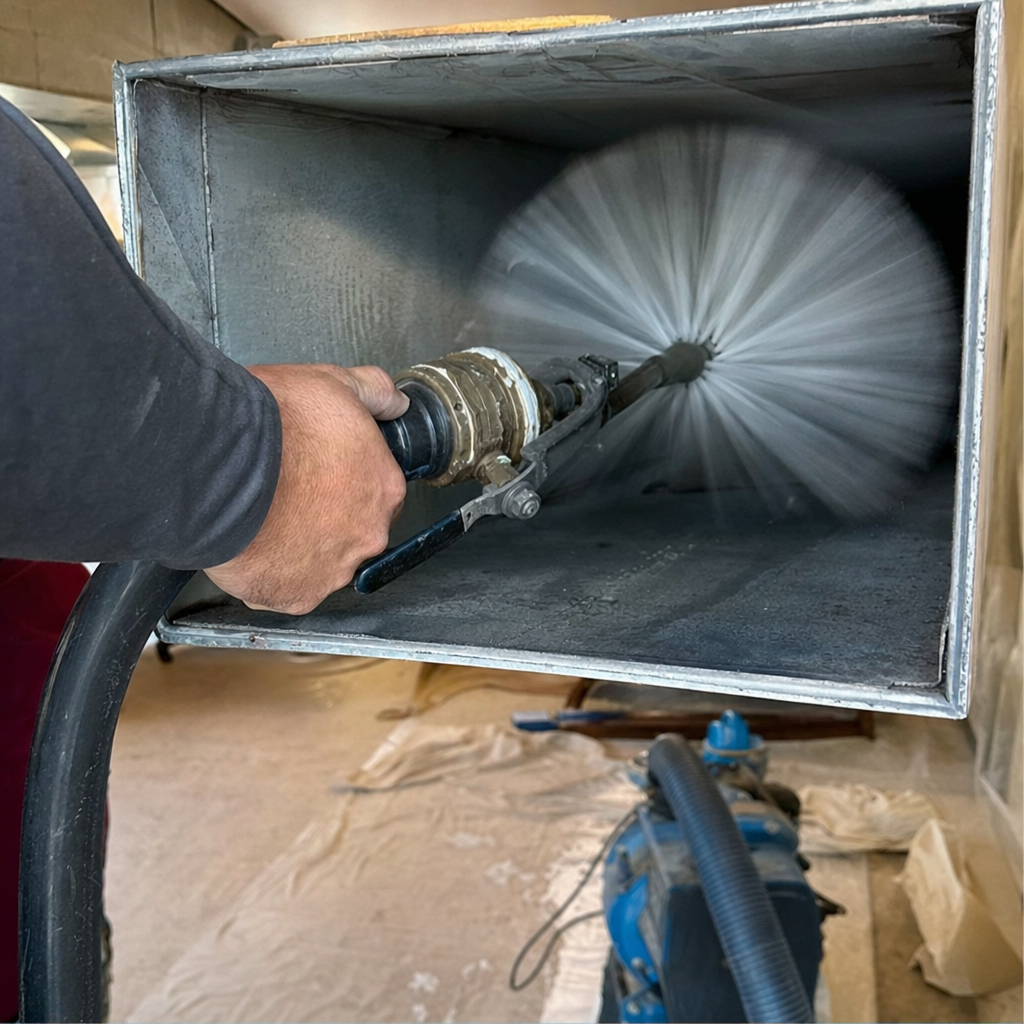
Richard Anderson doesn’t delegate to rotating crews. He’s owner-led on every job, running the same Rotobrush and Nikro equipment we’d use on a commercial restoration project. When a Capitol Hill property manager calls about musty airflow in a 1925 fourplex, Richard is the one who crawls the space, identifies the failure mode, and signs off on the work.
Our response time to Seattle neighborhoods averages same-day or next-day availability, with emergency scheduling for post-wildfire-smoke cleanings during August and September when Eastern Washington fire drift loads particulate into duct systems across the metro area.
We recently serviced a 1920s craftsman bungalow in Ballard where the original gravity-furnace plenum box had been left in place when a forced-air system was retrofitted — a sealed dead-air chamber full of decades of biological debris. Our Rotobrush system extracted nests of rodent debris and mold from the duct interiors, but the unused plenum required a separate access cut to clean, a Seattle-specific retrofit artifact we encounter regularly.
Our HVAC Cleaning Services in Seattle
Evaporator Coil Cleaning
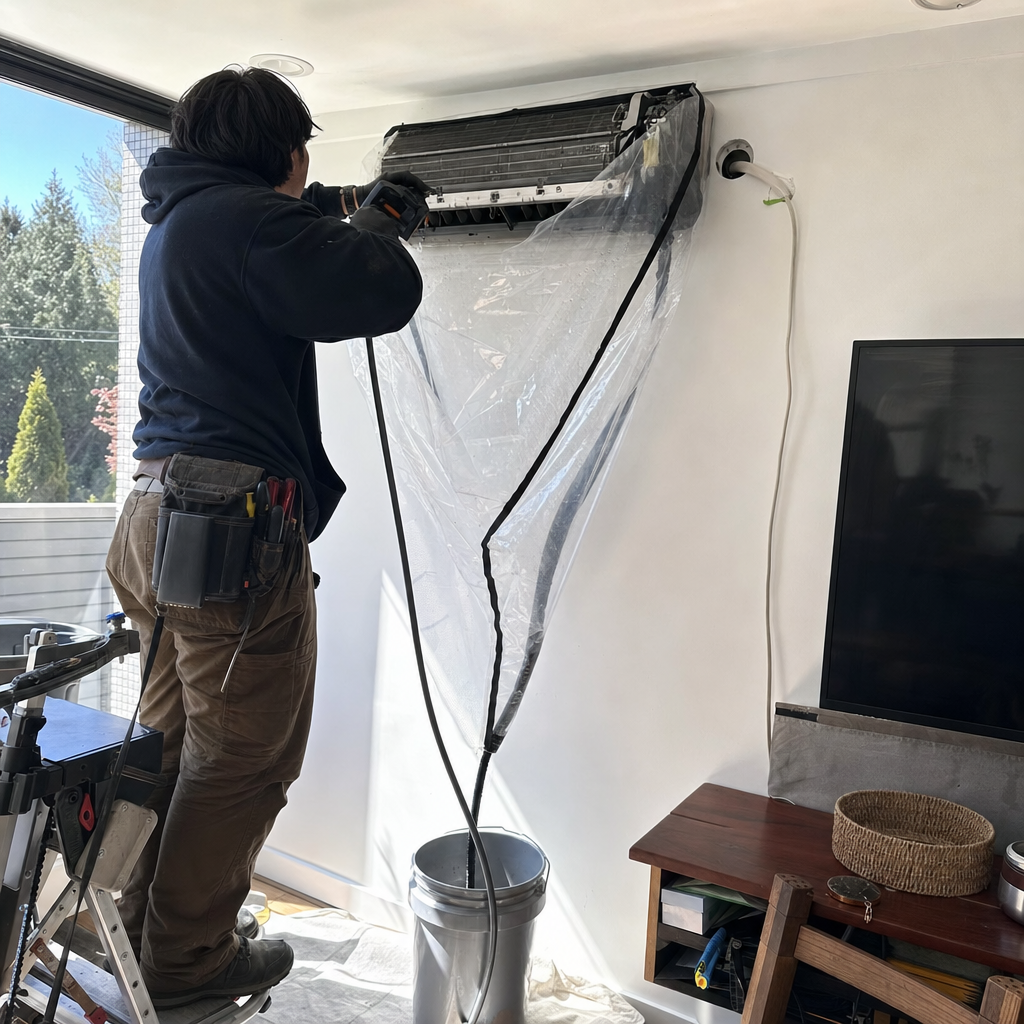
The evaporator coil in your Seattle home’s air handler works constantly through our mild but humid heating season, and the moisture load from October through May creates a film of biological material that standard filter changes never touch. In homes near Puget Sound — Wallingford, Fremont, neighborhoods where marine air pushes inland — we’ve measured coils with 3–4mm of buildup that dropped airflow by 30% before cleaning. Our process removes this layer without damaging the delicate aluminum fins, restoring heat exchange efficiency before the heating season peaks.
Blower Cleaning
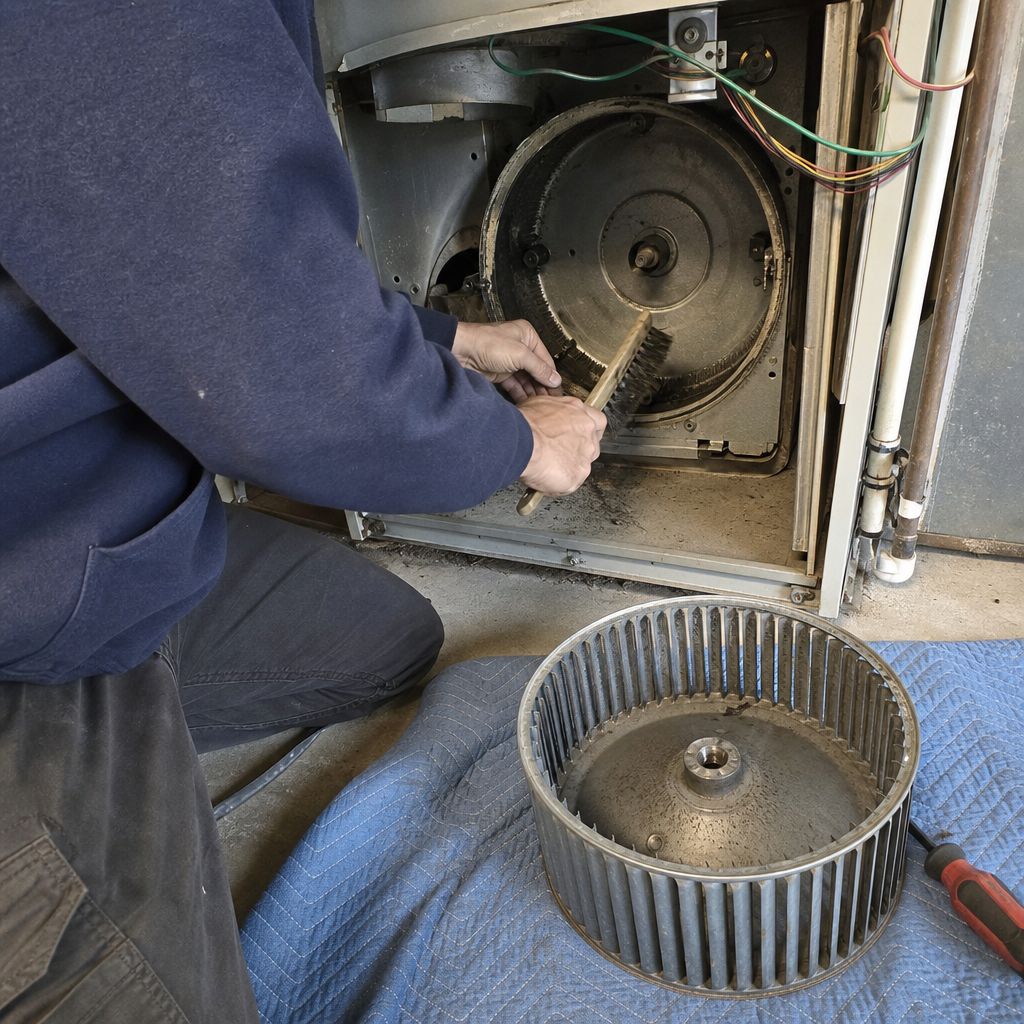
The blower motor and wheel assembly sits downstream of your filter, but fine particulate still reaches it — especially during Seattle’s late-summer wildfire smoke events, when even MERV-13 filters load quickly and bypass increases. A dirty blower wheel throws airflow balance across your duct system, creating pressure imbalances that pull damp crawl space air through seams in retrofitted ductwork. We remove the assembly, clean the wheel vanes and motor housing, and verify amperage draw against manufacturer spec before reassembly.
Condenser Cleaning
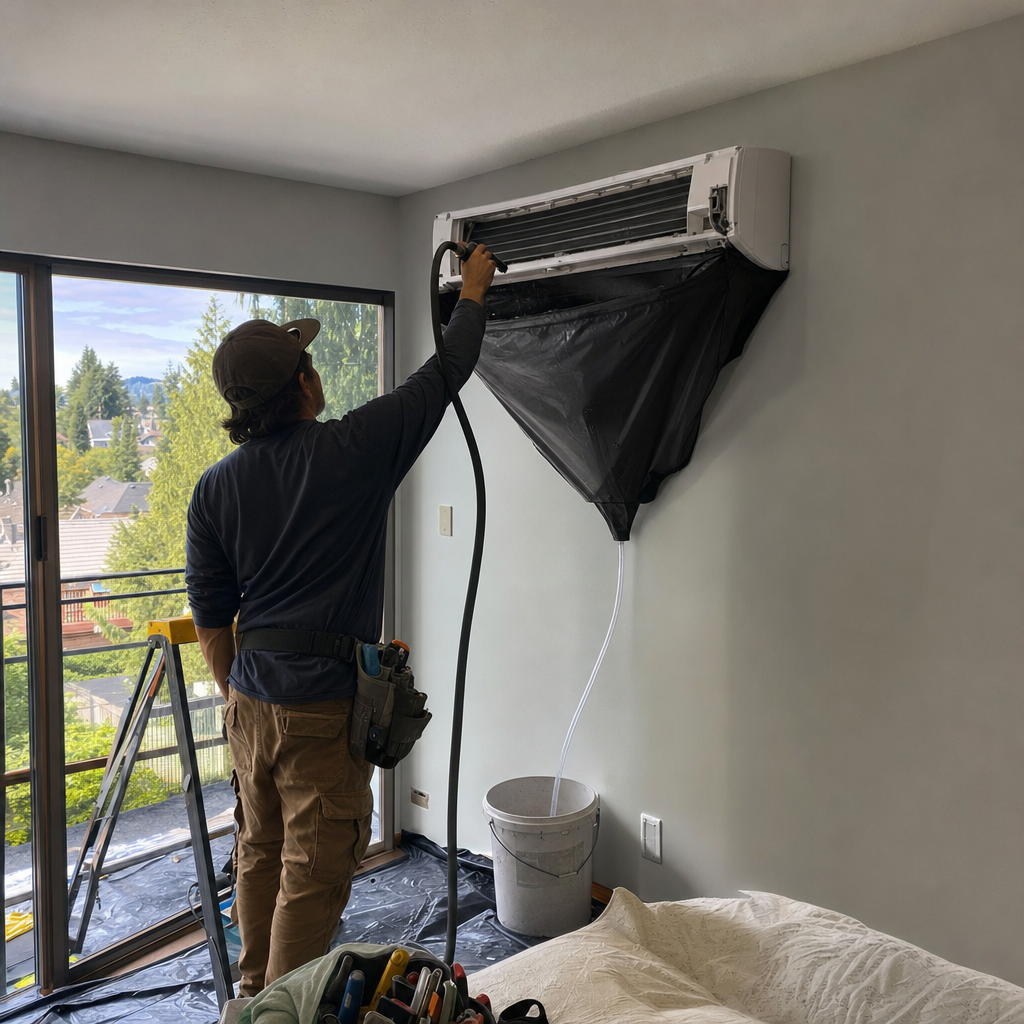
Seattle’s mild summers mean condensers don’t face the thermal stress of Phoenix or Sacramento, but they face something else: cottonwood fluff from the city’s mature tree canopy, moss and algae growth from persistent moisture, and salt aerosol if you’re within a few blocks of Elliott Bay or Puget Sound. We clean coils with foaming agents that break biological adhesion without corroding aluminum, straighten fins with precision combs, and verify refrigerant pressures against ambient conditions specific to our marine climate.
Air Handler Cleaning
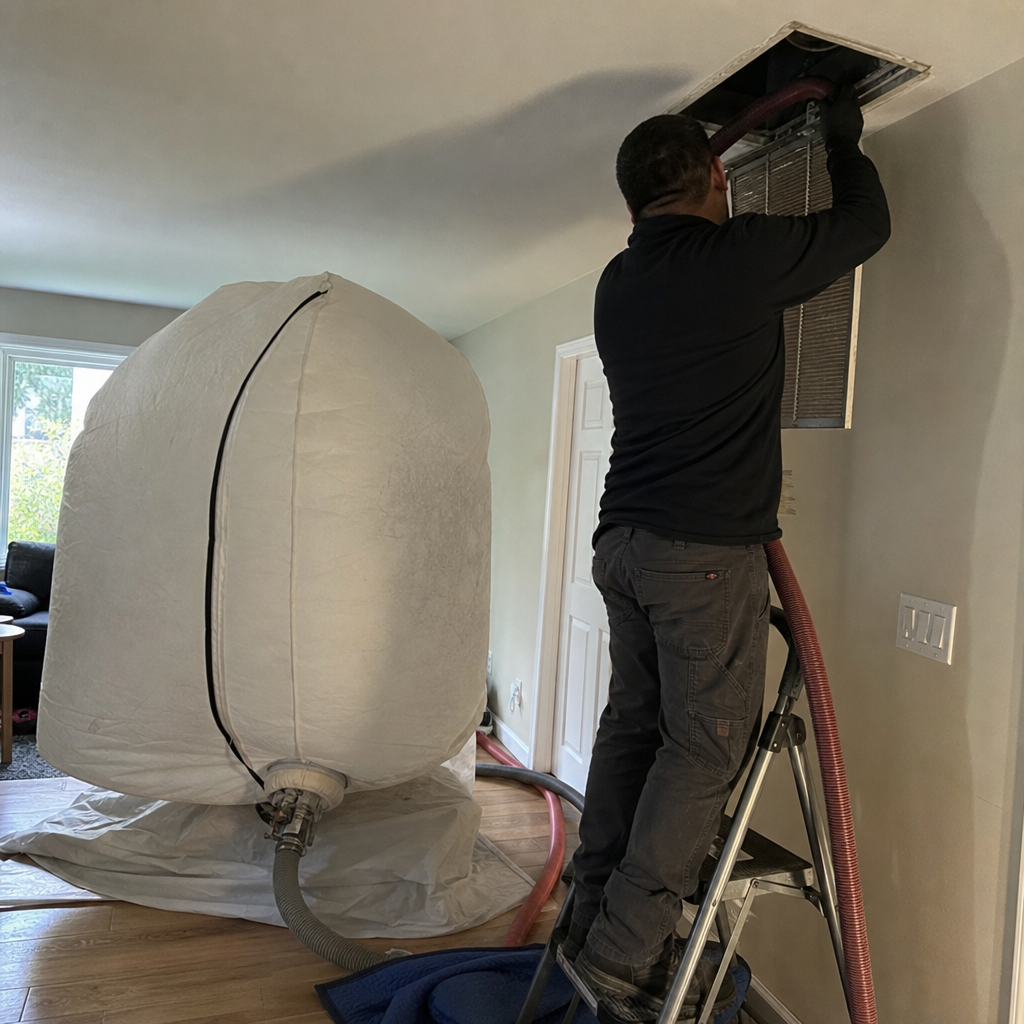
The air handler cabinet is where Seattle’s ductwork problems concentrate. In retrofitted systems — the majority of pre-1950 homes in Ballard, Wallingford, Queen Anne, and Capitol Hill — the air handler often sits in a crawl space or basement corner where gravity-furnace infrastructure was never fully removed. We inspect for abandoned plenum boxes, disconnected returns, and moisture staining that indicates crawl space humidity is entering the system. Our cleaning addresses the full cabinet interior, not just visible surfaces.
Heat Exchanger Cleaning
Gas furnace heat exchangers in Seattle’s older homes require visual inspection for corrosion and cracking — a safety-critical step we perform during HVAC cleaning service. The marine climate’s constant humidity accelerates metal fatigue in exchangers that may already be 20–30 years old. We document condition with borescope imaging and flag any unit where combustion gases could potentially enter the airstream.
Coil Treatment
After mechanical cleaning, we apply EPA-registered coil treatments that inhibit biological regrowth without leaving residues that circulate into living spaces. In Seattle’s damp climate, this step is essential — untreated coils in our humidity profile can show new microbial colonization within 60–90 days. We use products compatible with Honeywell and Aprilaire air quality systems for homeowners who’ve added whole-home purification downstream.
What happens when you call
- 1
A real person answersNo phone trees — you reach a local pro.
- 2
You get an upfront price rangeHonest numbers before anyone is dispatched.
- 3
A background-checked tech heads outLicensed & insured, dispatched right away.
- 4
You approve before work beginsNothing starts until you say go.
Trusted Brands We Service in Seattle
Our equipment comes from Rotobrush and Nikro — the same brands restoration contractors use after water damage, not rental-grade alternatives. For air quality upgrades, we work with Honeywell, Aprilaire, Abatement Technologies, and Guardsman products, stocking common components for faster turnaround on Seattle jobs. When a Wallingford homeowner needs a UV-C lamp retrofitted to an existing air handler, or a Bellevue property manager wants Aprilaire media filters across a four-unit building, we source and install without the multi-week delays of generalist HVAC shops that don’t prioritize indoor air quality.
Common HVAC Cleaning Problems We See in Seattle Homes
- Sealed dead-air plenums from gravity-furnace retrofits. The original plenum box sits abandoned inside the duct path, filled with decades of debris that standard cleaning never reaches. We locate these with borescope inspection and cut dedicated access when needed.
- Moisture re-inoculation after cleaning. Seattle’s October–May humidity means ducts that aren’t fully dried post-cleaning can show new mold growth within days. We verify dryness with moisture meters and extend drying cycles beyond manufacturer minimums for our climate.
- Sagging flex duct and separation at seams. Retrofitted ductwork in tight crawl spaces — common in 1910s–1940s Ballard and Wallingford homes — develops sags that trap condensation and tears that pull unfiltered crawl space air into the system. We flag these for repair during cleaning service.
- Wildfire smoke particulate accumulation. Since 2017, August–September smoke events from Eastern Washington and Oregon fires have created a new seasonal cleaning demand. Fine particulate embeds in duct insulation and blower assemblies, producing odor recurrence when heating season starts.
Pricing for HVAC Cleaning in Seattle, WA
| Service | Typical Range in Seattle |
|---|---|
| Evaporator coil cleaning (standalone) | $180–$340 |
| Blower cleaning and balance check | $150–$280 |
| Condenser cleaning and fin straightening | $160–$300 |
| Air handler cleaning (full cabinet) | $220–$400 |
| Complete HVAC system cleaning (all components) | $450–$650 |
| Coil treatment application | $85–$150 (with cleaning) |
| Heat exchanger inspection and cleaning | $140–$260 |
What moves you within these ranges: system accessibility (crawl space vs. utility room), component count (single-zone vs. multi-zone), contamination severity (routine maintenance vs. post-smoke or mold event), and whether abandoned infrastructure requires additional access cuts. Homes in Queen Anne’s hillside neighborhoods or Capitol Hill’s tight lots sometimes need extra setup time. We provide exact quotes before starting — estimates are free, and Richard Anderson personally assesses each Seattle job. Call (877) 335-1974.
We Also Serve Cities Near Seattle
Our service radius extends to White Center south of the city limits, Mercer Island across the I-90 bridge, Bellevue on the Eastside, and Boulevard Park along the Duwamish River. Each shares Seattle’s marine climate profile and much of its retrofit-housing history, though we adjust our approach for the specific construction eras and crawl space conditions we find in each community.
Serving Seattle, WA — Our Local Coverage Area
We’re based in the Seattle area and know this community well. Use the map below to see our service coverage — if you’re nearby, we can almost certainly help.
FAQs — HVAC Cleaning in Seattle
Yes — the optimal window is late May through early July, after the heavy moisture period ends but before wildfire smoke season begins. Scheduling in peak damp months (November–February) requires extended drying protocols we build into our process, but the pre-heating-season timing of September remains popular despite the moisture risk. Call (877) 335-1974 and we’ll recommend the best timing for your specific home’s duct configuration.
Mechanical cleaning removes the particulate source of smoke odor from duct interiors, blower assemblies, and coil surfaces — but if smoke penetrated porous duct insulation or settled in an abandoned plenum box, odor may persist without full component replacement or targeted sanitizing. We assess this during our initial inspection and quote air quality treatment with Guardsman or Abatement Technologies products when needed. Call (877) 335-1974 for an evaluation.
Regularly. In Ballard, Wallingford, and Queen Anne, we’d estimate 30–40% of retrofitted forced-air systems still contain the original gravity-furnace plenum, sealed and bypassed but never removed. It’s a structural artifact of Seattle’s specific heating history that technicians in newer markets almost never see. Our borescope inspection locates these before cleaning begins, and we quote any additional access work separately so you’re not surprised.
Typically 4–6 hours with our standard drying protocol, but we extend to 8–12 hours during October–May when ambient humidity exceeds 70%. We verify with moisture meters before sealing access points — skipping this step in our climate risks mold re-colonization within days. For urgent scheduling during damp months, we can deploy supplemental drying equipment.
Generally no for routine maintenance, but yes when cleaning follows a covered peril — water damage from a failed water heater, smoke damage from a fire, or post-remediation clearance after mold abatement. We document our work with photos and detailed reports that support insurance claims when applicable. Call (877) 335-1974 and we can review your situation.
Written by Richard Anderson, Owner and Lead Technician at Landmark Air Duct Cleaning Service Washington, serving Seattle since 2013.